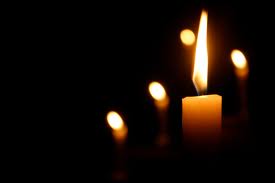
Confession 360: Darkness

They don’t know the way of peace; there’s no justice in their paths.  They make their roads crooked; no one who walks in them knows peace.  Because of all this, justice is far from us, and righteousness beyond our reach.  We expect light, and there is darkness; we await a gleam of light, but walk around in gloom.  Isaiah 59:8-9 (CEB)

I read an article the other day from the site State of Formation.  This is a dedicated body of up and coming religious leaders from multiple faiths who speak out on issues of ethics and morality.  The article I read was entitled: “Tearing Down Christmas Lights: The Reason for the Season.”

In this article, the author discusses the “charades of peace” we have established in our society that mask injustice and oppression.  In Chicago, one of those charades of peace was the brightly lit and festively adorned mayoral Christmas tree.  Protestors, fed up with the charade, took it upon themselves to remove the lights from the tree.  We are living in a time of darkness, they seemed to say.  So let’s stop pretending otherwise.

Last month, as another giant Christmas tree was unveiled at the Vatican, Pope Francis addressed the world with these words:

“Christmas is approaching: there will be lights, parties, Christmas trees and Nativity scenes…it is all a charade.  The world continues to go to war.  The world has not chosen a peaceful path…We should ask for the grace to weep for this world, which does not recognize the path to peace…”

Advent, true advent, is a season of darkness.  The people of Jesus’ time were living under the oppressive regime of the Roman empire.  Like our world today, the world Jesus came into was violent and unjust.  There was economic, racial, and religious disparity.  Those who had continued to gain more, while those who had not were continually persecuted.  People were judged based on their economic status, their ethnicity, their gender, and their religious beliefs.  Very few deigned to reach a helping hand out to the least of these.  And, there was no peace.

As in Isaiah’s time, people awaited a gleam of light, but walked around in the gloom.

In our culture today, we rush headlong into the Christmas season, willfully choosing to forgo the darkness of Advent.  We forget that the true beauty of Christmas comes after time spent in the darkness.  How can we appreciate that light if we ignore the darkness into which it sparks?

This Advent season, I would encourage you to spend some time living in the darkness.  Look at the world around us–the dark, violent, unjust world that we have created.  And remember that it was into this darkness God himself chose to come.  The darkness is not where the story ends.

As Jesus followers, we don’t stop in the darkness.  Rather, it is our job to carry the light into the darkness.  Rather than continuing the charades of peace, we need to expose the true light of love.  How do we do this?  There are many ways, some simple, others more complex.  We expose the light of love when we:

  • sit with a friend undergoing cancer treatments
  • bring meals to those who are not able to provide for themselves
  • speak words of encouragement and support to those who are struggling
  • grieve with those who are mourning loss
  • donate food, clothing, toys, school supplies, toiletries, etc… to local food pantries, shelters, nursing homes, or children’s hospitals
  • visit those members of your community who are hospitalized, in nursing homes, or shut-ins
  • coach someone seeking employment through the job-hunting process
  • volunteer to tutor a child struggling in school
  • give the gift of hope through organizations like Heifer International and the Rainbow Network
  • stand in solidarity with those who are protesting acts of discrimination and injustice
  • welcome those into our midst who are different from us
  • establish cross-cultural relationships
  • forgo argumentative language and opt for thoughtful and respectful discussions about important issues of justice
  • write notes of encouragement to those working for justice and peace, including law enforcement officers, military personnel, and civic and community activists
  • contact Congressional representatives at the state and national levels about important justice issues
  • practice kindness
  • say thank you and mean it
If we, the Jesus people, truly practice what Jesus preached, we can use our little shafts of light to illuminate the world.
Blessings and Peace,
Sara

Confession 359:Peace

As Jesus came to the city [Jerusalem] and observed it, he wept over it.  He said, “If only you knew on this of all days the things that lead to peace.  But now they are hidden from your eyes…”  Luke 19:41-42 (CEB)

Peace.  It is one of the four pillars of the Advent season.  According to the liturgical calendar, the Peace candle will be lit this coming Sunday, the second Sunday of Advent.  And yet, as I look around at the world this morning, I see no peace.  Mass shootings, acts of terrorism, homicides, and drug violence dominate news headlines.

I think it’s no coincidence that my Bible reading this morning found me in Luke 19.  As Jesus looks out over the city of Jerusalem, he weeps.  He knows that the triumphal entry he is embarking on will lead, ultimately, to violence and death.

“Jerusalem!”  Jesus cries.  “If only you knew the things that led to peace!”

I find myself thinking that we have forgotten the path of peace.  But then I wonder…did we ever really know it?

On Christmas Day in  1863, during the height of the Civil War, poet Henry Wadsworth Longfellow penned the carol “I Heard the Bells on Christmas Day”.  Longfellow had spent the past month nursing his son who had been nearly paralyzed in the battle of New Hope Church.  Even though his son was home, there was no peace.  The cannons of war raged on throughout the land.

Stanza three of the carol encapsulates Longfellow’s feelings:

And in despair I bowed my head:

“There is no peace on earth,” I said.

“For hate is strong, and mocks the song

Of peace on earth, goodwill to men.”

I have to think that this is the same despair that led Jesus to weep over Jerusalem–the same despair that perhaps still causes him to weep over the world.

I’m struck by Jesus’ words in Luke 19:42: “If only you knew the things that lead to peace…”

Jesus understood fully the path to peace, for it was a path he had set himself on since the beginning of his ministry.  Jesus knew that path to peace was one of love–a love so great that he would sacrifice himself to share it with a humanity that would forsake it time and time again.

At any point in his ministry, Jesus could have called on the army of heaven to come down and establish his kingdom.  He could have led the people he ministered to into an uprising–a violent rebellion against the Roman empire.  And yet, Jesus never even touched a sword.

Instead, Jesus used his hands to bring healing.  He used his lips to proclaim a message of love and hope.  He used his body to bring salvation.

As Christians, we know the path to peace.  The path to peace comes through love.  It comes through valuing human life–all human life–above ourselves.  It comes in acts of selflessness, acts of generosity, acts of mercy, and acts of forgiveness.  It is a rough and difficult road to walk.  We have to leave our weapons behind–those weapons of fear, hate, and selfishness.  The path to peace is one of vulnerability, but one of ultimate victory.

The fourth stanza of “I Heard the Bells on Christmas Day” is my favorite, for it shows us the ultimate victory that is God’s.

Then pealed the bells more loud and deep:

“God is not dead, nor doth He sleep;

The wrong shall fail, the right prevail,

With peace on earth, goodwill to men.”

Right will prevail with peace.

If only you knew the things that lead to peace…

We do.  Let’s use them.

Blessings and Peace,

Sara

Confession 358: Anticipation

He [John] will go forth before the Lord, equipped with the sprit and power of Elijah.  He will turn the hearts of fathers back to their children, and he will turn the disobedient to righteous patterns of thinking.  He will make ready a people prepared for the Lord.  Luke 1: 17 (CEB)

Several months ago, my boys had their first overnight with a friend.  They waited in eager anticipation for the arrival of their guest–standing at the door a full twenty minutes before the expected entrance to make sure he would get a warm welcome.  Games were laid out, toys carefully chosen, activities planned and sleeping arrangements determined well in advance.  In their excitement about this most special occasion, the boys weren’t just ready–they were completely and abundantly prepared.

Anticipation is a word that conveys an eager expectation of something.  Generally, it is positive.  There is something good that is coming up and we are excited about it.

Advent is a season of anticipation. We eagerly prepare our houses for the coming of Christmas–decorating trees, hanging stockings, stringing lights, baking sweets, and wrapping gifts.  Like my boys, we completely and abundantly prepare for the arrival of family and friends.  But I wonder, in our sometimes manic preparations for Christmas Day, do we miss what should be the most anticipated event of all?

Are we really waiting in eager anticipation of the coming of Christ?  Are we completely and abundantly preparing our hearts for a renewed encounter with the King?  For this is what the gift of Advent truly is–an opportunity for us to prepare for a visit with God our Creator.

Advent isn’t a season of passively waiting.  Like John the Baptist, we must be working to prepare the way for the coming of the King.  John lived in anticipation of the coming of Christ by making ready a people prepared for the Lord.  The people of Israel weren’t prepared for Christ.  They didn’t understand how far they had fallen from God.  Their hearts weren’t open to Christ’s message of love, forgiveness, mercy, and grace.  They needed time to prepare for Christ’s coming; time to repent, time to listen, time to grow.

When we truly practice Advent, we must actively make ready our hearts for the coming of the Lord.  We, too, must repent.  We must listen.  We must grow.  Our focus must be fixed firmly on God–reading his word, singing his praises, ministering to those in need.  We must approach this season with anticipation, fully expecting to have an encounter with the risen Lord.

Over the next few weeks, I would encourage you to spend some time in anticipation.  Make ready your heart for the Lord.  And watch for him.  He often shows up in the most unexpected places.

Blessings and Peace,

Sara

Confession 258: Gratitude

This post was originally published on November 21, 2012.  I’m running a bit behind this week, and this is still true for me today.  Blessings and Peace–Sara

When her husband Elkanah went up with all his family to offer the annual sacrifice to the Lord and to fulfill his vow,  Hannah did not go. She said to her husband, “After the boy is weaned, I will take him and present him before the Lord, and he will live there always.”
“Do what seems best to you,” her husband Elkanah told her. “Stay here until you have weaned him; only may the Lord make good his word.”
So the woman stayed at home and nursed her son until she had weaned him.
After he was weaned, she took the boy with her, young as he was, along with a three-year-old bull, an ephah of flour and a skin of wine, and brought him to the house of the Lord at Shiloh.   
When the bull had been sacrificed, they brought the boy to Eli, and she said to him,
“Pardon me, my lord. As surely as you live, I am the woman who stood here beside you praying to the Lord.  I prayed for this child, and the Lord has granted me what I asked of him.  So now I give him to the Lord. For his whole life he will be given over to the Lord.”
1st Samuel 1:21-28

November is the month of gratitude.  It is the time we set aside before our season of self-indulgent excess to give thanks for all of the blessings we have.  And, for many of us in the United States, those blessings are abundant.  I’ve been thinking a lot about gratitude lately.  I’ve been thinking about what it means to be truly grateful.  And I’ve come to the conclusion that there is a big difference between giving thanks and showing gratitude.  Thanks is easy.  It’s rote.  Someone opens a door for you and you say, “Thank you.”  You don’t even have to make eye contact.  My six year old son thanks me almost every morning for his apple juice in between large gulps.  He doesn’t even raise his head from the cup.  Don’t get me wrong—I appreciate that he says it.  But other than showing me he can be polite, it doesn’t mean much.

I think most of us can come up with a list of things we are thankful for.  I’m guessing if I asked you, yours would look a lot like mine.  I’m thankful for my husband, my children, my family, my friends.  I’m thankful for a job, for benefits, for a house, for food, for transportation.  I can say, “Thanks.”  The question I’ve been asking myself this year, however, is: Can I be grateful?  Can I look at my life and say to God, “You have given me more than enough.”  Can I let my gratitude fuel my actions?

The difference between giving thanks and showing gratitude, to me, is in the application of the sentiments.  While thanks is something we say, gratitude is something we do.  It is an action of appreciation we take when we are truly grateful for the blessings in our lives.  It is our cup running over and pouring out love to someone else.  

Gratitude is what Hannah showed when she took her most treasured gift, her long prayed for/longed for/agonized for son to the Tabernacle and gave him to God.  This child, Samuel, was the only thing Hannah had ever wanted.  Can you imagine the joy that filled her soul the day he was born?  Can you imagine how cherished he was?  How loved he was?  She could have said, “Thanks,” and moved on.  But instead, she chose to give something out of the fullness of her heart.  In gratitude, she handed Samuel over to Eli the priest, to be raised in service to the Lord.  She gave back to God what God had so graciously given to her.  And what amazing plans God had in store for Samuel!

The question I’m left with as I end this reflection is this: How can I show my gratitude for the blessings in my life?  For me, this means taking the time to literally show the people I love that I am grateful for them.  It means taking the resources God has given to me and using them to benefit others.  It means slowing down and enjoying what I already have.  It means taking my “more than enough” and giving it back to God for use in His service.

Gratitude is hard.  It puts others first.  It goes against the grain of our culture.  But I think, if I can get it—if I can show it—then my life is going to be a little more fulfilled.
Blessings and Peace,
Sara

Confession 356: Why We Need to Learn to Love

Love is patient, love is kind, it isn’t jealous, it doesn’t brag, it isn’t arrogant, it isn’t rude, it doesn’t seek it’s own advantage, it isn’t irritable, it doesn’t keep a record of complaints, it isn’t happy with injustice, but it is happy with the truth.  1 Corinthians 13:4-6 (CEB)

serve

I grew up in a small town in Western Central Missouri.  It was your typical Midwestern small town; local business, an established class hierarchy, strong local government, and predominately white.  I went to college in another small Missouri town, at a small liberal arts college that was also predominately white.  My junior year of college, a bunch of us white kids got together and took a class on African-American literature.  It was, in all seriousness, a life-changing experience.  For the first time in my young life, I came face to face with the racial biases and stereotypes that were (and are) endemically part of being a white American.  For the first time, I had to confront biases and stereotypes within myself–thoughts and ideas that were (and are) readily accepted by the majority of white Americans.

Confronting my own inner biases and stereotypes was not an easy process, but it changed my way of thinking, of seeing, of being, and of understanding.  I wanted to know more.  I wanted to grow in cross-cultural understanding.  I wanted to change the narrative of my own racial bias.  I spent a lot of time in the intervening years deliberately working to cross cultural boundaries.  I continued to learn, to see, to understand, and out of that understanding came a deeper capacity to love.

Like many Christians, I love the “love passage” in Corinthians 13.  Paul writes about love with such beauty and grace that we just want to say, “Awww…that’s so pretty.”  The problem is, if we really unpack the message, it’s not pretty at all.  It’s messy, challenging, and requires a lot of serious labor on our part.  Look again at what Paul is saying:

Love is patient –it stays the course, even when it seems like change will never come.

Love is kind–it doesn’t resort to hate-filled words and acts of violence.

Love isn’t jealous–it doesn’t feel threatened when others succeed.

Love doesn’t brag, isn’t arrogant, and doesn’t seek it’s own advantage–it focuses on lifting up others.

Love isn’t irritable, nor does it keep a record of past wrongs–it offers grace.

Love isn’t happy with injustice–it seeks to change the narrative.

I believe that, as white Americans, we haven’t really learned to love.  Endemic racism seems to permeate all of our institutions.  Poverty, lack of quality education, lack of job opportunities, lack of access to quality healthcare, lower wages, and mass incarceration are forms of injustice that perpetuate the power of the white elite.

new jim crowI recently read a book by Michelle Alexander entitled The New Jim Crow.  In this book, Alexander makes the case that our system of mass incarceration is a new form of the racial caste system that has always been a part of American culture.  Alexander writes that,

If we had actually learned to show love, care, compassion, and concern across racial lines during the Civil Rights Movement…mass incarceration would not exist today.”

As white Americans, I think we need to learn to love–not the “Will you be my Valentine” love that card companies manufacture, but the deep, challenging, and messy love Paul writes about and that Jesus commanded.  When we truly learn to love, we see injustice, and speak out for change.  When we truly learn to love, we challenge stereotypes that are presented as fact.  When we truly learn to love, we welcome others–no matter their ethnic, religious, or economic background.  When we truly learn to love, we stop feeling threatened by change.  When we truly learn to love, we see those who are different from us for what they really are: beloved children of God.

diversity

This week, I would challenge you to talk about racism in America.  Engage your friends, family members, co-workers, and church members in conversation about racial justice issues in the news, like racism on college campuses.

Seek out information about racial injustice in America.

Do some soul searching to identify stereotypes and biases that you hold (we all have them).  Then, work to recognize when those stereotypes and biases are presented to you in news stories, advertisements, and even television shows or movies.

Finally, pray.  Pray that we, as a nation, can do a better job of learning to love.

Blessings and Peace,

Sara

Confession 354: Coffee Chat–Awakenings

Hey Friends!  I am starting a new series here called “Coffee Chat”.  This is a video series (eek!) where we can sit, have a cup of coffee, and chat about the things God is doing in our lives.  I’m hoping that, over the next few months, I can get some friends to come and chat with us.  Enjoy the first episode–and look for the new Coffee Chats tab on menu bar.

Blessings and Peace,

Sara

Confession 353: What Did You Come Here For?

After John’s messengers were gone, Jesus spoke to the crowds about John. “What did you go out into the wilderness to see? A stalk blowing in the wind? What did you go out to see? A man dressed up in refined clothes? Look, those who dress in fashionable clothes and live in luxury are in royal palaces. What did you go out to see? A prophet? Yes, I tell you, and more than a prophet.  Luke 7:24-26 (CEB)

Purpose

When I go shopping, it’s usually with a purpose.  There’s something specific that I want to get.  Yesterday, I ordered hand soap online and went to the grocery store for low-carb tortillas, protein bars, coffee beans, and creamer.  The day before that I ordered school pictures, looking for the package that was around twenty dollars.  Don’t get me wrong, sometimes I go into a store (Target) and aimlessly meander, coming home with some goodie I never knew I wanted before that moment.  But most likely, there was a purpose that took me shopping.

Most of us have a general purpose for how we spend our time, energy, and money.  There’s a method behind the madness.  We know why we go to work, we know why we vote for certain candidates, we know why we make our kids do their homework, we know why we bought the car/house/furniture we own, we know why we have pets, and we even know why we love certain sports/movies/music/holidays.

However, when it comes to our faith, I feel like we really don’t always know why it matters. In Luke 7, Jesus has an encounter with John the Baptists disciples.  John the Baptist was a prophet who came before Jesus and prepared the way for him.  John lived in the wilderness, taught people about the need for repentance, proclaimed the coming of the Messiah, and baptized those who were seeking transformation.  John was arrested for speaking out against King Herod, and while imprisoned news of Jesus’ ministry reached him.  He sent his disciples to Jesus to ask, “Are you the one who was to come?”  Jesus answers affirmatively, then talks to the crowds about John.  I love Jesus’ question to the crowds, and it’s a question he asks of those who seek him throughout his ministry.

“What did you come here for?”

In Luke 7, Jesus specifically asks the people, “Who did you go to the wilderness to see?  A king?  A celebrity?  No, you came to see a prophet.”  Essentially, Jesus is reminding the people that what they were looking for was an encounter with the Divine.  They wanted to hear a word from God, and they believed that John was delivering that word.

This is not the only time in the Gospels that Jesus questions people who come to him about their motives.  Matthew, Mark, and Luke all record the story of a blind man coming to Jesus.  In many Gospel healing encounters, Jesus automatically knows what the one coming to him wants.  He understands the healing that needs to take place.  Yet, when Jesus sees the blind man he asks, “What do you want me to do for you?”

Of course, Jesus knew the man was blind.  He knew that the man wanted healing.  And yet, he posed the question anyway.

“What do you want me to do for you?”

Jesus knows what we need.  He knows the desires of our hearts.  But sometimes, I think he wants to make sure we know them, too.  He wants us to have a faith that is both meaningful and purposeful.  Otherwise, what’s the point of showing up for worship each week?  What’s the point of engaging in Bible study?  What’s the point of working toward social justice?  If we don’t know why we’re doing it, then we’re just going through the motions.  There’s no purpose, there’s no connection, there’s no relationship.  Just as we work, shop, and relax with purpose, so our faith lives should be filled with purpose also.


“What did you come here for?” Jesus asks.  As Jesus People, I think we need to be able to answer that question, because the answer to that question will give our faith a real and tangible purpose.  Furthermore, that real and tangible purpose will result in a closer, deeper, and stronger relationship with God.  Instead of meandering aimlessly through the aisles of faith, picking up a prayer habit here, looking at a Bible study over there, hopping from one church to another trying to find something that “fits”, we’ll be able to focus our time and energy on what we truly need.

For me, I want to experience God’s presence.  I want to know God more, and in doing so I want my life to be an extension of his works.  Therefore, when I go into worship each Sunday, I don’t care if we sing traditional or contemporary hymns, if we read a Psalter or pray quietly.  My focus is on experiencing God’s presence, and God can present himself to me ipurpose 2
n any style of worship.

Similarly, I engage in Bible study because I want to know God more.  I want to understand what is important to him and what he expects of me.  I want to know how I can live in a way that shows others God’s love, grace, and hope.  I want to know God better so that I can share his message with others.

I also engage in Bible study and prayer because I want to have a closer relationship with God.  More than that, I want our relationship to be symbiotic.  I want God’s Spirit to dwell within me so that I can live out my full potential in him.

Do you see why purpose matters?  Do you see why Jesus asks, “What did you come here for?”

Let me ask you two questions to think about the next few days:

  1. What do you go to church/Bible study/small group for?
  2. What do you want Jesus to do for you?

Blessings and Peace,

Sara

Confession 352: Why Ministry is Always Worth It, Even When It Feels Like It’s Not

As Jesus walked alongside the Galilee Sea, he saw two brothers, Simon, who is called Peter, and Andrew, throwing fishing nets into the sea, because they were fishermen.  “Come, follow me,” he said, “and I’ll show you how to fish for people.”  Right away, they left their nets and followed him.  Continuing on, he saw another set of brothers, James the son of Zebedee and his brother John. They were in a boat with Zebedee their father repairing their nets. Jesus called them and immediately they left the boat and their father and followed him.  Matthew 4:18-22 (CEB)

Caribbean Beach House

I have to confess, some days (weeks/months) I fantasize about tropical islands.  I can picture us there, my family and I, on a small Caribbean Isle.  We’d live in thatch-roofed house with a wrap-around deck on a lush verdant hillside.  Rough stone steps would snake a path down the hill to a rocky cay.  There, the boys would explore the wonders of nature while I sat atop the hill writing.  My husband would have an outdoor dockside office, owning and operating a boating guide service for tourists.  We would live a quiet life, picking fruit from our trees and drinking cool water sprinkled with coconut milk.

This is the place I go to in those moments when I wonder, “Is ministry really worth it?”  My husband, who is much more evolved than I, always answers that question with a resounding “YES!”  I, on the other hand, ponder images of crystalline water and snorkeling.

The truth is, ministry–be it professional, personal, or volunteer–is hard.  When Jesus spoke to his disciples about ministry, he didn’t use the terms competitive salary and full benefits.  Rather, Jesus talked about the cost of being a disciple.  He told his disciples that they would be disrespected, ridiculed, judged, imprisoned, persecuted, and even put to death for their work.  For Jesus, ministry was never a question of what you got.  Rather, it was a question of what you would give.

You would think that  the disciples might have reconsidered their commitment at this point.  You would think that they, like the young rich ruler who came to Jesus seeking eternal life, would have said, “Thanks, but, no thanks.”  You would think they would have said, “Ministry really isn’t worth it.”

But they didn’t.

When Jesus called his first disciples, they came–immediately.  They literally stopped working, put down their fishing nets, left their families, and followed Jesus.  Immediately.  There was no hesitation.  Regardless of what would come, following Jesus was worth it.  Of course, there were times of doubt.  There were times of fear.  There were times of hurt.  There were times when nothing made sense.  But yet, they continued on.

When the apostle Paul was imprisoned in Rome, he questioned whether or not continuing in ministry was worth it.  In Philippians 1, Paul writes of his conflict.  He is tired.  His body is worn out.  He wants to go home, to live eternally with Christ.  However, Paul affirms that continuing the path of ministry is worth it.  He knows his journey is not yet done.  He tells the Philippians, “I’m supposed to help you continue to grow in your faith.”

Throughout the history of our faith, we see faithful disciples affirming the call to ministry in spite of the overwhelming obstacles they face.  Corrie Ten Boom risked her life to save the lives of others during the Holocaust.  She kept her hope (and faith) alive in the midst of the horrors of a concentration camp–teaching others about Christ’s love while living in the midst of hate.

Bishop Desmond Tutu was propelled by his faith to fight for the rights of black South Africans throughout his ministry.  He took on the apartheid government and fought to end segregation.  Similarly, Martin Luther King, Jr. fought to end segregation in the U.S. during the Civil Rights Movement.  Dr. King was beaten, imprisoned, and ultimately gave his life for the cause.  And yet, he continued on.

When I think about these champions of faith persevering through enormous obstacles, I can’t help but be a little ashamed of my island dreams.  The truth is, if we are truly Jesus People, then ministry is always worth it.  It’s not worth it because of the fruits of our labor, although that can be a byproduct.  It is worth is because it is what we are called to do.  Ministry is, and always has been, an act of obedience.  Ministry is worth it because we are called to obediently follow Christ.  Sometimes we will be disappointed.  Sometimes we will be challenged.  Sometimes we will be attacked.  And sometimes, our feelings will just be plum hurt.

Even so, Jesus says, “Come–follow me.”  And while I might hesitate for a moment, in the end, I know following Jesus is always worth it.

Blessings and Peace,

Sara

P.S. I love this quote from Bishop Tutu:

Despite all the ghastliness in the world, human beings are made for goodness.  The ones who are held in high regard are not militarily powerful, nor even economically prosperous.  They have a commitment to try and make the world a better place.

Confession 351: Taming the Tongue

My brothers and sisters, not many of you should become teachers, because we know that we teachers will be judged more strictly.  We all make mistakes often, but those who don’t make mistakes with their words have reached full maturity. Like a bridled horse, they can control themselves entirely.  When we bridle horses and put bits in their mouths to lead them wherever we want, we can control their whole bodies.  James 3:1-3

quiet sign

I have to confess…sometimes, I can be a little critical of others.  Okay, so maybe the “a little” is really more of an “a lot”.  I have an analytical mind.  Years of English study has taught me to take a whole work and break it apart into tiny pieces to examine, analyze, and evaluate its worth.  This is great for unpacking literature–not so much for unpacking human beings.  Yesterday, as I was watching my children play in a botanical garden, I found myself evaluating the people around me.  The woman in a Ralph Lauren maxi dress with strappy sandals and a scarf was a snob.  The woman in faded, ripped jean shorts, a dirt-smudged t-shirt and old scruffy tennis shoes was not very bright.  And the woman with crazy hair in a bright red Cardinals t-shirt that said “Jedi Knight” on the back was just weird.  Oh wait–that was me!  You see what I’m getting at, right?  Being critical is so easy, but it’s always a two-way street.

Recently, God has been pushing me to rethink my propensity to perform critical analysis in all areas of my life.  Instead of criticizing when opportunities present themselves, I hear God saying (very kindly, of course), “Shut up.”  It’s not my job to criticize others.  Don’t get me wrong, there is a time and place for teaching and for accountability.  However, like the book of James says, we need to place a bit in our mouths to carefully control what comes out of them.  Our teaching should never be about diminishing someone else.  Accountability should never be about condemnation.

Over the past few years, I’ve come to realize that my criticisms of others often stem from my own insecurities.  Criticizing is a self-centered action.  It’s about making ourselves seem better than someone else.  It’s looking at someone, judging them, and then saying, “Well, I would never do that.”   I would never talk to my child like that.  I would never coach a game like that.  I would never teach that way.  When we criticize others, we’re often trying to compensate for our own feelings of inadequacy or lack of self-esteem.  We’re not happy with ourselves, so we take it out on others.

Criticizing is a completely unproductive habit.  It’s not about making a situation better, rather, it’s about building our own egos.  And, if I’m building my own ego, I’m not focusing on the work God has placed before me to do.  I can’t be the person God created me to be if I’m constantly focused on finding fault in others.

As I was pondering a way to tame the critical beast within me, the following thoughts came to mind.  I’ve decided to challenge myself (and you) to answer the following questions before engaging in any sort of criticism.

  1. Is my criticism really about something someone else is doing, or is it about my own insecurities as a wife, mother, teacher, writer, leader, etc…?
  2. Will the behavior or situation I’m criticizing change for the better by vocalizing my complaint?
  3. If my criticism is valid, am I willing to directly confront the situation and seek a positive outcome in a way that supports and uplifts others?

If we’re willing to engage in a little introspection, I think we could more easily tame our critical tongues.  And, if we work to control our critical thoughts and words, the effect will go far beyond ourselves.  We will live with more joy, and we will be able to share that joy with others.

The apostle John told his followers that they would be known by their love.  Perhaps, showing love begins with taming the tongue.

Blessings and Peace,

Sara

Confession 348: Unity in Christ

 Take off the old human nature with its practices and put on the new nature, which is renewed in knowledge by conforming to the image of the one who created it.  In this image there is neither Greek nor Jew, circumcised nor uncircumcised, barbarian, Scythian, slave nor free, but Christ is all things and in all people.  Colossians 3:9-11

Often, in blogging, I avoid speaking directly to cultural and political circumstances that can be considered “hot topic” or “controversial”.  Yet in reading a recent blog post by author Rachel Held Evans, I’m reminded that Christian writers have a responsibility to speak in times of cultural trial.  Too often, the voice of “Christians” that echoes the loudest across media outlets is one of hate, judgment, bigotry and oppression.  Is it any wonder that more and more Americans are leaving behind the label of “Christian”?

And what is a Christian, anyway?  At its core, a Christian is someone who is a self-professed sinner.  A Christian is someone who knows they are in need of redemption.  For Christians, that redemption comes through God in the form of Jesus Christ.  Once salvation has been accepted, once grace has been received, a Christian seeks to live a life following the example of Jesus Christ.

Following the example of Jesus Christ means practicing humility, not arrogance.  Following the example of Jesus Christ means reaching out in love to others, not standing in judgment and hate.  Following the example of Jesus Christ means standing up for justice, not participating and accepting systems of injustice and oppression.

For white Christians (like myself) following the example of Jesus Christ means acknowledging our blatantly racist past and accepting that we have built systems of inequality and prejudice that exist today.  Following the example of Jesus Christ means that we (white Christians) must stop protecting institutions that promote racial injustice.  We need to acknowledge the fact that our law enforcement systems are racially biased.  We need to stand in solidarity with our African-American brothers and sisters in demanding that those systems change.  We need to accept that the lens by which we view the world is skewed by prejudices handed down over generations.  We need to remember that in Christ, we are all one body.

As I watch demonstrations for racial justice erupt across the nation, I am hopeful that maybe change will finally come.  It will take time.  It will be painful.  It will require humility, compassion, and a careful re-evaluation of our own beliefs, values, and motivations.  However, I think it’s good.

For my part, I will continue to speak out on behalf of those fighting for justice.  I will continue to work to evaluate my own motivations and perceptions when it comes to issues of racial justice.  I will admit that I am a Christian–a sinner in need of redemption and grace.

Blessings and Peace,

Sara