Confession 362: Stepping Back

“Ugh.  My leaves look like thorns.  I’ve painted a thorn tree!” I whined.

“What?  No.  You’re too close,” my friend Susan, who was painting right next to me, sagely advised.  “You need to step back and look at the whole thing.”

My weekly Bible study group was at a painting class.  Now, I have no artistic ability whatsoever.  Seriously, I’m not being modest.  I think it’s important that we recognize our spiritual gifts and non-gifts.  I quit Art after sixth grade and took a shop class.  Trust me, I’m no artist.

However, this painting class drew me in–probably because it was held at my favorite local coffee and sweet shop and included a free latte.  And I have to say, it was a lot of fun.  Our painting that evening was a willow tree.  It was amazing to see how twenty-two ladies could use the same materials and get such vastly different trees.

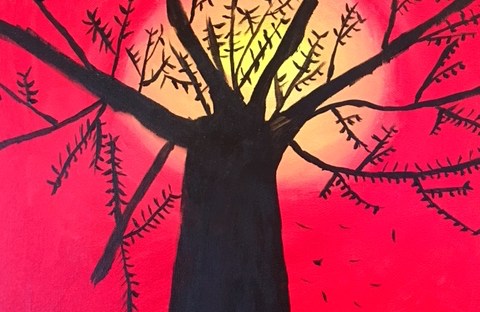
Back to the thorns.  With my nose inches from the canvas, this is what I saw.IMG_0093

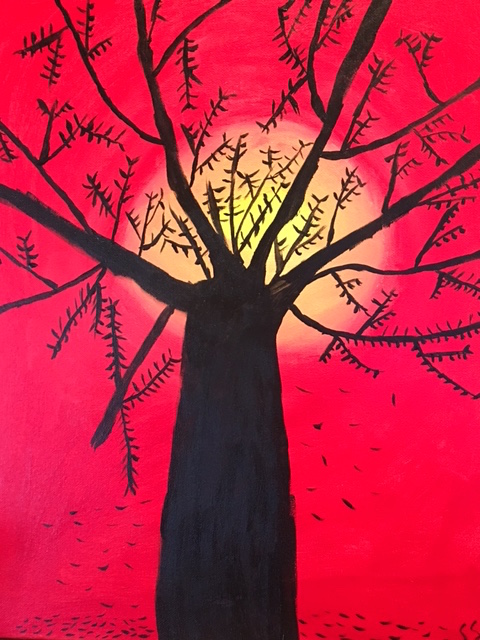
But when I stepped back, I saw this.

IMG_0095

It’s not great, so don’t pretend.  The swirling leaves were an added touch I went rogue with.  They were not in the original design.  From this perspective, and with my rogue falling leaves, it doesn’t look as much like a thorn tree.

The point is, perspective changes things.  In our lives, we sometimes stand too close to the canvas.  We get too close to our grief, our worry, our schedules, our drama, our work, our parenting, our volunteering, our aging, our life situations and we forget that there is a bigger picture being painted.

I love the verse from Revelation that opened this post.  God is.  God was.  God is to come.  God is THE Almighty.

God doesn’t just see the complete picture, he IS the complete picture!  But when we’re standing too close to ourselves we can’t see it.  We can’t see him or the work he’s doing.

We see thorns.  God says, I see a tree standing in the midst of a glorious Fall sunset.  (And I’m not talking about whatever that is Sara painted!)

God shapes our lives with boldness and depth.  He adds shades of brilliant color mixed with soft hues and rich earthiness.  All that is and was and is to come stretches out before him in a dazzling mural we can’t even comprehend.  And we only see thorns.

There is a time and place for closeness.  There are moments when we have to be solely focused on the grief, the illness, the budget, the children, the aging parents, the work.  But we also need to learn to take a step back.  We need to work to see the bigger picture, knowing that we won’t ever truly see it all in this lifetime.  We need to remember that we are children of the one who is, who was, and is to come–the Almighty.

Do you only see thorns?  Step back.

Blessings and Peace,

Sara


Confession 361: Fighting Against the Wind

And when they climbed into the boat, the wind died down.  Matthew 14:32


A few days ago, my husband and I saw an interesting sight.  It was a decidedly windy day, the kind Winnie the Pooh would refer to as “blustery”.  Suspended vertically in the air was a small bird.  It’s wings were out on either side of him, but they looked like feathery arms.  He was beating them up and down, relentlessly pushing against the invisible force that had suspended him midair.  Finally, he stopped beating his wings and dropped, straight down.  I craned my neck to see if he would hit the ground, but instead, he soared.   You see, when he dropped into the wind, he made his body horizontal.  Wings out, the currents of air moved under him and allowed him to glide.  By giving way to the wind, the bird could fly.

My husband and I chuckled at this funny little episode.  But then I thought, that bird is probably smarter than most of us humans.  Like the little bird, we tend to fight against the invisible forces of this life.  We beat our wings in futility against the problems that push against us like a fierce wind.  We think that if we just keep fighting we can mend that broken relationship, find that perfect job, gain enough wealth to make us happy or even reverse the doctor’s diagnosis.

We live in a society that tells us when you face insurmountable odds you have to just push through.  Struggling to finish a research paper?  Push through.  Having trouble meeting a project deadline?  Push through.  Can’t seem to lose that last twenty pounds?  Push through.  The ends of the checkbook won’t meet?  Push through.  Push.  Push.  Push.

I tend to be a push through girl.  Just keep going, keep doing, keep fighting until you get what you want.  The great irony of my life is that things never seem to really change or improve until I let go.

About twelve years ago, I was in a really dark place.  I was struggling with anxiety and depression.  After teaching for four years, I was burnt out, frustrated, and looking for a change.  I kept pushing through.  I called principals at schools I wanted to work at, only to be told they just didn’t have a position open.  I pushed on.  Finally, in the middle of a Good Friday service, God said, enough.  Bowing my head, I stopped pushing.  I fell into God’s plan, the one he’d been trying to direct me to for the past six months.

When I finally let go, when I stopped pushing and fell, God was right there.  His plan was infinitely better than mine, although I didn’t know it then.  When I stopped pushing, when I stopped fruitlessly beating against the problems in my life and gave them fully over to God, I was able to soar.

The next couple of years were a sort of sabbath period for me.  I went to seminary.  I met my husband.  I rested.  I grew.  Life wasn’t easy or perfect–it never is.  But there was peace.  There was purpose.  There was God.

My friends, I don’t know what you’re trying to push through today.  But my advice to you would be to stop.  Stop trying so hard to make a situation perfect.  Stop trying so hard to fix a problem.  Stop trying so hard to figure it all out.  Because you can’t.  You won’t.  Like that little bird, you’ll just beat senselessly against the wind.

Instead, let go.  Lay whatever it is that’s keeping you up at night before the throne of God.  Tell him you’re done pushing.  Tell him you’ve had enough.  And then, allow him room to let you soar.

Let go.

Blessings and Peace,

Sara


Confessions of the Pastor’s Wife Book

Hello Friends–

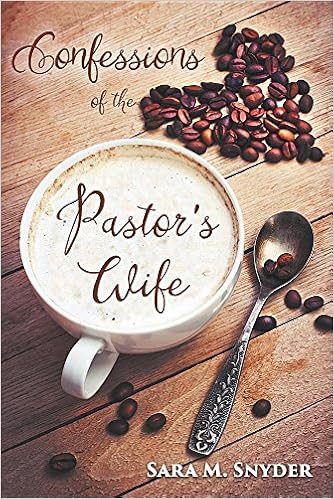
I’m a little late in publishing this, as IRL duties have picked up the past few weeks.  I am pleased (and terrified) to announce that the book is here. Confessions of the Pastor’s Wife, a 52 week devotional book, is now available.  Here’s the link to the book on Amazon.   An e-version is coming soon!

Confessions of the Pastor’s Wife is a three-way conversation between the author, the reader, and God. Containing fty-two devotionals, one for each week of the year, Confessions of the Pastor’s Wife can be used as a stand-alone devotional guide or a supplement to your daily Bible routine. Not only are the devotionals short, sweet, and to the point, they come with a weekly prayer and Scripture Bytes that you can take with you to chew on throughout the week.

Ideal if you’re looking for encouragement, a greater purpose in life, or a way to experience the love of God more fully, Confessions of the Pastor’s Wife will help you realize that God is with you, beside you, guiding and comforting you, throughout your walk with Him.

Blessings and Peace,

Sara


Confession 360: Darkness

They don’t know the way of peace; there’s no justice in their paths.  They make their roads crooked; no one who walks in them knows peace.  Because of all this, justice is far from us, and righteousness beyond our reach.  We expect light, and there is darkness; we await a gleam of light, but walk around in gloom.  Isaiah 59:8-9 (CEB)

I read an article the other day from the site State of Formation.  This is a dedicated body of up and coming religious leaders from multiple faiths who speak out on issues of ethics and morality.  The article I read was entitled: “Tearing Down Christmas Lights: The Reason for the Season.”

In this article, the author discusses the “charades of peace” we have established in our society that mask injustice and oppression.  In Chicago, one of those charades of peace was the brightly lit and festively adorned mayoral Christmas tree.  Protestors, fed up with the charade, took it upon themselves to remove the lights from the tree.  We are living in a time of darkness, they seemed to say.  So let’s stop pretending otherwise.

Last month, as another giant Christmas tree was unveiled at the Vatican, Pope Francis addressed the world with these words:

“Christmas is approaching: there will be lights, parties, Christmas trees and Nativity scenes…it is all a charade.  The world continues to go to war.  The world has not chosen a peaceful path…We should ask for the grace to weep for this world, which does not recognize the path to peace…”

Advent, true advent, is a season of darkness.  The people of Jesus’ time were living under the oppressive regime of the Roman empire.  Like our world today, the world Jesus came into was violent and unjust.  There was economic, racial, and religious disparity.  Those who had continued to gain more, while those who had not were continually persecuted.  People were judged based on their economic status, their ethnicity, their gender, and their religious beliefs.  Very few deigned to reach a helping hand out to the least of these.  And, there was no peace.

As in Isaiah’s time, people awaited a gleam of light, but walked around in the gloom.

In our culture today, we rush headlong into the Christmas season, willfully choosing to forgo the darkness of Advent.  We forget that the true beauty of Christmas comes after time spent in the darkness.  How can we appreciate that light if we ignore the darkness into which it sparks?

This Advent season, I would encourage you to spend some time living in the darkness.  Look at the world around us–the dark, violent, unjust world that we have created.  And remember that it was into this darkness God himself chose to come.  The darkness is not where the story ends.

As Jesus followers, we don’t stop in the darkness.  Rather, it is our job to carry the light into the darkness.  Rather than continuing the charades of peace, we need to expose the true light of love.  How do we do this?  There are many ways, some simple, others more complex.  We expose the light of love when we:

  • sit with a friend undergoing cancer treatments
  • bring meals to those who are not able to provide for themselves
  • speak words of encouragement and support to those who are struggling
  • grieve with those who are mourning loss
  • donate food, clothing, toys, school supplies, toiletries, etc… to local food pantries, shelters, nursing homes, or children’s hospitals
  • visit those members of your community who are hospitalized, in nursing homes, or shut-ins
  • coach someone seeking employment through the job-hunting process
  • volunteer to tutor a child struggling in school
  • give the gift of hope through organizations like Heifer International and the Rainbow Network
  • stand in solidarity with those who are protesting acts of discrimination and injustice
  • welcome those into our midst who are different from us
  • establish cross-cultural relationships
  • forgo argumentative language and opt for thoughtful and respectful discussions about important issues of justice
  • write notes of encouragement to those working for justice and peace, including law enforcement officers, military personnel, and civic and community activists
  • contact Congressional representatives at the state and national levels about important justice issues
  • practice kindness
  • say thank you and mean it
If we, the Jesus people, truly practice what Jesus preached, we can use our little shafts of light to illuminate the world.
Blessings and Peace,
Sara

Confession 359:Peace

As Jesus came to the city [Jerusalem] and observed it, he wept over it.  He said, “If only you knew on this of all days the things that lead to peace.  But now they are hidden from your eyes…”  Luke 19:41-42 (CEB)

Peace.  It is one of the four pillars of the Advent season.  According to the liturgical calendar, the Peace candle will be lit this coming Sunday, the second Sunday of Advent.  And yet, as I look around at the world this morning, I see no peace.  Mass shootings, acts of terrorism, homicides, and drug violence dominate news headlines.

I think it’s no coincidence that my Bible reading this morning found me in Luke 19.  As Jesus looks out over the city of Jerusalem, he weeps.  He knows that the triumphal entry he is embarking on will lead, ultimately, to violence and death.

“Jerusalem!”  Jesus cries.  “If only you knew the things that led to peace!”

I find myself thinking that we have forgotten the path of peace.  But then I wonder…did we ever really know it?

On Christmas Day in  1863, during the height of the Civil War, poet Henry Wadsworth Longfellow penned the carol “I Heard the Bells on Christmas Day”.  Longfellow had spent the past month nursing his son who had been nearly paralyzed in the battle of New Hope Church.  Even though his son was home, there was no peace.  The cannons of war raged on throughout the land.

Stanza three of the carol encapsulates Longfellow’s feelings:

And in despair I bowed my head:

“There is no peace on earth,” I said.

“For hate is strong, and mocks the song

Of peace on earth, goodwill to men.”

I have to think that this is the same despair that led Jesus to weep over Jerusalem–the same despair that perhaps still causes him to weep over the world.

I’m struck by Jesus’ words in Luke 19:42: “If only you knew the things that lead to peace…”

Jesus understood fully the path to peace, for it was a path he had set himself on since the beginning of his ministry.  Jesus knew that path to peace was one of love–a love so great that he would sacrifice himself to share it with a humanity that would forsake it time and time again.

At any point in his ministry, Jesus could have called on the army of heaven to come down and establish his kingdom.  He could have led the people he ministered to into an uprising–a violent rebellion against the Roman empire.  And yet, Jesus never even touched a sword.

Instead, Jesus used his hands to bring healing.  He used his lips to proclaim a message of love and hope.  He used his body to bring salvation.

As Christians, we know the path to peace.  The path to peace comes through love.  It comes through valuing human life–all human life–above ourselves.  It comes in acts of selflessness, acts of generosity, acts of mercy, and acts of forgiveness.  It is a rough and difficult road to walk.  We have to leave our weapons behind–those weapons of fear, hate, and selfishness.  The path to peace is one of vulnerability, but one of ultimate victory.

The fourth stanza of “I Heard the Bells on Christmas Day” is my favorite, for it shows us the ultimate victory that is God’s.

Then pealed the bells more loud and deep:

“God is not dead, nor doth He sleep;

The wrong shall fail, the right prevail,

With peace on earth, goodwill to men.”

Right will prevail with peace.

If only you knew the things that lead to peace…

We do.  Let’s use them.

Blessings and Peace,

Sara

Confession 358: Anticipation

He [John] will go forth before the Lord, equipped with the sprit and power of Elijah.  He will turn the hearts of fathers back to their children, and he will turn the disobedient to righteous patterns of thinking.  He will make ready a people prepared for the Lord.  Luke 1: 17 (CEB)

Several months ago, my boys had their first overnight with a friend.  They waited in eager anticipation for the arrival of their guest–standing at the door a full twenty minutes before the expected entrance to make sure he would get a warm welcome.  Games were laid out, toys carefully chosen, activities planned and sleeping arrangements determined well in advance.  In their excitement about this most special occasion, the boys weren’t just ready–they were completely and abundantly prepared.

Anticipation is a word that conveys an eager expectation of something.  Generally, it is positive.  There is something good that is coming up and we are excited about it.

Advent is a season of anticipation. We eagerly prepare our houses for the coming of Christmas–decorating trees, hanging stockings, stringing lights, baking sweets, and wrapping gifts.  Like my boys, we completely and abundantly prepare for the arrival of family and friends.  But I wonder, in our sometimes manic preparations for Christmas Day, do we miss what should be the most anticipated event of all?

Are we really waiting in eager anticipation of the coming of Christ?  Are we completely and abundantly preparing our hearts for a renewed encounter with the King?  For this is what the gift of Advent truly is–an opportunity for us to prepare for a visit with God our Creator.

Advent isn’t a season of passively waiting.  Like John the Baptist, we must be working to prepare the way for the coming of the King.  John lived in anticipation of the coming of Christ by making ready a people prepared for the Lord.  The people of Israel weren’t prepared for Christ.  They didn’t understand how far they had fallen from God.  Their hearts weren’t open to Christ’s message of love, forgiveness, mercy, and grace.  They needed time to prepare for Christ’s coming; time to repent, time to listen, time to grow.

When we truly practice Advent, we must actively make ready our hearts for the coming of the Lord.  We, too, must repent.  We must listen.  We must grow.  Our focus must be fixed firmly on God–reading his word, singing his praises, ministering to those in need.  We must approach this season with anticipation, fully expecting to have an encounter with the risen Lord.

Over the next few weeks, I would encourage you to spend some time in anticipation.  Make ready your heart for the Lord.  And watch for him.  He often shows up in the most unexpected places.

Blessings and Peace,

Sara

Confession 258: Gratitude

This post was originally published on November 21, 2012.  I’m running a bit behind this week, and this is still true for me today.  Blessings and Peace–Sara

When her husband Elkanah went up with all his family to offer the annual sacrifice to the Lord and to fulfill his vow,  Hannah did not go. She said to her husband, “After the boy is weaned, I will take him and present him before the Lord, and he will live there always.”
“Do what seems best to you,” her husband Elkanah told her. “Stay here until you have weaned him; only may the Lord make good his word.”
So the woman stayed at home and nursed her son until she had weaned him.
After he was weaned, she took the boy with her, young as he was, along with a three-year-old bull, an ephah of flour and a skin of wine, and brought him to the house of the Lord at Shiloh.   
When the bull had been sacrificed, they brought the boy to Eli, and she said to him,
“Pardon me, my lord. As surely as you live, I am the woman who stood here beside you praying to the Lord.  I prayed for this child, and the Lord has granted me what I asked of him.  So now I give him to the Lord. For his whole life he will be given over to the Lord.”
1st Samuel 1:21-28

November is the month of gratitude.  It is the time we set aside before our season of self-indulgent excess to give thanks for all of the blessings we have.  And, for many of us in the United States, those blessings are abundant.  I’ve been thinking a lot about gratitude lately.  I’ve been thinking about what it means to be truly grateful.  And I’ve come to the conclusion that there is a big difference between giving thanks and showing gratitude.  Thanks is easy.  It’s rote.  Someone opens a door for you and you say, “Thank you.”  You don’t even have to make eye contact.  My six year old son thanks me almost every morning for his apple juice in between large gulps.  He doesn’t even raise his head from the cup.  Don’t get me wrong—I appreciate that he says it.  But other than showing me he can be polite, it doesn’t mean much.

I think most of us can come up with a list of things we are thankful for.  I’m guessing if I asked you, yours would look a lot like mine.  I’m thankful for my husband, my children, my family, my friends.  I’m thankful for a job, for benefits, for a house, for food, for transportation.  I can say, “Thanks.”  The question I’ve been asking myself this year, however, is: Can I be grateful?  Can I look at my life and say to God, “You have given me more than enough.”  Can I let my gratitude fuel my actions?

The difference between giving thanks and showing gratitude, to me, is in the application of the sentiments.  While thanks is something we say, gratitude is something we do.  It is an action of appreciation we take when we are truly grateful for the blessings in our lives.  It is our cup running over and pouring out love to someone else.  

Gratitude is what Hannah showed when she took her most treasured gift, her long prayed for/longed for/agonized for son to the Tabernacle and gave him to God.  This child, Samuel, was the only thing Hannah had ever wanted.  Can you imagine the joy that filled her soul the day he was born?  Can you imagine how cherished he was?  How loved he was?  She could have said, “Thanks,” and moved on.  But instead, she chose to give something out of the fullness of her heart.  In gratitude, she handed Samuel over to Eli the priest, to be raised in service to the Lord.  She gave back to God what God had so graciously given to her.  And what amazing plans God had in store for Samuel!

The question I’m left with as I end this reflection is this: How can I show my gratitude for the blessings in my life?  For me, this means taking the time to literally show the people I love that I am grateful for them.  It means taking the resources God has given to me and using them to benefit others.  It means slowing down and enjoying what I already have.  It means taking my “more than enough” and giving it back to God for use in His service.

Gratitude is hard.  It puts others first.  It goes against the grain of our culture.  But I think, if I can get it—if I can show it—then my life is going to be a little more fulfilled.
Blessings and Peace,
Sara

Confession 356: Why We Need to Learn to Love

Love is patient, love is kind, it isn’t jealous, it doesn’t brag, it isn’t arrogant, it isn’t rude, it doesn’t seek it’s own advantage, it isn’t irritable, it doesn’t keep a record of complaints, it isn’t happy with injustice, but it is happy with the truth.  1 Corinthians 13:4-6 (CEB)

serve

I grew up in a small town in Western Central Missouri.  It was your typical Midwestern small town; local business, an established class hierarchy, strong local government, and predominately white.  I went to college in another small Missouri town, at a small liberal arts college that was also predominately white.  My junior year of college, a bunch of us white kids got together and took a class on African-American literature.  It was, in all seriousness, a life-changing experience.  For the first time in my young life, I came face to face with the racial biases and stereotypes that were (and are) endemically part of being a white American.  For the first time, I had to confront biases and stereotypes within myself–thoughts and ideas that were (and are) readily accepted by the majority of white Americans.

Confronting my own inner biases and stereotypes was not an easy process, but it changed my way of thinking, of seeing, of being, and of understanding.  I wanted to know more.  I wanted to grow in cross-cultural understanding.  I wanted to change the narrative of my own racial bias.  I spent a lot of time in the intervening years deliberately working to cross cultural boundaries.  I continued to learn, to see, to understand, and out of that understanding came a deeper capacity to love.

Like many Christians, I love the “love passage” in Corinthians 13.  Paul writes about love with such beauty and grace that we just want to say, “Awww…that’s so pretty.”  The problem is, if we really unpack the message, it’s not pretty at all.  It’s messy, challenging, and requires a lot of serious labor on our part.  Look again at what Paul is saying:

Love is patient –it stays the course, even when it seems like change will never come.

Love is kind–it doesn’t resort to hate-filled words and acts of violence.

Love isn’t jealous–it doesn’t feel threatened when others succeed.

Love doesn’t brag, isn’t arrogant, and doesn’t seek it’s own advantage–it focuses on lifting up others.

Love isn’t irritable, nor does it keep a record of past wrongs–it offers grace.

Love isn’t happy with injustice–it seeks to change the narrative.

I believe that, as white Americans, we haven’t really learned to love.  Endemic racism seems to permeate all of our institutions.  Poverty, lack of quality education, lack of job opportunities, lack of access to quality healthcare, lower wages, and mass incarceration are forms of injustice that perpetuate the power of the white elite.

new jim crowI recently read a book by Michelle Alexander entitled The New Jim Crow.  In this book, Alexander makes the case that our system of mass incarceration is a new form of the racial caste system that has always been a part of American culture.  Alexander writes that,

If we had actually learned to show love, care, compassion, and concern across racial lines during the Civil Rights Movement…mass incarceration would not exist today.”

As white Americans, I think we need to learn to love–not the “Will you be my Valentine” love that card companies manufacture, but the deep, challenging, and messy love Paul writes about and that Jesus commanded.  When we truly learn to love, we see injustice, and speak out for change.  When we truly learn to love, we challenge stereotypes that are presented as fact.  When we truly learn to love, we welcome others–no matter their ethnic, religious, or economic background.  When we truly learn to love, we stop feeling threatened by change.  When we truly learn to love, we see those who are different from us for what they really are: beloved children of God.

diversity

This week, I would challenge you to talk about racism in America.  Engage your friends, family members, co-workers, and church members in conversation about racial justice issues in the news, like racism on college campuses.

Seek out information about racial injustice in America.

Do some soul searching to identify stereotypes and biases that you hold (we all have them).  Then, work to recognize when those stereotypes and biases are presented to you in news stories, advertisements, and even television shows or movies.

Finally, pray.  Pray that we, as a nation, can do a better job of learning to love.

Blessings and Peace,

Sara

Confession 355: Distractions

While Jesus and his disciples were traveling, Jesus entered a village where a woman named Martha welcomed him as a guest.  She had a sister named Mary, who sat at the Lord’s feet and listened to his message. By contrast, Martha was preoccupied with getting everything ready for their meal. So Martha came to him and said, “Lord, don’t you care that my sister has left me to prepare the table all by myself? Tell her to help me.”

 The Lord answered, “Martha, Martha, you are worried and distracted by many things. One thing is necessary. Mary has chosen the better part. It won’t be taken away from her.”  Luke 10:38-42

The other day, I needed to switch a load of laundry from the washer to the dryer.  As I was passing through the kitchen, I saw that the dishwasher was finished.  I opened the door of the dishwasher to let the condensation dry before putting dishes away.  I also noticed some clutter on the counters and decided to remove it.  After the clutter was gone, I thought it would be nice to wipe the counters clean.  That finished, my mind turned to dinner, and I went into the garage to grab some chicken to thaw.  As I was preparing to place the frozen chicken in the sink, I realized I needed to clear the sink out.  That meant emptying and refilling the dishwasher.  It wasn’t until that evening, after dinner was over, that I remembered there was still wet laundry waiting in the wash.

Distraction happens–especially to those of us not blessed with the gift of organization.  We go to the grocery store for milk and come home with three bags full of other items.  We sit down to quickly respond to an email and get up from the computer 45 minutes later, response still unsent.  You know how it goes….

I was thinking about distraction as I was re-reading the story of Mary and Martha.  You’re probably familiar with this Biblical tale.  Two sisters invite Jesus to supper.  One sister hangs out with Jesus in the living room while the other sister maniacally works behind the scenes preparing a Pinterest worthy table spread.  Frustrated by doing everything herself, OCD sister (Martha) stomps into the living room and demands that Jesus tell the couch potato (Mary) to come help.  Jesus’ response…”Let it go.”

I have always identified myself with Mary in this story–more couch potato than Pinterest maven.  I’m content to sit and read a book while something stews in the crock-pot.  As far as table arrangements go, we don’t even own a complete set of matching dishes.  And yet, a closer look at this story reveals that perhaps I am more like Martha than I thought.

Look at Jesus’ response to Martha’s complaint. He says, “Martha, you are distracted by many things.”  Jesus isn’t criticizing her for being organized.  He’s not berating her because she’s working.  He’s not reprimanding her because she wants to be an excellent hostess.  Jesus is pointing out to her that her problem is her priority in this particular moment.  Martha, in her desire to be a gracious hostess, has become distracted from the purpose of the visit.  She and her family have been given the opportunity to sit in the presence of the Lord, to listen to him, to learn from him, and to be blessed by him.  Instead of taking advantage of that opportunity, she’s distracted by a to-do list.  Martha is missing the blessing.

How often in the course of our days do we find ourselves distracted from the purpose of the moment?  How often do we lose sight of what’s really important?  Mary chose to sit at the feet of Jesus because she knew that was what really mattered in that moment.  Mary was blessed because she put her focus on Jesus.

This world is a distracting place.  Noise comes at us from all different directions.  There is an abundance of busyness.  Yet, busyness is not always productive.  Like Martha, we can become so distracted by the tasks of this world that we lose sight of what is most important.  What blessings are we missing because we don’t take time to sit at the feet of Jesus?  Focusing even a small part of our day on spending time with Jesus helps us to prioritize our time.  It gives us a greater sense of purpose and direction.  Focusing on Jesus helps us to avoid distractions.

That doesn’t mean there isn’t a time and place for preparing elaborate feasts and creating intricate centerpieces. It just means that we need to make sure the time spent creating those feasts and centerpieces doesn’t come at the cost of time spent with Jesus.

As we begin to enter into that most Martha-ish time of year, my challenge to you is to make sure you are choosing “the better part”.

Blessings and Peace,

Sara

Confession 354: Coffee Chat–Awakenings

Hey Friends!  I am starting a new series here called “Coffee Chat”.  This is a video series (eek!) where we can sit, have a cup of coffee, and chat about the things God is doing in our lives.  I’m hoping that, over the next few months, I can get some friends to come and chat with us.  Enjoy the first episode–and look for the new Coffee Chats tab on menu bar.

Blessings and Peace,

Sara