On Change…

A few months ago, we brought a new family member into our lives. This is Roxie–a now 4-month-old Great Dane pup. And while she looks pretty docile in this photo…looks can be decieving.

Puppies, like children, disrupt everything. When Roxie entered, routines were smashed in a frenzy of jumping, biting, snuggling, and potty breaks. I quickly discovered that her morning zoomies happened to coincide with my daily quiet time. Before Roxie, I meditated on God’s word sitting on a step stool in the kitchen–opening my soul and senses to the presence of the Holy as coffee brewed and the house slowly awakened. After she arrived, I stubbornly attempted to cling white-knuckled to my old routine. This is what I do each morning. This is how I worship God, and nothing is going to change that, no matter how many times a puppy comes crashing through the kitchen.

You can guess how that worked out. A typical beginning to my prayer time would go something like this: God, as I still my thoughts before you…”Roxie! Drop it!!”…As I enter prayer now…”Get off of that chair!”…God, would you open my heart to…”Ow! No bite!! Let go–I said let GO!”

Frustrated at my lack of progress, I decided to do what many people do when change is thrust upon them–I quit. If I couldn’t meet God on my terms, then I decided I just wouldn’t meet him at all.

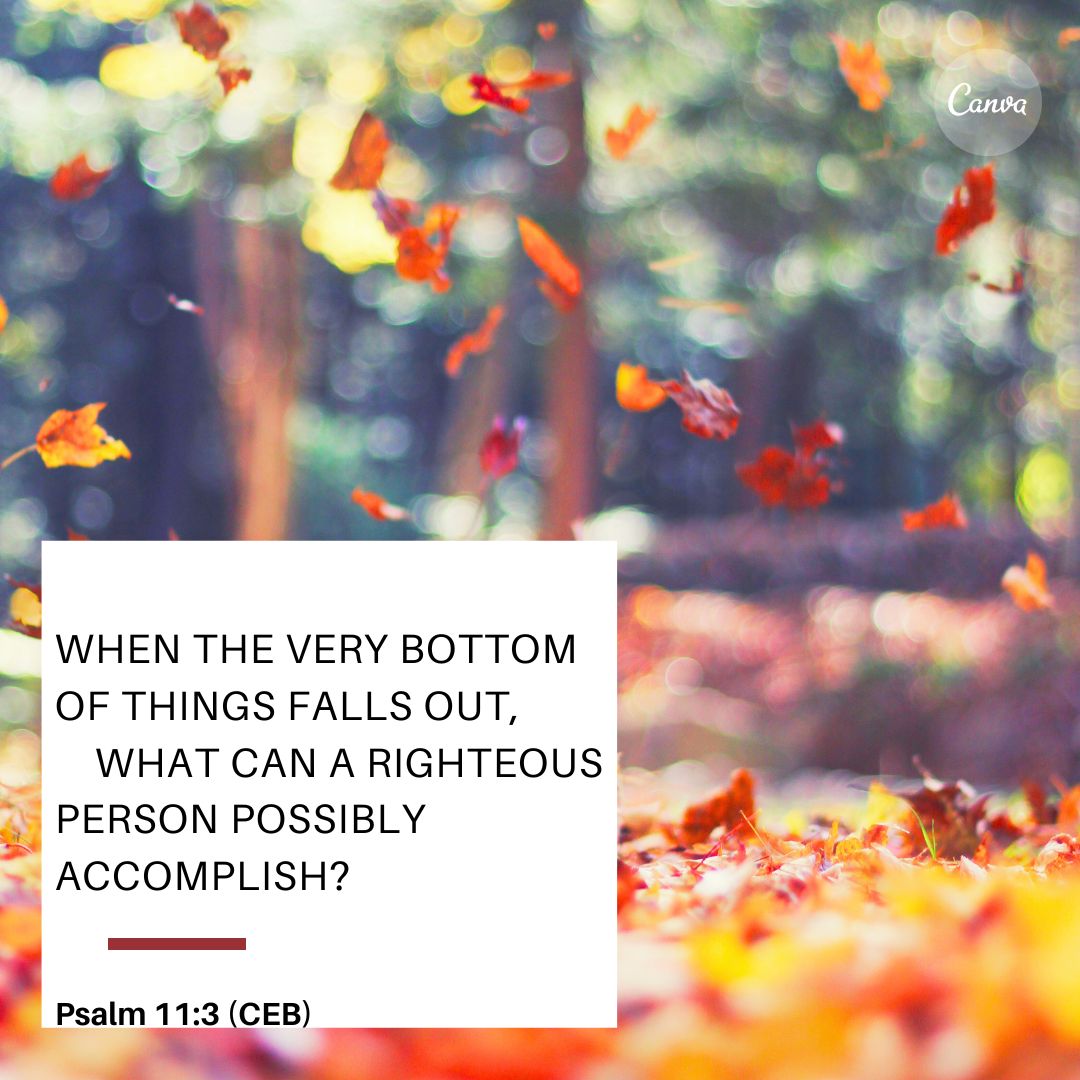
While completely irrational and contrary to everything I know to be true, my stubborn spirit was unrelenting. It’s like the question the psalmist asks in Psalm 11:3. I justified it to myself by saying, It’s just a season. I’ll pick up where I left off when she’s older. God, however, felt otherwise.

Over the past few weeks, God has been whispering into my soul. His words are simple and logical. He says, “You can find new places and spaces in your life to be with me.”

Yet as a creature of habit, I resist these kinds of messages. While I think change is fine for other people, I really am not interested in practicing it myself. My stool is a venerated object–the kitchen my sacred space–the end. But here’s the thing God is teaching me: Anyplace is sacred once God enters in. Think about where you worship God. Is it really limited to one concrete place? When I’m being honest, I can recognize that I have worshiped God by campfires, in cars, on airplanes, in the shower, at huge events, and in the darkness of my bedroom at night. Experiencing God is not a function of place, but of purpose. And it’s not predicated on what worked in the past, but on where we find ourselves in the present.

While most of us resist it, life is change. Seasons come and go. We grow and evolve. Hopefully we mature. We experience new things that broaden our minds and enhance our understanding. But too often, as people of faith, we tie ourselves to the past and refuse to move forward. There’s comfort and familiarity in the way we’ve always done something–but it’s not realistic or sustainable. We don’t worship a God who lives in the past, but one who is moving and acting and saving in the present. He’s ready and eager to meet us wherever we are. As Psalm 11 continues…

The Lord is always in his holy temple, so we don’t need to get caught up in ideas of place or space. God will meet us wherever we are, in whatever season we’re in, to fill us up so that we can go forth and serve in his name. This week, give thanks for all of the things you loved in the past, including those special places where you encountered God. Then, take a deep breath, and walk with anticipation with God (and maybe a puppy) into the future.

Blessings and Peace

Sara

A Future of Impossible Hope

As I write this today, any number of awful things are happening in the world. Communities have been devastated by fire, flood, and wind. Wars rage, violence erupts on city streets, governments that are supposed to protect oppress instead. Tragedy strikes, grief lingers, jobs are lost, and doctors can offer little to ease the mind. Sometimes, it doesn’t seem like God likes us very much, let alone loves us.

In my experience, one of the biggest stumbling blocks to faith for people who are non-believers lies in the absolute tyranny of life itself. How can a God who is love sit idly by while tragedy strikes, trauma endures, sickness continues, and injustice abounds? Truth be told, the most reasoned and best articulated answer I can give people who question God’s motives is simply this: The world is broken, and sometimes, it sucks.

But I can also unequivocally tell you this–God does love us, and the proof of that is everywhere. It’s in early-morning hours as the peachy orange of a new dawn slowly pushes the night away and the birds emerge from their slumber to sing the day into being. It’s in the praise song that fills my heart and compels me to sing as I take my son to early morning band practice. It’s in the daily reminders that my life is full of people who love me: texts from my mom sharing news of the day, calls from my sister while she’s waiting in the drive-thru lane at Starbucks, Sunday evening conversations with my in-laws as we unpack our week. God’s love is in the rhythm of daily living that my husband and I have cultivated together over the past 19 years, full of conversations about everything and nothing, laughter and love. It’s in those moments where I look at my boys and see glimpses of the thoughtful and talented men they are becoming, realizing that God is working in their lives even when I don’t notice.

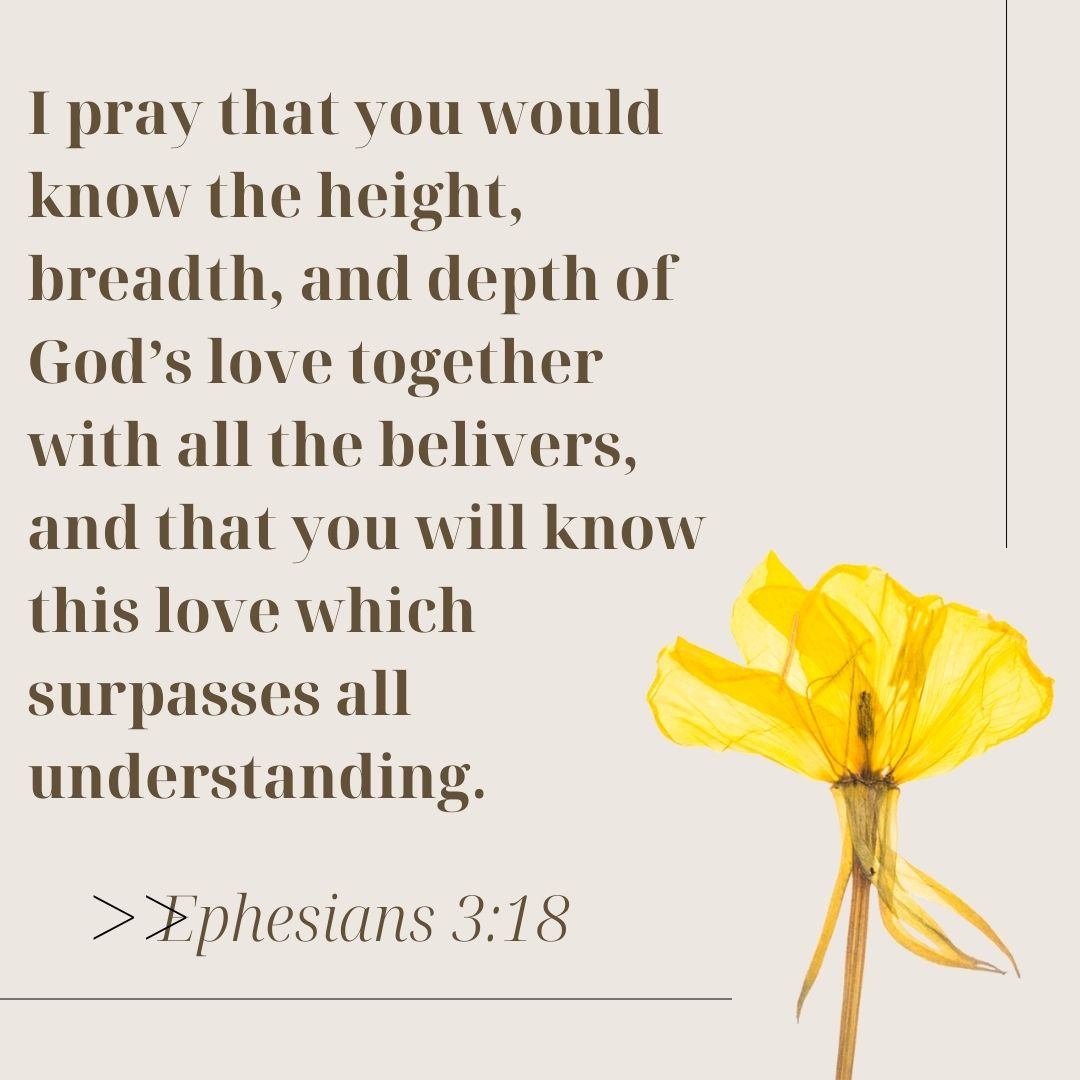
When your heart is full of compassion and kindness, that is God’s love shining through. Paul reminds us in the letter to the Ephesians that God’s love doesn’t just skim the surface of life. It’s not temporal or transactional. It doesn’t ebb and flow. Instead, it is deep and wide, reaching well above and beyond anything we can grasp, let alone comprehend.

I think if people truly understood the height, width, depth, and breadth of God’s love, if they knew they are well and truly loved completely, then I have to think the world would change. This, then, is our mission as those who already know God’s all-surpassing and ever-encompassing love: We must be bearers of love until every person on this planet knows there is something bigger, something more powerful, something more sacred than what our eyes can see. If we truly want others to know God, then we need to love them.

And so, today, I offer this prayer:

God, give us courage and strength to love as you have loved.

God, give us patience and wisdom to love those whom you love.

God, give us compassion and understanding when we are seeking to share your love.

God, give us power to show love in ways that help others see there is a greater love.

And God, let us love because you love us.

In Jesus’ Name…Amen

The Greatest Mystery of All

Knowledge…it is something I value above most things. As a writer, my favorite days are research days…when I spend hours combing through Google articles, my eyes scanning texts for nuggets of information as my fingers tap out questions like: Why did megalodons go extinct? How does the filibuster actually work? Who invented the water slide? What exactly does G-force mean? And though sometimes it takes a bit of digging and much cross-referencing of sources, I can usually come up with the answer (the climate changed, hard to say–but one of the first recorded water rides was built in New Zealand in 1906, the force of gravity or acceleration on the body).

Whenever someone in our house is feeling unwell, I turn to Google for a diagnosis before calling the doctor’s office. When our beloved Newfie passed away last month, I researched pet cremation because I wanted to know what would happen to him next. And when my brand new sewing machine quit working correctly, I turned to YouTube to figure out how to fix it myself–and learned about the function of tension in the process!

People say that knowledge is power, but its power comes from the fact that it leads to understanding. And understanding leads to informed decisions.

That’s why it often confounds me that so much of faith is still a mystery. Despite all of my knowledge of God, I still have so many unanswered questions. Why does God let people suffer? How does eternity work? Is heaven really a place in the hereafter, or do we have it all wrong? Will God truly send people away from him after working so hard to save humanity? If God forgives and forgets, why do so many churches still talk about judgement? And how can God really be everywhere at once?

Yet as I was meditating on Psalm 8 last week, a thought occurred to me. Though there are many mysteries in this life of faith, perhaps the biggest mystery of all is that God loves us.

We are a people who spend most of our waking moments focused on our selves–on our self-preservation and self-perpetuation. If I’m being honest, I would have to say that a large chunk of my thoughts are self-directed, from pondering what I want to eat to thinking through conversations in my head, it’s all about me, myself, and I. Sound familiar?

And yet, God loves us anyway. Why? We’ve never once given him a reason to do so. In fact, a quick scroll through history will show that we’ve given God ample reasons to wash his hands of us. But instead, he keeps calling. From the beginning to the end, our Father who loves seeks us out and gathers us home. And this all-consuming love of God is, I think, the greatest and most holy mystery of faith–a strange and perplexing force out there hovering in the cosmos like the Oort Cloud (Google it). I can’t tell you why God continues to love us–it’s enough to know that he does.

God set us apart…making us just less than divine, Psalms says, but crowning us with God’s own glory and grandeur. It’s overwhelming to think about–kind of like looking up into the vastness of the night sky. When I consider the stars, I am diminished. I remember that in the grand scheme of the universe, I am but a blink, a breath, a bubble. When I’m gone, I will leave nothing lasting–nothing immemorial. My name will not become a question future Jeopardy contestants will answer. But yet, God says, “You matter to me.” And he says the same to you.

How do we respond to such a mystery? How do we let the knowledge of God’s unfathomable love shape us? My hope is that it moves us out of ourselves just a little bit farther and closer to the one God has called each of us to become in him.

This week, I would encourage you to spend some time outside looking to the sky. Lose yourself in the great cosmos of stars and planets that circle above. Be small, and in that smallness remember how very much you are loved. And let that love be enough.

Blessings and Peace,

Sara

Go, Set a Watch

Several years ago now, when my boys were still little and cute and cuddly–before the teen years set in and they knew more, wanted more, and looked at the world through slightly more jaded eyes–in a time and place that now seems kind of like a “once upon a time”, my boys stood watch at our front door.

We have a picture of them, standing stair-stepped side-by-side as the sun poured in through the screen door. Their faces are turned away from the camera–looking outward into the big, wide world. Their bodies seem poised, ready to spring into action–the camera capturing that moment right before potential energy becomes kinetic. And their eyes, so round, so eager, so full of expectation…the picture makes clear that something is coming, and it is gleefully anticipated.

What was the cause of such a joyful watch? A friend was on his way, and the boys were getting ready to participate in their first-ever sleepover. And so they watched. And so they waited. And so they were ready when the van first appeared, turning the corner onto our street. And so the door was thrown wide into the evening, welcoming the traveler in. And so shouts sprang forth, calling the parents and the dogs to gather: “He’s here! He’s here!” And so the watch was complete, the waited-for moment come to fruition just as the grown-ups had promised. And so there was joy.

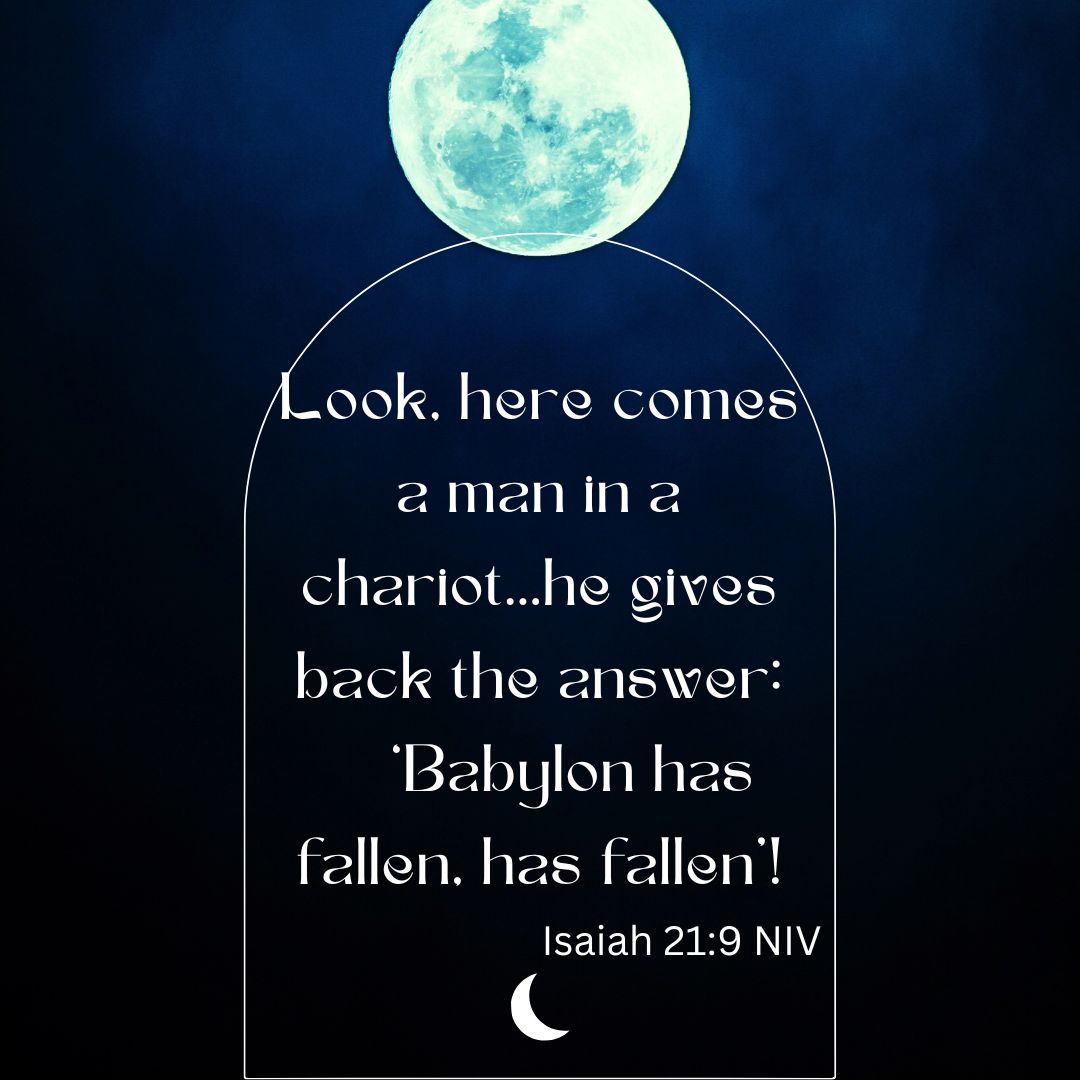
It is with precisely this kind of ardent hope that I read Isaiah 21, as the Lord tells the people of Israel to set a watch–not because invaders are coming–but because news of deliverance is on its way.

Why did the Lord call on the remnant of Israel to set a watch? What were they supposed to be looking for? Nothing short of the miraculous….Babylon, the mighty power that had shattered the Temple and cast Israel into exile–the vast empire that had become the political, economic, and cultural center of ancient Mesopotamia–was under threat. Good news was coming to the remnant of Israel, and God said, “Watch.”

And so, Israel sets a watchman, who stands on the ruined walls of ancient Jerusalem and squints toward the horizon. It is quiet, as the people wait with bated breath. Time seems to stand still, energy suspended in its potential form, until, suddenly, there is a shout from above. A cloud of dust rises in the distance, and as the lookout calls down from the wall, a sound is heard–it is the sound of horses running.

Can you imagine the joy that greeted this pronouncement? Babylon, the nation that had flaunted its power and supposed superiority over the Lord God Almighty had fallen–her idols smashed to the ground. John recounts this moment in the book of Revelation, using it to celebrate God’s final victory over the enemy. Israel watched, and God’s promises were fulfilled.

As I read this passage, I can’t help but think about our churches today. And I wonder…are we watching? Or are we so consumed with self-perpetuation, with our own rules and policies, with numbers and monetary gains, with infighting and sacred cow traditions, that we have forgotten that part of our role is to be the lookout for God’s work in our world?

Like my boys waited and watched with hope and expectation, so we, the people of God, should do the same. We, as God’s church, should be the watchmen on the walls of our community–not looking for invaders or danger–but, as the watchman on Jerusalem’s walls peered toward the horizon seeking that cloud of dust which bore the first sign of God’s good news , so we should position ourselves throughout our communities to ardently seek opportunities to share God’s good news with the world.

As watchmen (or lookouts, if you’d rather), the Church can point to an opportunity for God to be made known–gleefully, joyfully, fervidly, and wholeheartedly. Perhaps we see someone grieving and stop what we’re doing to sit beside them. Maybe we see someone hungry and put our resources to ensuring that they are fed. Are there those in our community who are lonely, and could our churches be the community into which they can connect to something deeper? Do we have an opportunity to speak of God’s freedom to those who are imprisoned, be it a physical cell or one constructed from addiction or mental illness?

Just as he did long ago, so God still calls his people to set a watch, but not a watch of trepidation and despair. Rather, we are called to scan the horizon of our communities with eagerness–to gaze into the vast night of the world and enter into that space bringing the love and light of God.

So go…stand on the watchtower…and expect God to show up.

Blessings and Peace,

Sara

Are You Ready for God to Show Up?

This past Sunday, Christians around the globe gathered in churches scattered far and wide to celebrate something big–the birth of the church. On Pentecost Sunday, we remember the remarkable story of the Holy Spirit roaring like a hurricane throughout the room where the apostles were gathered, branding them as holy vessels with a tongue of fire above their heads, and giving them the ability to speak in many different languages. On that day thousands of years ago, God showed up in a big way. God sent his Spirit…the Advocate…the Breath of God…to fulfill the promise Jesus made to the disciples before he was raised to heaven.

As the disciples spoke, the Spirit was set loose–opening the minds and hearts of countless people from all over the known world to the gospel message.

At its core, Pentecost is a celebration of the Holy Spirit and of God’s awesome power to fulfill each and every one of the promises made in Scripture. It’s a celebration of hope –the hope that we have in God’s mighty power to act in this world and to build his kingdom here…on Earth as it is in heaven.

Sometimes, it can be hard to reconcile the Pentecost story to the world in which we live. There’s too much hate. Too much evil. Too much anger. Too much uncertainty. But lately, I’ve felt a tugging deep within my core–a desire to proclaim the goodness of God to all I meet. It’s like a little spark–a tiny ember popping from a flaming log and shining for a moment in the night sky. It burns in the center of my soul and says, “Tell people what God is doing.” So I’ve been trying. When I hear God speak through a piece of Scripture, devotional reading, or prayer, I send it out in a text message, or even in a chat group at work. Sometimes I omit the words God and Jesus, depending on who I’m reaching out to…but I figure the Holy Spirit will take care of that. As an ember, I’m called to provide a little sizzle, not a full-blown conflagration.

I share my spark in other ways, too–being gracious to those I meet in public, having conversations and listening when interacting with fellow human beings rather than keeping my head down and eyes focused on my phone. And reaching out to build new relationships…to expand my sphere beyond the four walls of my home, or even the many walls of our church building. It’s not always easy, and sometimes there’s a trade-off in time or energy. As an introvert, I prefer cocooning, but I’m trying to follow the pull to be an ember.

Because as the Spirit threw open the doors behind which the disciples hid during Pentecost so they could share the good news of Jesus Christ, so, too, the Spirit calls us forth into the turbulent waters of the world today to share the message of God’s love. It’s not easy. There’s much that stands in the way. But where God wills, the Spirit makes a way…just as it did on Pentecost over two thousand years ago.

The psalmist writes:

#saramsnyder.com

The story of Pentecost is the story of God showing up. But it didn’t end there. History is full of moments when the Spirit has moved. Some have been blazes that have led to national or international revivals, while others have been small sparks in individual lives that have transformed relationships, brought hope in the midst of darkness, or changed the course of a church congregation. There’s SO much the Spirit can do when it is unleashed in our lives, even if it’s just an ember that burns brightly for a moment.

So let’s be embers, my friends. Let’s be the spark of the Spirit and lean into our communities, our nation, our world, and allow God room to move. Let’s be the hands and feet that bring good news to the brokenhearted. Let’s speak to others in words of love. Let’s offer grace to those whom we disagree with. Let’s forgive those who have wronged us. Let’s show mercy to those whom we feel are misguided or wrong. Let’s offer food to the hungry, and care to the homeless. Let’s listen before we speak, and allow others to talk. Let’s greet everyone we meet with kindness. Let’s open our hearts to empathy, and show compassion for those whose journey looks different from ours. Let’s sit with those who mourn, and encourage those who are struggling. Let’s push our each other to be better and to do better.

Most importantly, let’s expect God to show up today. And tomorrow. And the next day. And let’s be ready to follow when he does.

Blessings and Peace,

Sara
NIV Student Bible: Teen Review

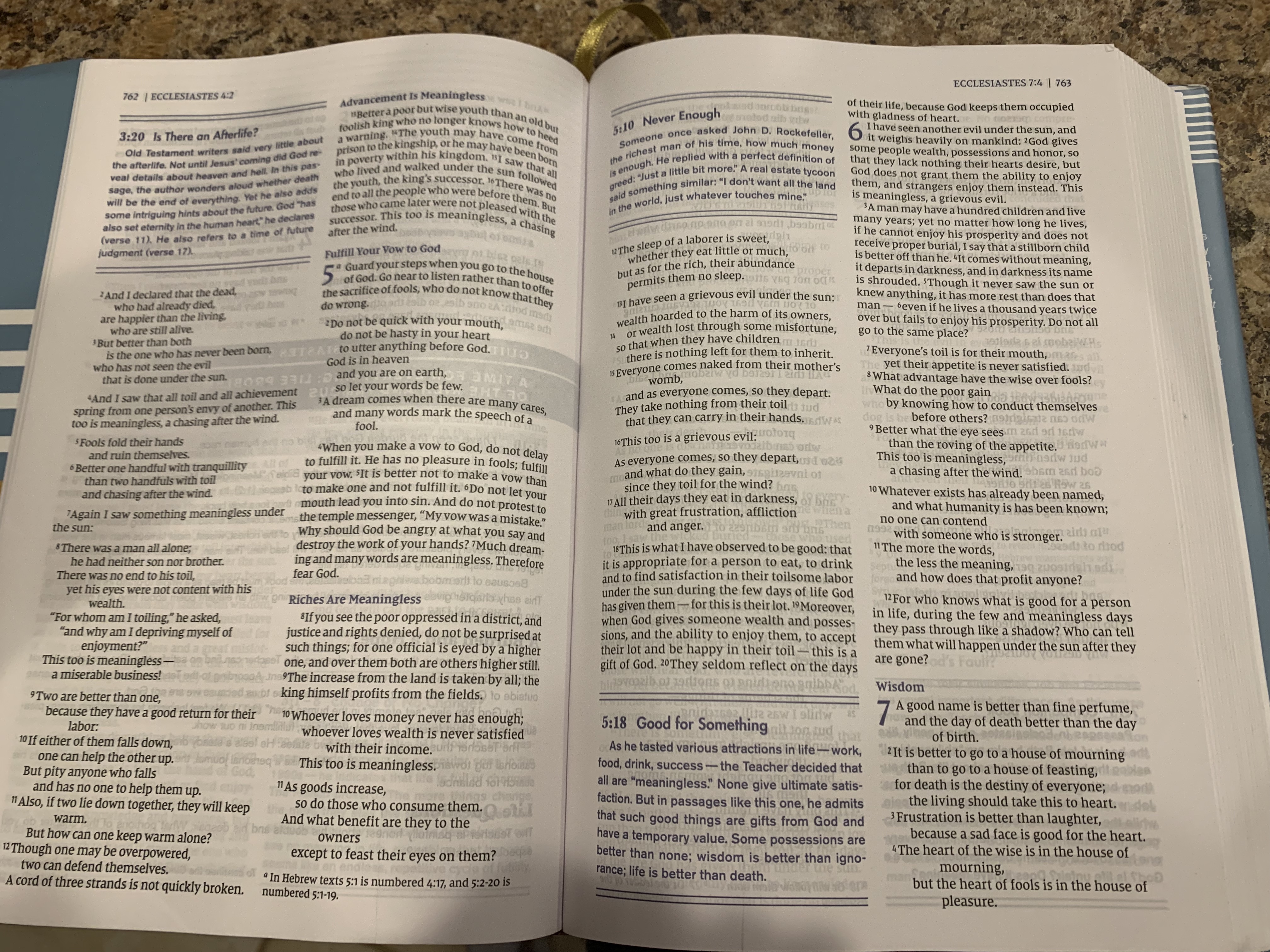
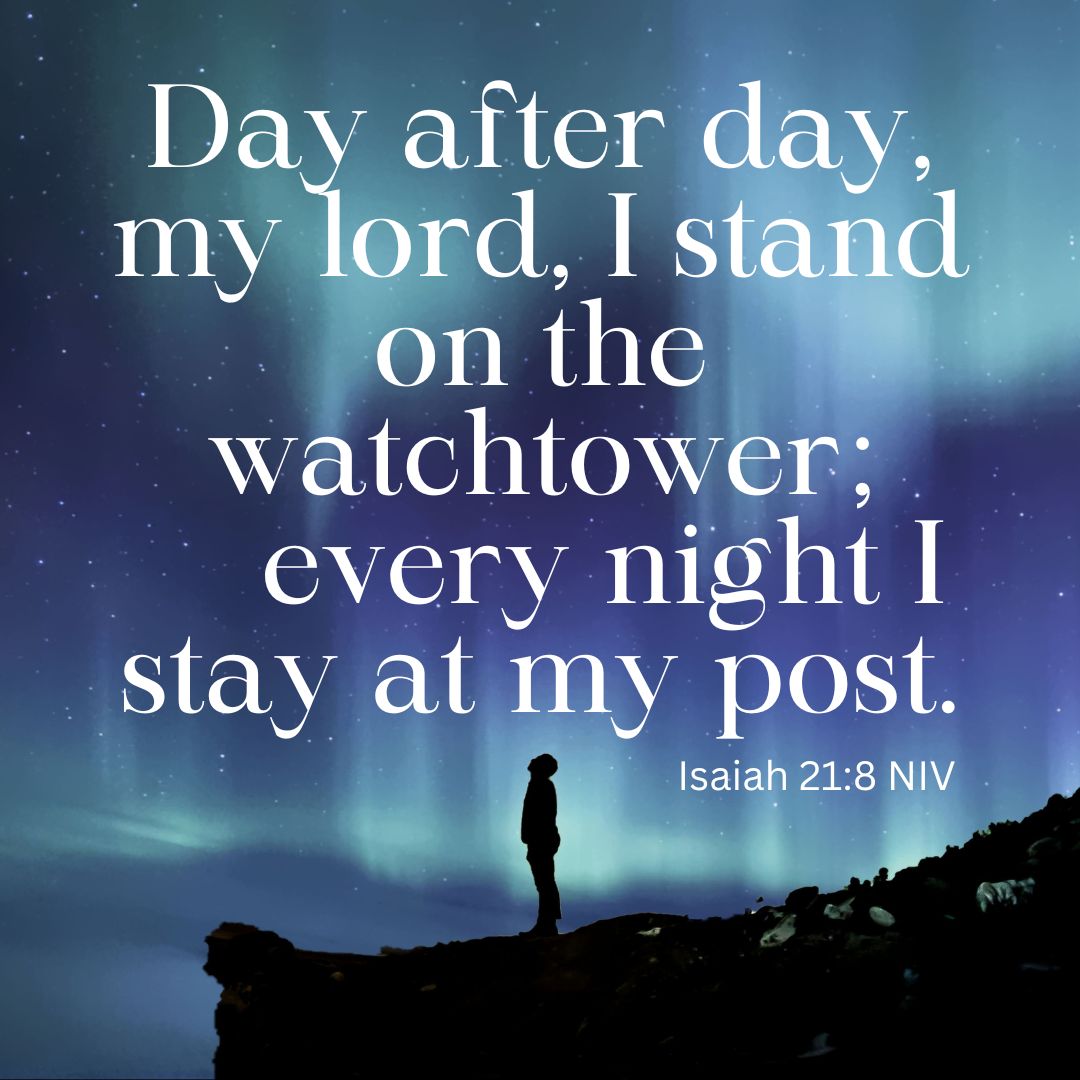
My 14-year-old came home last week talking about the book of Ecclesiastes. This is not a normal circumstance–but I had tasked him with helping me review the new NIV Student Bible from Zondervan, which I was given a free copy of to review as a Bible Gateway BG2 member–and he was taking it seriously.

Actually, what really happened was he started reading the Bible…and really liked it. I remember getting my first NIV Student Bible as a teen–and it transformed the way I read the Bible. Apparently, this new edition, with commentary by bestselling author Phillip Yancey, is doing the same. My son talked to me about Solomon’s words on life–how the king looked out over his vast kingdom, contemplated his vast wealth and abundant life, and declared: “Meaningless! Meaningless! Everything is meaningless!!”

My son commented that, in reading the commentary, he learned that Solomon wasn’t really saying all life is meaningless, just life without God because God gives life meaning. And, he said, the notes in the Bible applied the teaching in a real-world way that made sense to him. My chin might have hit the floor.

You can read more about the new NIV Student Bible from Zondervan here: But I thought I’d let my son fill you in on all the deets that appealed to him.

First, he says the Guided Reading plans are easy to follow…and that he learned a lot from the. He liked the way they were broken down by topic. He also thought the introduction to each Bible book gave a lot of useful information about what was to come, and that the examples included tied into real life and “made sense.”

Then there are the notes, which he says are “nice and helpful to understanding more about the Scripture.”

His overall impression: “All in all, this Bible is nice to use, easy to follow, and there is a lot to learn from it–but this Bible makes it easy to learn. The NIV Student Bible makes understanding the Bible easier.”

After giving me his review, he asked me if he could keep using the Bible, because he is really enjoying reading it. Then he promptly put it back in his backpack, where he’s been carrying it to and from school for two weeks–reading in his spare time both in class and on the bus.

I’m pretty sure I can’t give more of an endorsement than that!

Blessings and Peace,

Sara
Unity in Diversity

What does it mean to be diverse? Technically speaking, it’s just having a variety of stuff, though when we use it we’re generally referring to the inclusion in a group or organization of people from many different backgrounds, ethnicities, and experiences. The kingdom of God has always been a diverse place–you can begin at the beginning to see God’s appreciation of diversity in the makeup of creation. Leaders in the Old Testament came from different backgrounds, and the people of Israel sometimes welcomed “outsiders” into their fold. Ruth was from Moab, God saved the Ninevites, and the disciples themselves were a motley crew made up of fisherman, a doctor, a tax collector, a Hellenized Jew, and eventually one of the most bigoted Jewish leaders. Moreover, Jesus often spoke to diverse groups of people, welcoming the upper crust, no crust, and even Samaritans to God’s feast of love.

Jesus made clear through both walk and talk that the Gospel is for everyone–a message solidified in Peter’s vision in Acts 10, and Paul’s words in Galatians 3 that there is neither Jew nor Greek, slave nor free, male nor female in God’s kingdom.

Though unity is central in the body of Christ (look at Acts 2 and the oneness of the believers), diversity is as well. The early church was highly diverse. There were people from different races, zip codes, cultures, theologies, and income levels who came together united under the banner that Jesus saves. Was there conflict? Of course! And there was positioning and posturing and power grabbing, too. But time and again the church leaders sought to resolve conflict by taking the path of love because they understood that what mattered most was the transformation of the world through the gospel message of Jesus Christ. (Acts 15:6-21) Peter affirmed to the Jerusalem Council that both circumcised and uncircumcised were saved in the same way–by the grace of Christ Jesus.

In the 3rd letter of John, the apostle writes to a dear friend and shares that he and his team of missionaries have been barred from a church because of Diotrephes–a seemingly self-appointed gatekeeper who has taken umbrage with John’s message, even resorting to spreading “malicious nonsense” about John and his followers. However, John also expresses his intent to call this bully out the next time he’s in town…because in the kingdom of God, there is no room for bullies.

Lately, I have been troubled at the bullying supposedly good “Christians” have been doing–seeking to marginalize, castigate, and even dehumanize others, and barring them from the love of Jesus Christ. John’s words about the malicious nonsense being spread ring true in the hate-filled rhetoric and mean-spirited laws aimed at the LGBTQ community, as well as Asian Americans, Latin American immigrants, and the Jewish community. The things being spread on social media, shouted by politicians, and enacted in law are nonsense at best, and a fomentation of violence at worst.

Did you know that LGBTQ teens are nearly 4 times more likely to attempt suicide than their peers? And it’s not because of who they are, but how they have been stigmatized and traumatized by their communities. These youth also experience bullying at a much more significant rate than their peers, and are more likely to be both physically and sexually assaulted.

As Jesus followers, we are called to be greeters, not gatekeepers.

I know many Christians have differing views about Scripture and the LGBTQ community–but as someone who has friends in the community, and as someone who has prayerfully studied the Bible with academic insight, I cannot abide the hate some believers spew in Jesus’ name.

Jesus calls us to servant leadership borne of love. His arms are open (John 3:16-18) as he seeks the salvation of all. As Jesus followers, we are called to be greeters, not gatekeepers.

You can agree or disagree with my theology…I don’t mind. The apostles themselves didn’t always agree, but it doesn’t give us the right to be mean or abusive. Jesus never said to hate those who differ from you, to persecute those who are different. He didn’t call his disciples to weaponize his words, or to bully salvation into others (though that’s what some in history have done). No, Jesus said to love others, because it is through loving that we introduce others God.

Blessings and Peace–and Love,

Sara

A Roller Coaster of a Ride

Several years ago, my father-in-law experienced a significant health scare. Though he is well now, I remember that time as being a veritable roller coaster of emotions. Initially, doctors thought healing my father-law would be simple…relief…but that relief became alarm very quickly as surgeons were consulted. Confusion then set in, as one department said, “Sure! We can fix this!” and the other said, “No, we really can’t.” But we weren’t done yet. For just as it seemed we had a tenuous path forward, a surgeon said the most terrifying phrase of all–this could potentially lead to death. The bottom dropped. And still, the ride continued, because the next morning what had been the…worst…prognosis…was suddenly spun around once more, as the partnering physician said, “Actually, I do this everyday. It’s going to be a piece of cake.”

I remember sitting in the surgical waiting room, trying to keep my brain busy as we sat on tenterhooks awaiting news. And then, suddenly, the door a door was thrown open, and the surgeon gleefully pranced inside (the man literally had a spring in his step) proclaiming the surgery a triumphant success. Thank God! Hallelujah! Where’s the wine?

Just a few short hours later, I was with my father-in-law in the ICU room as a nurse checked his cognitive function. As she asked him why he was in the hospital, my father-in-law, never missing a beat, pulled out his trademark humor and said: “I had br-a-a-a-in surgery.” Laughing, I knew we were going to be okay.

Life can feel like a roller coaster sometimes, can’t it? Things are chugging along smoothly, then the bottom drops out. We’re struggling up a hill that seems as if it will go on forever, but then all of a sudden, we’ve reached the summit and the whole world stretches before us. There are sudden turns, jarring moments of flailing upside down, but also smooth straightaways where we can sit back, smile, and enjoy the breeze.

This, in a nutshell, is Holy Week. We begin at Palm Sunday with joyous crowds, loud hosannas, and hope for tomorrow, only to be tempered a bit by the solemnity of Maundy Thursday as Jesus offers a new cup. Friday is an absolute horror show, as the crowds suddenly turn on the one they were exalting to shout, “Crucify him!” And then Saturday dawns, dark, somber, joyless with the disciples asking from their closed room, “How did this happen?” Of course, we know how it happened, as God spoke it from the very beginning of the story.

Luke 2 might seem an odd place to land when contemplating the Easter story…but the events of Holy Week are encapsulated for us in the words of Simeon as he beholds the Messiah.

Simeon tells Mary and Joseph that their child will bring salvation….but even more fantastical, it will be a salvation for ALL people–not just the Jews. Hallelujah, right? We are cresting the hilltop–but wait–Simeon isn’t finished yet. Looking straight at Mary he says:

What?! How did we go from salvation to sword so quickly? Ask Peter…he knows (John 18:10) Simeon makes it clear that along the path to salvation will be both joy and sorrow–and that Mary, this new mother still reeling from all that has happened and been revealed these past nine months, will find her heart broken open by this infant she cradles in her arms.

I wonder how Mary responded. Did she look at Joseph and murmur, “This dude is loco.” Or did she feel an inkling of fear shivering up her spine? Maybe she walked out of the Temple and decided it was time for a nap, as I can’t imagine she’d been getting much sleep and things often appear worse when you’re tired.

Regardless, Simeon’s words echo throughout the Gospel story–that the work this child born under such remarkable circumstances was called to do will bring about such turmoil and upheaval, both within our innermost beings and out in the midst of a broken and volatile world. There will be highs, and there will be lows. We will be caught off guard–or perhaps snoozing, like the disciples. (Matthew 26:40-42) We will shout, and we will cry. We will be stunned into silence. But we will also stand in awe at the absolute marvel that God has wrought in bringing about our reconciliation to him.

As we enter into this Holy Week, let us do so remembering that salvation is messy work. Be willing to experience all of the emotions this week brings–not skipping past the dips and turns and gravity-defying inversions. Instead, let’s walk with Jesus as he moves from palms to hyssop–as he listens to exaltations becoming jeers–as he asks for the cup to be taken from him, but affirms God’s will be done. Take the roller coaster ride of the salvation story this week–because when the cart finally pulls back into the station, we’ll be ready for the joy.

Blessings and Peace,

Sara

Unscheduled Stops

In our family, we love a good road trip. Part of the magic of trekking across this vast landscape we call America is leaving room for new adventures that might present themselves as we roll along. A few years ago, as we were driving through the Southwest, we saw that we were closer to the Petrified Forest than we realized. So, we stopped and spent a lovely few hours hiking through ancient (or beyond ancient) rocks–marveling at the grandeur and majesty of God. This past summer, we headed East to Washington, D.C. With no plans one evening, we made our way to the U.S. Capitol and sat on the steps of this hallowed seat of government, visiting with a group of veterans who had come to exercise their Constitutional rights in the push to secure funding for service members who had become ill in the course of their duty. More recently, on a work trip to Philadelphia, I spent half a day wandering the city and exploring some of its history–going wherever the spirit of inquiry led me, delighting in learning more about the marvelous mayhem that was our nation’s founding.

At this point, you’re probably thinking that you didn’t click onto this post to read about my travel history…and that’s a fair critique. So let me get to the point…In this day and age, we lead hyper scheduled lives. Look at your calendar and see how many empty days you have. We don’t have a free Saturday until February 25. Our daily schedules follow a same pattern–minutes carefully accounted for from the moment we wake to the moment our heads hit the pillow once again. Yet all of this scheduling poses a problem for our practice of faith, because God doesn’t move according to our schedules. He has his own, and it often looks nothing like ours.

I love this passage from the Gospel of John. Jesus is talking to Nicodemus, a Pharisee, who wants to believe in salvation, but Jesus’s words just don’t gel with his understanding. Everything in Nicodemus’s life says to follow the path of tradition. Hold fast to your education, maintain your daily practices, adhere to the schedule established in the Book of Law. And so, Nicodemus says to Jesus, “This doesn’t make any sense. It’s completely illogical.”

And, in the most aggravatingly awesome way ever, Jesus responds…Yes. You’re exactly right.

Instead of walking Nicodemus through the law (see Peter’s speech in Acts 2:14-41 for that), Jesus essentially tells him that God’s plan goes against everything Nicodemus has ever expected, and that he just needs to get over that and accept that things are going to be different. God’s Spirit goes where it wants to, Jesus says. You can follow, or not.

Personally, I find a lot of relief in Jesus’s response to Nicodemus. It takes the pressure off my already overtaxed brain to figure something else out. It’s one less thing I need to have an answer for. God has his own plan, and I can follow or not. But like Nicodemus, following God’s spirit might require some unscheduled stops–or even a full-out detour from the present path.

God doesn’t care about our schedules, which I know from personal experience, as He has disrupted nearly every plan I’ve ever had for my life. If you don’t believe that God is the Great Disrupter of Schedules, a cursory glance through Scripture should confirm this truth. Try Abraham, or Jacob, or Joseph, or Moses, or Hannah, or Ruth, or Mary, or Peter, or Paul….the Bible is full of human plans usurped by God’s eternal ones.

Part of being a follower of Christ means that we must be ready for unscheduled stops because we know that the Spirit blows wherever God wills. Maybe it’s a co-worker who needs some encouragement when we have a deadline to meet. Or maybe it’s our child who wants to talk ad nauseam about seemingly mundane things (but really just wants to be with us) when we’re simply trying to relax and unwind from a hectic day. Perhaps it’s a request for financial assistance when we had planned to use our resources on something completely different (and likely more fun). Sometimes, it’s even upending our calendars to make room for work that God is doing somewhere else.

Jesus reminds us, in the Gospel of John, that wherever he is, there his servants should be. If we truly seek to follow the path that Jesus has laid out, then we have to be okay with unscheduled stops along the way. As you and I ponder our calendars, make plans for the days ahead, I would encourage each of us to leave some room to follow where God’s Spirit leads. As with some of our best vacations experiences…the unscheduled stops are sometimes the best.

Blessings and Peace,

Sara
Stop Persisting

“Mom,” my 16-year-old said, looking down at me on my hands and knees, pulling armfuls of dead leaves from beneath a thorny bush. “You know the wind’s just blowing the leaves back under there, right? I think you need to stop aiming for perfection.” With a sigh, I looked at the leaves scuttling along the footpath…inching their way toward the bushes…gleefully taunting me in my efforts to clear them from the yard.

“I just need to get a few more,” I replied, reaching my tired arms forward to pull another bunch from beneath the bush. After all, this was a church mission project…and I was supposed to be working on behalf of God. Perfection seemed appropriate. My son shook his head. He knew what I didn’t want to admit–there will always be just a few more leaves to get.

We live in a society that relentlessly pushes us toward perfection–the perfect body, the perfect marriage, the perfect kids, the perfect pet, the perfect job…it goes on and on. Carefully crafted branding messages and pithy social media slogans bombard our senses–perpetuating the push to perfect. Fake it til you make it; If at first you don’t succeed, try and try again; Nothing ventured, nothing gained; Failure is not an option; Keep going; Persist.

The problem with all of this, in my life anyway, is that the drive to be better always leaves me feeling like a failure, because no matter how much harder or smarter I work, perfection remains out of reach. I keep persisting, only to run headlong into the same brick wall time and time again–and the only thing that gets dented is my head! And when I start feeling weak and broken, judgement enters in–of both myself and others. To soothe my own feelings of inadequacy, I turn my ire on others–judging them in their failures to ease my own hurting soul.

This, of course, is the opposite of what God wants for us. God, who comes to us with grace, love, and mercy, never intended for us to bear the brunt of perfection. If we could achieve it on our own, why did we need salvation in the first place? The truth is, we weren’t made for perfection–we were made for God.

It is only when we release the need for perfection, when we resist persisting, that we find ourselves made perfect in God’s love. How is that possible? God created us to be dependent not on ourselves, but on him. God is so much bigger, so much more capable, and so much wiser than we are that it is he who does the heavy lifting for us. When we yield…God picks us up–and he is infinitely more able to transform us than we are to transform ourselves.

The apostle Paul understood this need for humility–a gift he did not naturally possess. In 2nd Corinthians, Paul makes a revealing statement. Though he admits to being vastly superior to most every other human being in his knowledge, fervor, and leadership abilities, he notes that God has given him a “thorn in his side” to carry. The thorn (he doesn’t elaborate on the specifics) vexes him, until he realizes its purpose: God gave Paul the thorn to teach him the lesson he could not learn on his own–surrender. And with that surrender, Paul experienced freedom.

Because he realized his need for God, Paul was able to boast more avidly–not in his own abilities, but in God’s mercy and grace.

Change is hard work, but it doesn’t require more striving, it requires letting go. We must go to God and admit our failures…our tendency to judge, to be jealous, to be petty and conceited and self-righteous. He knows it anyway, but there’s release in the confessing, and then comes the freedom we receive when we finally stop persisting and lean into God’s mercy, knowing that change doesn’t come from us. And accepting that others are undergoing the same transformation.

I like the way Anne Lamott puts it in her book, Hallelujah Anyway: Rediscovering Mercy:

“Over and over, in spite of our awfulness and having squandered our funds, the ticket-taker at the venue waves us on through. Forgiven and included, when we experience this, that we are in this with one another, flailing and starting over in the awful beauty of being humans together, we are saved.”