A Time for Wonder

Today, we find ourselves entering the home stretch of the Advent season. Christmas is in two days and, per usual, I am in manic mode. There are gifts to finish purchasing, stockings to stuff, menus to plan, and goodies to bake. In all of my self-inflicted hustle and bustle, I sometimes forget to pause and reflect on why we celebrate Christmas in the first place. Holidays can easily devolve from celebrations to chores if we’re not careful, and there are times I have teetered on that ledge–or nose-dived right off it!

So now, I’m reflecting on the writings of the minor prophets: specifically, the books of Haggai, Zechariah, and Malachi. These three prophets lived and worked in the post-exilic period, after the Israelites had returned from Babylon. There was a lot of work to do–the land was in ruins. So this group devoted themselves to putting the pieces of their nation back together. It was busy work and, as happens in the midst of busyness, the people were neglecting God again. The prophets were there to remind them that, although the work of rebuilding the nation of Israel was important, most important was their continued faithfulness to God and his law. Kind of like our to-do lists, right?

And yet, I have found, that when we set aside our “must…keep…pushing…through” items and focus our souls on God, he shows up in such unexpected and remarkable ways that we can’t help but, as the hymn proclaims, stand in awesome wonder. Last year, about this time, a moment of awesome wonder came in my kitchen as I was sitting on the little wooden step stool my husband’s grandfather made long ago and which has become my Bible time stool. I was reading through the book of Malachi. Like his contemporaries Haggai and Zechariah, Malachi was urging the people to remain faithful to God, and chastising them for prioritizing other tasks and only giving God the left-overs of their daily lives. But Malachi was also speaking beyond the present, prophesying a time to come when God would judge between the faithful and the faithless, setting aside a people to call his own. Chapter four of Malachi ends this proclamation:

#saramsnyder.com

I quickly turned the page to see what would happen next, and was flummoxed to discover that there were no more words. What?! I thought to myself. That’s it? Truth be told, there’s one more verse–it says God will come and strike the land with total destruction. (Malachi 4:6) Quite the exclamation point! But I want to focus on the proclamation–the promise of Elijah before the day of the Lord’s arrival.

As I flipped ahead through the next several pages of historical commentary in my Bible, somewhat disgruntled by the lack of resolution on the author’s part, it dawned on me…Malachi ends abruptly because the story’s not done. Flipping quickly to the book of Matthew I sat, stunned, as I looked at the words before me. For the first time ever, I was awed, not by God’s word, but by a genealogical list of names.

Normally, when it comes to biblical genealogy, I just skim through it. But what stunned me, what awed me, weren’t the names themselves, but the fact that God had been continuing the story for generations, even after the prophets in Scripture had gone silent. Malachi spoke of the coming of Elijah in 430 B.C., and in the first-written synoptic gospel around 60 A.D., we have John the Baptist, an Elijah-like figure, living in the Judea wilderness and preaching a gospel of repentance in preparation for the coming of the Lord.

The final word in the Old Testament is a promise of the Lord’s coming. Then there’s silence. Time moves on. One generation gives way to the next. Nations rise and fall. Yet the minutiae of life keeps moving, like a time-lapse video, different figures blurring together as they move in an out of the same scene. Years pass…hundreds of them in which people are born, in which they live and laugh and love and cry, in which they die and are laid to rest with all of those who have gone before. And the Earth keeps turning.

It’s quiet. It’s ordinary. Until one day, in an ordinary time in an ordinary place, an angel delivers a message to a young man and a young woman that will change everything. While many people had long ago stopped expecting God’s promises to be fulfilled, God hadn’t forgotten. From Malachi to Matthew (and Mark and Luke) God had a plan, and what we celebrate at Christmas is the fulfillment of that plan.

#saramsnyder.com

This, then, is what fills me with awe. That God came in a moment when it was least expected–in a time when many had likely written off his promise of a messiah as a myth or legend–a story of hope to be shared, but not really to be anticipated. God continued the story…for thousands of years! And it’s a story he’s continuing to write–his words etched into the hearts of all those who love him–his promises yet to be fulfilled.

As the shepherds did on a night long ago, I stand (or sit) in awesome wonder of God’s work. I’m overwhelmed by the depth and breadth of his faithfulness. For me, this Christmas is about hope. The hope that God is faithful, that all of his promises will come to fruition in his time and in his way. God never gives up. He came when everyone least expected it, and in a way that no one could have foretold.

My prayer for you as we enter the Christmas season is that you, too, will have an experience of God that leaves you standing in awesome wonder. Are you looking? Are you waiting? Fear not! God will come.

Blessings and Peace,

Sara

On Faith and Politics

Today, we are one week out from the 2024 presidential election. Many people I’ve spoken with are feeling an inordinate amount of anxiety about this presidential race, and who can blame them, with both parties catastrophizing the outcome. I’m mostly sad and disappointed, and I’m tired of the fact that we seem to be acting like a nation of toddlers. But as I look back at our past, it seems we were always this way.

As an amateur historian, I find that history grounds me, especially in our current age of aggrandizing every event into the most whatever thing that’s ever happened. American politics has always been a hot mess, and elections haven’t always been peaceable or straightforward. In the election of 1800, for instance, a deadlocked House of Representatives couldn’t reach an agreement on who should become president. Mobs formed in the streets and the governors of Virginia and Pennsylvania began readying their militias for action before the politicians were able to get it together and elect Thomas Jefferson. In 1828, four Democratic-Republicans ran against each other for the top job, splitting electoral votes and forcing the election (again) to the House of Representatives, who made a so-called “corrupt bargain” and installed JQ Adams rather than Andrew Jackson as president, even though Jackson had won the popular vote. Then, of course, there was the election of 1860, which resulted in an entire swath of the nation seceding from the Union and a nearly 5-year-long bloodbath that we call the Civil War.

I’ve said many times in this space that, in my opinion, the biggest threat to our contemporary church in the United States is the politicalization of our faith. We have made an idol of politics, worshiping the doctrine of political parties and seeking salvation in elected leaders. But the thing is, Jesus wasn’t interested in politics….at least, not politics in the traditional sense of the word. In both word and deed, Jesus sought to bring the good news of God’s salvation to all people, tearing down systems of oppression in the process.

Jesus didn’t mess with political campaigns. He didn’t seek out political leaders, nor did he attempt to make himself a space in the political sphere. It’s not that Jesus wasn’t aware of what was happening politically, or that he didn’t care. He just understood that there was something bigger.

In Matthew 11, John the Baptist sends some of his disciples to speak with Jesus. John had spent his entire adult life preparing the way for the Messiah. He had preached a gospel of repentance, leading people into the wilderness to pray and learn and fast and be baptized. He had witnessed that divine moment when Jesus rose from the Jordan River and God had claimed him as his one and only son. But time has passed. Things were not great on the ground in Judea. The Romans were still oppressive, there was still massive inequality, the religious leaders were still hypocrites, and John himself was languishing in prison. Beaten, broken, sensing the end of his time drawing near, John implores Jesus to bring him peace of mind. Are you really the promised Messiah? John asks. Or should we keep looking?

It’s a simple yes or no question, right? But Jesus doesn’t really do yes or no. Instead of affirming John’s query and easing his troubled mind, Jesus tells John’s disciples to….

I love this response, because it’s such a teacherly thing to do. John wants Jesus to tell him what he wants to hear. But Jesus cares too much about John to do that. Instead, Jesus says, watch me.

Watch me. Look at what I’m doing. See the difference it is making. Where there was sickness, there is healing. Where there was death, there is life. Where there was despair, there is hope. Watch me. Then determine for yourself if I am who you think I am.

There are a lot of politicians who claim the name of Jesus in their rhetoric, but I would argue that if their message isn’t bringing healing, life, and hope, then they are not really following in Jesus’ footsteps. And the same is true for us. If our words, whether in person or online, and if our actions are not bringing healing, life, and hope to others, then we have veered wildly from the path which Jesus calls us to follow. We cannot espouse vitriol in one breath and love of Christ in another. That’s not the way it works. If we’re watching Jesus, then our lives should look a little different.

In the book of John, Jesus puts it this way:

Jesus tells his disciples that they should be characterized by love…but not the Hallmark movie kind of love…. but the Jesus kind of love. Jesus gave himself to us courageously, determinedly, trustingly, full-bodily, continuously, selflessly, single-mindedly so that others could experience healing, life, and hope. And if we are to be his disciples, then we must watch, learn, and do likewise.

So next Tuesday, we should vote. But we should also do some kingdom work. Volunteer for an hour or so at a food pantry. Visit someone in the hospital. Check in with a neighbor. Hand out blessing bags to those in need. Send a note of encouragement to someone who is struggling. Post your favorite Scripture verse to your favorite social media site. Pay for someone’s groceries. Let’s let others know that there’s something greater than politics at work in our lives, and that the same grace and love we share can be theirs, as well.

In her book, Savor: Living Abundantly Where You Are, As You Are, author Shauna Niequist writes of the role that the church (and its people) should play in our world. She says, “The church is at its best…when it is more than a set of ideas and ideals, when it is a working, living, breathing, on-the-ground, in-the-mess force for good in our cities and towns.”

In this season of political uncertainty, let’s be the body of Christ for a nation and world in need. Watch Jesus. Then follow his lead.

Blessings and Peace,

Sara

Thomas Nelson Bible Roundup: Kids, Max Lucado, and Pretty in Purple

As most of you know, I LOVE Bibles! I love the heavy weight of a Bible in my hands as I sit and study Scripture. I love the crinkly sound of tissue-thin pages being turned, and the sharp smell of paper mingling with ink that wafts up as one page gives way to another. Reading the Bible is an act of communion for me–it is, at the same time, both tactile and ethereal–a mingling of body, soul, and mind as I read, reflect, write, and converse with God. So, I’m always excited when Thomas Nelson sends out the next round of Bibles to be reviewed. Not only do I get to sample different versions of our faith’s guiding text, but I get to share them with others!

Here is the latest Thomas Nelson Bible Roundup.

Pros: This Bible has several features that can help kids relate to the text, including profiles of people in Scripture, definitions of words like genealogy, and action articles that help kids practice their faith in the real world.

Cons: Like many kids’ Bibles, it doesn’t fully address the fact that Bible literacy is tough for kids. While the explanatory articles are great, asking kids to read more when they’re already struggling to comprehend could be a deal-breaker for many of them. It’s very text-heavy, with few pictures or illustrations, which is also tough for kids, and some of the “Live It” commentaries are pithy.

Overall: This is an okay study Bible option for upper elementary and middle grade readers. I would be inclined to use it in a small group or Sunday school setting. However, I feel like it trivializes some big questions of faith that kids are perfectly capable of thinking and talking about.

Pros: If you’re a fan of Max Lucado’s work, then you will love this Bible. It breaks the text into daily readings so you can get through the Bible in a year, and it includes short reflections on Scripture passages by Lucado himself.

Cons: Because you’re going through the Bible in one year, the reading is not light. You’ll need a dedicated chunk of time each day to get it done. Also, the writings from Lucado are pulled from his published work–so, no new content.

Overall: A great choice for Lucado fans, or those interested in tackling the Bible from cover to cover in on year.

Pros: This Bible is all about the beauty. From the gold filigree and stamped leather markings on the cover, to the gorgeous text type within, there’s a reason this is the publisher’s “Sovereign Collection.” I love that, textually, this Bible is no-frills. There are no reflections, commentaries, spotlights, etc., which makes the Bible light and portable. I can easily see myself popping this Bible into a bag and hitting the road. Plus, because there aren’t a lot of extra features inside, there’s plenty of room in the margins for note-taking.

Cons: There aren’t extra features included in this Bible, so if you want reflections or commentary, you’re going to need to look elsewhere. And, it’s pricier than the other Bibles in this review.

Overall: I love this one. It’s both light and sturdy, which makes it a great Bible to carry around. And it’s beautiful.

No matter the Bible you choose, spending time in God’s Word is paramount to faith development. It’s a way to connect with our Creator, and to better understand who he is, and who we are in relation to him.

Blessings and Peace,

Sara

The Nature of Witness

So, for those of you who don’t know me well, I have a confession to make: I LOVE a good disaster or dystopian story. If meteors are barreling toward Earth, there’s been a nuclear meltdown, or society has been disrupted by an alien invasion–I’m totally in! For me, these stories are kind of like riding a roller coaster. They bring you to the brink of terror, then ease you safely back into the familiar. Beyond that, I find these stories to be an interesting study of humanity. As you watch or read, you’re confronted with real questions about who we are and why we behave the way we do.

That said, when a new dystopian-esque movie released last week, my boys and I didn’t hesitate before hopping in the car and driving the 30 miles or so to see it. The premise of the story is pretty simple–America devolves into another civil war and chaos and violence ensue. The story follows a group of journalists covering the horror show that is war, and explores the role journalists play in society. But for me, the overarching question that has continued to bump around my brain after seeing this film is: What does it mean to bear witness?

For journalists, bearing witness means to document and share what is happening in any given situation–both awful and awesome. Good journalists don’t make themselves a part of the story. They don’t enter into the fray. Rather, they record what they see so that they can share it with the public, allowing people to form their own conclusions and make informed decisions based on that information. I think the same is true for our Christian witness. We share the truth of who God is and what he has done in our lives, and allow others to, like Joshua, choose for themselves this day whom they will serve.

But what does that look like?

In the liturgical year, we are approaching Pentecost–the day when we remember the outpouring of the Holy Spirit on the disciples, allowing them to spread the news of Jesus’s death and resurrection to thousands of people at one time. This was the fulfillment of Jesus’s prophecy to them in Acts 1:8.

With wind and fire the Holy Spirit breaks down all barriers to faith–enabling the apostles to share what they saw and experienced while living and walking with Jesus. Moreover, they share this witness in every language represented by the people listening. In this way, more witnesses are made. Those who saw the power of God that day had to have returned home talking about this extraordinary event. But it didn’t stop there. This was no feel-good news segment that airs once and then is forgotten. No, this was a movement–a surge of the spirit that would not be contained.

The disciples continued to be witnesses to Jesus, meeting daily at the Temple, preaching and teaching, healing and restoring, feeding and supporting. They lived out their faith in a way that helped others come to know the extravagant love of God.

And then some of them hit the road–compelled to chance their safety and security in places foreign and sometimes hostile to share the story of what Jesus had done in their lives. They went to synagogues and public meeting places, entered the homes of both the poor and the powerful, worked alongside people making goods to sell, sat on the riverbanks where people were doing laundry. In short, they entered into people’s daily lives, building relationships and meeting the needs of others to demonstrate the nature of God.

Some were imprisoned. Others were beaten. Stephen was stoned. John was exiled. It wasn’t easy, but they were compelled. They had a story to tell. And they chose to tell it wherever they went to whoever might listen. As Christian witnesses, that is our call, too. God has given each of us a story to tell, and we are to tell it wherever we go and to whoever might listen. That might be the grocery store checkout line, a hospital waiting room, or even a fast-food restaurant. God has given me opportunities to be a witness in each of these places.

I feel like I would be remiss if I didn’t express my opinion that being a witness doesn’t mean badgering people, or making them feel ashamed and inferior. For me, being a witness is like being a journalist. It’s about observing what’s going on around you–looking for inroads to spread the message of God. Like the disciples, we need to go into our communities and work alongside people. We need to build relationships and offer support to those in need. We need to recognize what God has done in our lives so that we can bear witness to that with others.

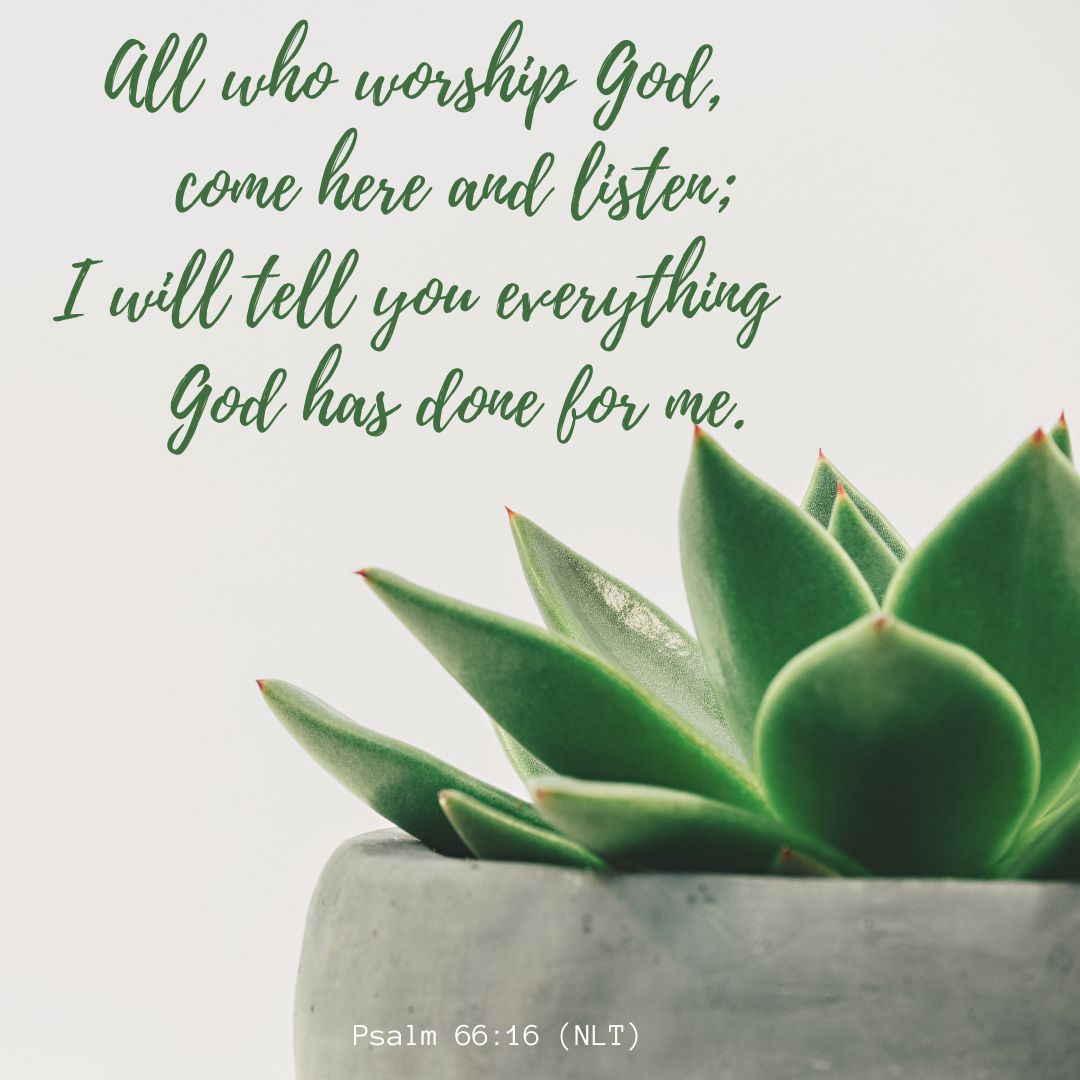
I think the psalmist sums it up pretty eloquently in Psalm 66:

As witnesses, we attest to what we have seen and experienced God doing. In this way, we join the great multitude of saints who have gone before us, proclaiming the love and grace of Jesus Christ.

Blessings and Peace,

Sara

Just Breathe: A Review of the Breathe Life Bible

Recently, I had the opportunity to review a couple of Bibles through the Thomas Nelson bible review program. One Bible that I chose to peruse is the Breathe Life Bible. Though I didn’t realize it at the time, this Bible is the perfect resource for anyone who is interested in exploring the crossroads where faith and justice meet. Though compiled with those in mind who daily feel the suffocating effects of racial injustice, it is most certainly not limited to one group. As former Ambassador to the United Nations Andrew Young writes in the forward, the Breathe Life Bible is about putting faith into action, taking an active stand against injustice and oppression. Young writes that this Bible “is about making real the Beloved Community where everyone is valued and cared for.”

When my youngest was about six, he and his brother were walking home from school one afternoon with a few other students who also lived nearby. One of the students had pulled out a Little Debbie snack to eat along the way, but before she could dig in, an older boy snatched it from her hand. My little firebrand would not stand for that. He promptly took the snack back and returned it to the girl, telling the older student, “That’s not right!”

This story always makes me chuckle–if you knew my youngest, you’d understand. He’s always had a fire in his belly to stand up to something, and as he’s gotten older, that hasn’t changed. My son feels strongly about justice…more aptly, he feels compelled to take a stand against what he perceives to be injustice. And there’s a lot of it. Walk down any street in your community and I’ll bet you’ll see it. Poverty; lack of access to resources like healthcare, mental healthcare, addiction treatment, quality education, fresh food; systemic violence….the list goes on and on.

Over the years, I have come to believe that our faith is intricately wound with justice. More specifically, I believe that God calls his people to acts of justice.

#saramsnyder.com

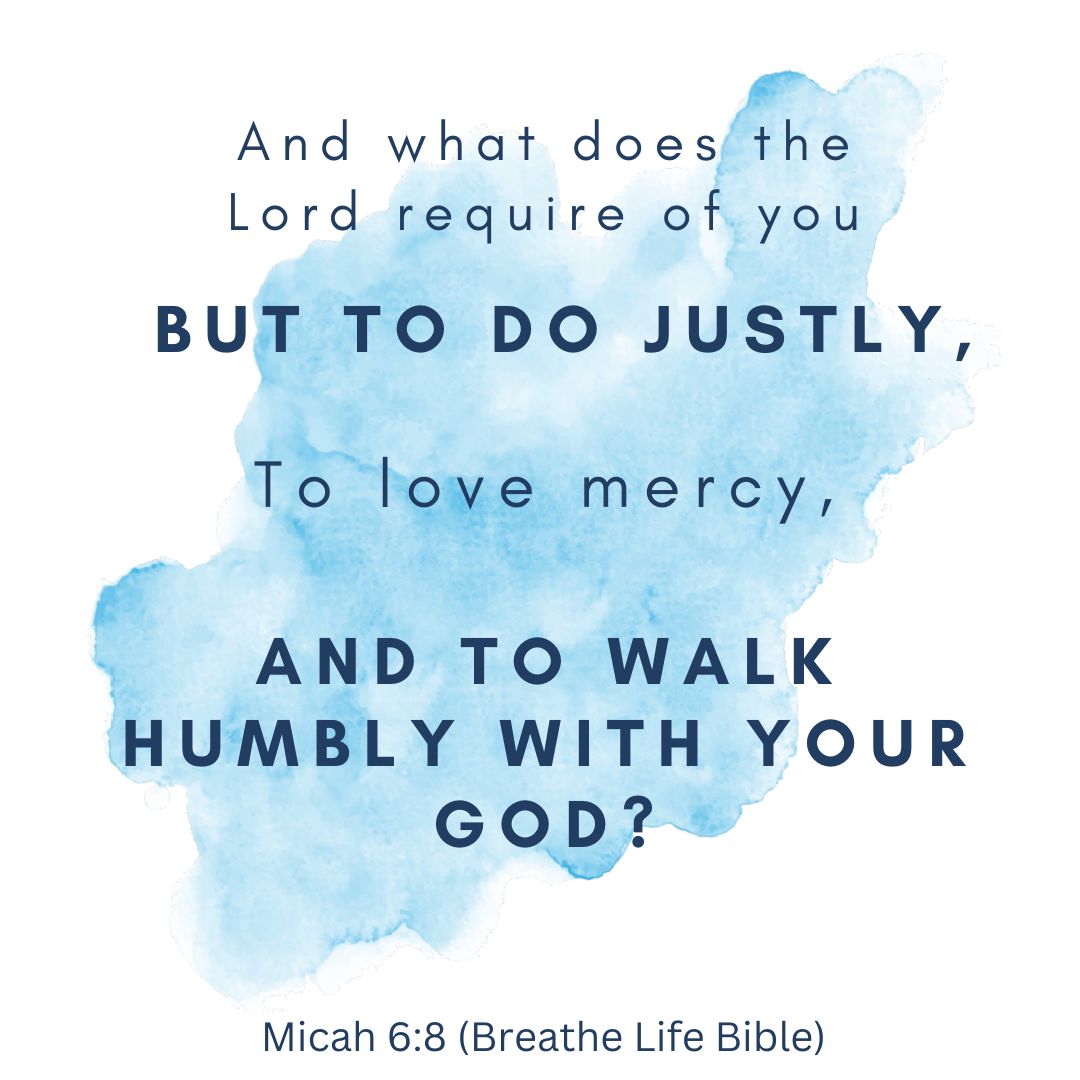
I love that the Breathe Life Bible says that the Lord requires his people to DO justly. This call to action encompasses Jesus’ command to love our neighbors as ourselves, and his exhortation to remember that whatever we do for the least of these, we do for him. But God’s message of justice often gets diluted in feel-good messages that only touch the surface of what it means to live a life of faith. As Christians, we have a tendency to become consumers of God, rather than people who act on his word. Author and leader Brian Heasley wrote in a reflection that, “Christianity is not a self-help group.” Though we sympathize with the plight of those suffering injustice, and maybe even empathize at times, how often do we act on their behalf? How often do we stand up and say, “That’s not right!”

The Breathe Life Bible is unique in that it also offers practical insight into how we can cultivate a life of social justice. There are essays by social justice leaders about what it means to put our faith in practice, commentary by Biblical theologians about what it means to act justly, special first-person accounts of Biblical characters that help the reader engage deeply and personally with God’s word, devotions written by pastors and teachers who share how God’s word impacts our lives, and opportunities to simply inhale and exhale God’s spirit.

Here’s a peek at some of those features:

God calls us to DO justice. And the Breathe Life Bible is a good companion for the journey. Regardless of which Bible you use, however, the fact remains that God doesn’t want us sitting on the sidelines of justice. Rather, he calls us to take action–to stand up and, in his name, work to make the world a better place.

God of Justice, open my eyes, stir my heart, and teach me how to do justly, and to love mercy, and to walk humbly with you today. Amen

Blessings and Peace,

Sara

Are We Paying Attention?

Have you ever missed the turn onto your street? I’m not talking after recently moving to a new city or neighborhood–I mean a true head in the clouds moment where you blew right past the place you’ve been turning into for at least three years. I would like to tell you that this happened to me once….but the truth is….no one in my house is surprised when I miss an obvious turn. I just get distracted. There’s a great song playing and I’m singing along. Or a fox crossed the road and I’m craning my neck to see where it went. Maybe I’m too focused on the pinks and purples bleeding into the horizon as the sun sets. Whatever the case, I don’t always pay enough attention to where I’m going.

Recently, I was re-reading Moses’ call story. This is, hands down, one of my favorite stories in all of Scripture. I love that Moses is not a superhero. I love that he comes up with excuse after excuse to avoid God’s call. I love that Moses is plagued with self-doubt. I love that he boldly tells God he needs some muscle because he can’t carry this call alone. And, of equal importance, I love that Moses was distracted enough to have an encounter with God in the first place.

As Exodus 3 opens, Moses is tending sheep for his father-in-law. I don’t know a lot about sheep, but I cannot imagine it to be a highly stimulating job, especially for someone whose resume boasts “working royal”. With no smart phone, book, magazine, or radio, Moses had lots of time and space for his mind to wander. And that’s how he came to notice the burning, yet strangely not burning bush.

xr:d:DAF7RudQutY:3,j:8830849986575324288,t:24012914

In this passage, Moses was aware enough of his surroundings, yet distractible enough from his task at hand, that he noticed something out of the ordinary was taking place. Moses looked up. And when he looked up, he saw something new–something remarkable–and it sparked his interest. When Moses saw the burning, not burning bush, he was curious. And so, (like future shepherds would) he went to see this thing which had come to pass.

Here’s where the story gets really interesting: It wasn’t until Moses actually went to see what was going on that God showed up. Scripture tells us that an angel of the Lord was responsible for the fire. Though God had orchestrated the supernatural event, Moses had to take the first step before God called his name.

Sometimes, God needs to get our attention before he can get to work in our lives. And he waits until we’re invested before he speaks. Moses shows us that when God calls, sometimes it requires us to wake up and move!

Too often, I run around with my head so lost in the fog of my thoughts or an electronic device that I can’t hear God call. I’m not focused on where God and how he’s working and what he might be inviting me to take part in. And so, God gets my attention in some surprisingly odd ways. Like a cow…stuck in a fence.

Years ago, as I was going about my business, driving the two-lane highway past farms and fields that was my daily commute, singing along to whatever pop song was on the radio, I happened to spot movement from the corner of my eye. Turning my head, I saw something new–a cow that was entangled in a barbed wire fence. As my brain was attempting to process this strange sight, my cell phone rang. It was my sister, driving down city streets 200 miles away, passing storefronts instead of fences. When I told her about the bizarre bovine encounter, I expected a chuckle, or at best, a snort. But what I got instead was a question that entirely upended my way of thinking. She asked: “What are you going to do about it?” In that moment, my sister reminded me that we are not to be passive bystanders on the road of life. Rather, we are called to enter in, to act, to make a difference. Because if we don’t, then who will?

And so, I called the sheriff’s department and reported a wayward cow. I have no idea what happened next, if the cow was safely removed from the fence or became someone’s dinner, but I know that God used that cow (and my sister) to teach me a lesson that has factored into many of my ensuing moments. But before God could get to the lesson, I first had to notice…and then I had to move.

What do you need to look up from to see God working in the world? Where is he trying to get your attention? And are you willing to go and see what he’s doing?

Blessings and Peace,

Sara