The Invitation

Last night was Ash Wednesday service, my least favorite service of the year. I’ve never fully appreciated the call to repentance and renewed discipleship. It’s not that I don’t think those two things are important, but I feel like those are daily practices in trying to follow Jesus…although, I suppose there is something to be said for a corporate call to repentance and renewal–sort of like the Day of Atonement in Judaism.

That said, I mostly just show up for Ash Wednesday and go through the motions until it’s over. But last night, something struck me. It came as my husband read out the invitation to enter into Lent.
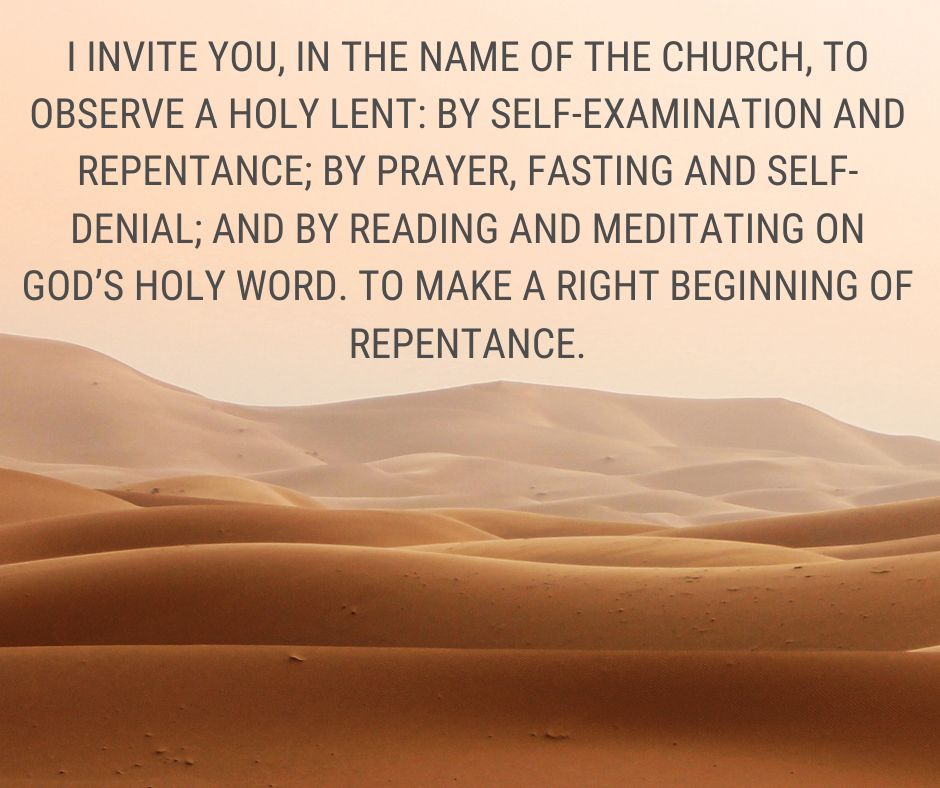
This year, the beginning of Lent falls in the middle of the quadrennial Winter Olympics. To say I am an Olympic fan would be putting it mildly. I LOVE the Olympics. It’s a weird quirk for someone who generally eschews all things sports, but the Olympics are so amazing. I love seeing all the different sports beyond throwing and catching balls. Who knew sliding a stone along a sheet of ice could be so thrilling? And who in their right mind would look at a ski jump and say, “What if we just added a bunch of flips after we launch ourselves fifty feet into the air?” There’s also something beautiful about nations coming together to peacefully compete. And, of course, there are the athletes themselves who have spent years working toward this moment, and most of whom will go home with nothing more than the title of Olympian next to their name.

During the closing ceremony of each Olympic games, the head of the International Olympic Committee gives a proclamation, inviting the youth of the world to gather, once more, in four years time to compete in the Olympic games. That invitation, repeated every two years for both summer and winter games, always gives me goosebumps. It’s such a beautiful call–one of purpose and hope and expectation. And upon hearing it, I always think, “I can’t wait for the next Olympics!”

As I was listening to the invitation to enter into Lent last night, I found myself thinking: What if I approached Lent like I do the Olympics? Instead of something dark and dreary, what if the invitation to Lent was actually a beautiful call of purpose and hope and expectation? Because what is the point of Lent, really, if not to draw closer to Christ? And how can we approach that invitation with anything less than exuberance?
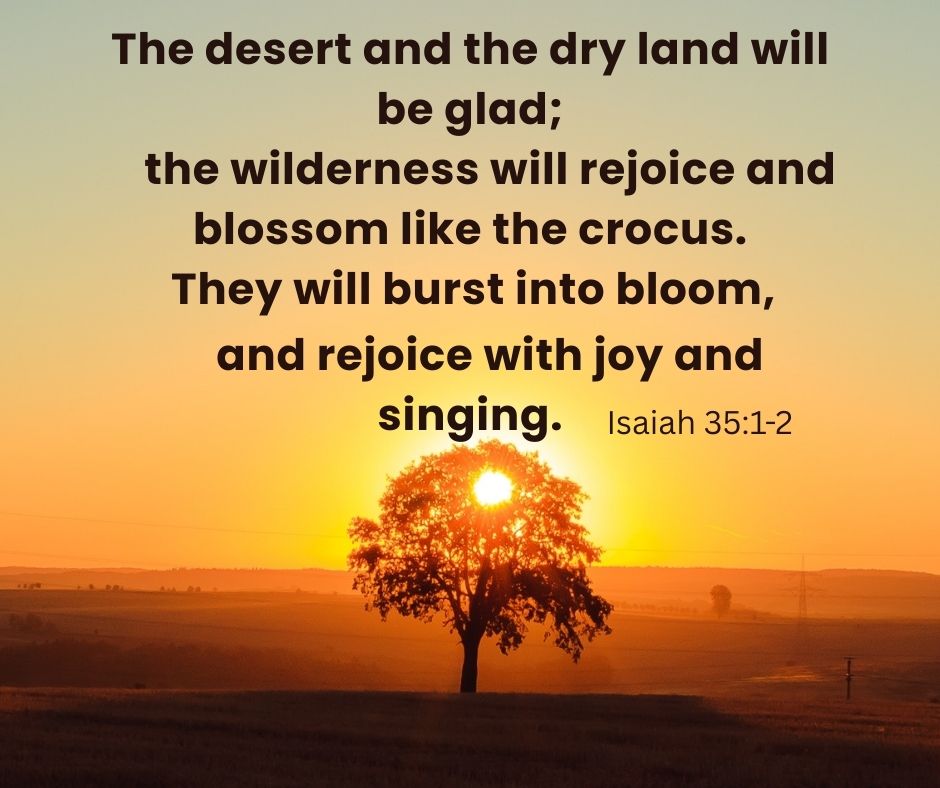
Through our practice of Lent, Jesus calls each of us to draw closer to him–to throw off the trappings of busyness and brain rot, of worry and want to sit with him in the desert places and be healed, uplifted, encouraged, and strengthened. And as we sit in those desert places, God promises that he will bring life. Forests will grow, plants will flourish, and streams will burst to overflowing.

Through the practice of Lent, God is inviting us to enter into the life that he desires for us, one marked by his presence and his wisdom and his love. We all enter into the desert in different ways. For some, it’s about giving something up. For others, it’s about taking something on. But for all of us, it’s about getting to that place where we can sit and commune with God.

This year, I’m very excited about a new Lenten series from Lectio 365. This daily prayer and devotional app has been extremely helpful to me in drawing me closer to God. I love that the format is rooted in ancient traditions, and I appreciate the intentionality of the daily prayers and guide to reflection. Lectio 365 is a place infused with God’s Spirit. Their 2026 Lenten focus is on the Desert Fathers and Mothers. Each day throughout Lent, the devotionals will focus on the life and teachings of the men and women who lived in the desert centuries ago, helping people find their way to Jesus. If you’re looking for a Lenten practice, consider getting the app and following along. It’s free and easy to use.

However you approach Lent this season, I pray that your time in the desert will produce a bountiful harvest of God’s grace and love in your hearts and homes.

Blessings and Peace,

Sara

On Lent and Justice and Slogging Through Both

This past week marked the season of Lent–a time when many of us Christians give up or pick up habits in an effort to grow closer to becoming that person we believe (fingers crossed) God has called us to be. A few weeks ago, I read a devotion based on Isaiah 1:11-21 that lit a fire within me. If you haven’t read it, take a few moments to do so…I’ll wait.

In Isaiah 1, God has had it with the people of Israel. They’ve made worship a spectacle–kind of like the Super Bowl, but without T-Swift. They show up with their game-day gear, jump around, scream and cheer, get fired up and riled up, then go home feeling really good about themselves, secure in the knowledge that they’re part of team God and they will always bring home the bling. However…God’s not buying it. Look at what he says to the Israelites:

#saramsnyder.com

Yikes! I’m not going to lie, that kind of stings. That’s because I have a feeling, deep down, that Isaiah’s words are as true today as they were thousands of years ago. How often do we make our faith a performance–something we throw on Sunday mornings like a special-occasion dress so we can #church on social media? We tend make worship a bit of a spectacle, too, complete with loud songs, raised hands, and calls of “Amen” and “Praise Jesus!” None of this is wrong, per se, but God tells us that he wants more than the motions. In Isaiah, God’s not angry that the Israelites are worshipping emphatically–he’s furious that their so-called devotion doesn’t extend beyond the walls of the Temple.

While the Israelites are happy to bring sacrifices to God in worship, they most certainly aren’t doing so beyond that. They lie and cheat. They ignore those in need. They don’t defend the widows or help the orphans. And they oppress the immigrants. In fact, Isaiah goes so far as to say that the people of Israel have blood-stained hands. Maybe they haven’t physically hurt someone else, but their actions have perpetuated systems of injustice that have led to people being oppressed and neglected. When children are starving, who is responsible? God seems to say that we all are.

So, what does God want from us? Isaiah lays it out pretty clearly:

#saramsnyder

We are to be the people of hope–the feet that bring good news to the poor, sight to the blind, and release to the captives. Our acts of worship should fill us up with God’s spirit so that we can leave behind the walls of the church and bring God’s mercy and love to those on the streets…the hungry, addicted, enslaved, abused, grief-stricken, struggling, fearful, lonely people we meet every day.

God’s justice is different from the world’s justice. When the prophets speak of justice, they’re not always talking about retribution. Rather, it’s a reordering of priorities and practices. God’s justice is about freedom–breaking the chains of poverty, racism, sexism, ableism, violence, human trafficking, hunger, climate change so that all people can live into their God-given potential because all people are children of God.

God’s justice makes me want to move, to act, to sing the Good News into the world. Before Lent, I had a plan. I was going to make a justice calendar for myself that I could hang above my desk. There would be a daily act of justice, something small, but meaningful, I could check off each day. But as I considered this justice to-do list, I came to a daunting reality: You can’t schedule justice on a calendar.

The truth is, fighting oppression is a long slog through the bogs of humanity. Though we can give to the hungry, it takes a lot of time, effort, resources, and reordering of our systems of government and finance to ensure that every person can provide for themselves. Case in point, we once served a church that helped build a chicken farm in a community in Haiti. The farm was supposed to bring financial freedom to the people of the community and help their neighbors get sustenance, but these God-inspired goals were hit with the full force of political turmoil and economic oppression. The farm struggled, and though the people of the community are diligently trying to make it work, it’s an uphill battle.

Justice is hard, because it calls for a reordering of society. Justice is about relinquishing power, turning over our resources, making more room at the table for people who might make us uncomfortable. And honestly, I don’t always have the will or desire to do that. However, God is adamant that this is nonnegotiable. Remember when Jesus said: “Whatever you do for the least of these, you do for me?” That’s justice. And it’s so hard.

Fortunately, when it comes to hard things, we’re not alone. We have a God who can do infinitely more that we could ever plan or imagine. He makes things possible, though not necessarily easy. This Lenten season, I feel like I’m at the start of something. There’s a road that God is inviting me to follow, and I know we’re going to wind our way through some steep hills and marshy valleys. I don’t know anymore what this focus on justice will bring, but I know it’s a journey I have to take. Because we are kingdom builders. Even it we have to start with one small pebble at a time.

Blessings and Peace,

Sara