Confession 408: Ask Away–40 Days of Decrease

I am the LORD!  There is nothing too difficult for me. Genesis 18:14 (CEB)

girl on swing

When I was a kid, I asked a lot of questions.  My mom recalls a memorable experience seeing Disney’s Sleeping Beauty in a theater where, at the age of two, I very loudly demanded to know a plethora of things.  Important things like, “Why is the dragon purple?  Why is her dress pink?  Why is the prince riding a horse?”

My parents were professional educators, so they didn’t discourage my questioning–even when it drove them crazy.  Now, I have two children of my own who question everything.  I find I have a new appreciation for the amount of self-discipline and control my parents must have had not to ban me from speaking until I was eighteen.

And, although it’s incredibly annoying to have your ten year old constantly ask you if you’re driving the speed limit whenever you hit the highway, questions are (by and large) good things.  Questions lead to knowledge, to new understandings and perspectives, to a greater appreciation for the world and the people within it.  Questions also lead us into a deeper relationship with God.

girl on swing 2

There’s a fallacy among some religious people that questioning God is sinful.  I think this idea is born out of the great fear we humans have with uncertainty.  Many of us struggle with the concept of holy mystery. We can’t handle the complexity of God’s great all-encompassing love coupled with the reality of the ramifications of free will and human suffering.   When tragedy strikes, it’s more comfortable to say “Well, it’s God’s will” rather than “What the —-?”

The truth is, our desperate cry of “Why would you let this happen?” draws us much closer to the heart of God than an apathetic response of, “Okay…whatever…”  Accepting without question doesn’t engage in a conversation.  It doesn’t open the door for a relationship; instead, it shuts the door in God’s face.  Ignoring the questions in our hearts only serves to weaken our faith because we deny ourselves an opportunity to speak to God openly and honestly.

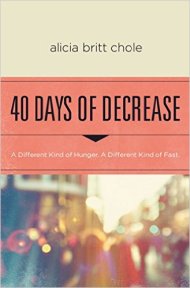
choleIn 40 Days of Decrease, Alicia Britt Chole refers to our process of trying to rationalize God’s ways as a means of fixing faith.  She writes:

The church in general panics when miracles miscarry.  We scurry clumsily to prop up God’s sagging reputation.  There must have been a problem, we offer.  God must have something even better around the corner, we propose.  Must He?  (pg. 34)

In her challenge to fast “fixing it”, Chole acknowledges the need for questions in our faith.        When we fast “fixing it” we allow ourselves to become children once again, running to the great Parent with questions, fears, disappointments, anger and broken hearts.  And God, the great Parent, welcomes us with open arms.  He listens to our questions.  He understands our fears and disappointments.  He accepts our anger and he grieves our broken hearts.  God is our safe place–our refuge in times of trouble. (Psalm 18:2)

That is not to say God will provide an answer to all our questions.  How could he when there is so much at work in this world that is way beyond our understanding.  But God wants us to ask the questions, because he wants to be in a relationship with us.

As a parent, it’s important to me that my children know they can always come to me with any questions.  I don’t answer all of them, sometimes because I don’t know the answer and sometimes because they’re not ready to hear it.  However, in listening to their questions and responding in love, I’m teaching my children (I hope!) that Mama is a safe place for them to come and lay their burdens down.  And, as their questions get bigger and harder, I’m hopeful that my willingness to engage in their questions will teach my boys that they don’t have to hide anything from me–that when they are with me they are free to be themselves,even if it’s not always pretty, because I love them.

If you’re like me, you have a lot of questions for God.  Some days those questions are born out of mere curiosity.  Other days the questions come from a deep place of hurt or anger.  Whatever questions of faith you have today, I would encourage you to bring them before God.  Lay them down at his feet and let him be your safe place.

Blessings and Peace,

Sara

Confession407: Are You For Real? 40 Days of Decrease

Now when John heard in prison about the things the Christ was doing, he sent word by his disciples to Jesus, asking,  “Are you the one who is to come, or should we look for another?” Matthew 11:2-3 (CEB)

In 40 Days of Decrease by Alicia Britt Chole, we are asked to fast artificial light.  This fast comes to us out of the depths of a dark and lonely prison cell.  John the Baptist, who once commanded great crowds in the wilderness and carried the light for God, now sits broken and chained in a dark, dirty, dank dungeon far below Herod’s great palace.  John, who first recognized Jesus as Messiah from his mother’s womb is now asking the question, “Are you for real?”

caged bird

This question brings me to my knees each time I study it.  It brings me to my knees because, my friends, I’ve been there.  There are moments in each of our lives where our surety of faith born in the light of God’s goodness and grace gives way to uncertainty in the darkness of disappointment and disillusionment.  God’s promises of health, protection, love, and stability haven’t materialized as we expected.  Life threw a curveball and we grounded out in the dirt.

A couple of years ago, I took a “leap of faith”.  God and I had been discussing a career change for a few years, and I was finally taking the plunge.  I gave up full-time employment to become a freelance writer.  I gave up a salary package, benefits, vacation time and tax refunds to pursue this calling.  I knew that if I jumped, God would provide.  For over a year and a half the floodgates were opened.  Work poured in and I basked in the glow and wonder of God’s ability to make this new life happen.

But then, the streams began drying up.  The floodgates of opportunity closed.  The famine that I knew was part of this journey began, and I felt betrayed.  Where once was sureness, now was doubt.  Did I follow the wrong path?  Did I misunderstand?  Did I neglect part of a bargain I didn’t know I’d signed?  Did I miss the fine print?

Over the past several months, I’ve found myself asking God, “Are you for real?”  

One of the things I love about Chole’s book is that she gives me permission to ask God tough questions.  Her reminder of John the Baptist’s question to Jesus brought peace to my troubled soul.  Because John was one of the few people in Jesus’ sphere who got it.

From the beginning, John knew who Jesus was and what his own role was to be in spreading the good news.  John’s job was to prepare the way for Jesus–to be the supporting actor, so to speak.  And John was totally okay with this.  In fact, when his disciples attempted to start a turf war with Jesus, John cut them off.  John clearly says, “I’m not the Christ, but the one sent before him.” (John 3:28)

So if John, whose entire life was devoted to preparing the way for Jesus, asked Jesus if he was for real, then I think my own questions of doubt are okay.

So the question remains, “Are you for real?”

Look at the response John gets from  Jesus.

“Go, report to John what you hear and see. Those who were blind are able to see. Those who were crippled are walking. People with skin diseases are cleansed. Those who were deaf now hear. Those who were dead are raised up. The poor have good news proclaimed to them. Happy are those who don’t stumble and fall because of me.” Matthew 11:4-6 (CEB)

I feel a great love in Jesus’ response.  Notice he doesn’t rebuke John’s doubt.  He doesn’t dismiss John’s question.  He doesn’t say to John, “Well, if you really knew me you wouldn’t ever question.”  No…Jesus responds with kindness, compassion and love.  He says to John, “Look at what I’m doing.  The work you started is coming to fruition.  I never want you to doubt because of me.”

Do you see the great beauty in Jesus’ response?  Do you see the depth of love?  I feel like if Jesus were sitting before John in his prison cell he would have taken John’s face in his hands and looked at him with eyes brimming over with compassion.  As Chole writes so eloquently in her book:

Jesus’ calm response to John echoes to us today: “Recall what I have done in the past.  Accept me as the Great I Am of your future.” (pg. 16)

free bird

I don’t know what crises of faith you might be experiencing today–what promises you have yet to see fulfilled in your life.  But know this, your disappointment, your doubt, you disillusionment is okay.  God can handle it.  But first, you have to bring it to him.

Today, tell God what you’re feeling.  Ask him if he’s for real.  And then, listen to the loving way he speaks to your fears.  As Chole writes, “accept [God] as the Great I Am of your future.”

Blessings and Peace,

Sara

Confession 406: 40 Days of Decrease by Alicia Britt Chole

Growing up in the Southern Baptist church, Lent was not something I was familiar with.  My understanding of Lent went something like this: people give up sweets or soda for a couple of months and then pig out on Easter.

I didn’t get it.  After I joined the United Methodist church and went to a United Methodist seminary where I earned a master’s degree in Christian Education…I still didn’t get it.  I think my precise thoughts on the matter were: This is dumb.  Aren’t we always supposed to be engaging in penitence and confession to prepare ourselves for Christ?  (Deep down, I’m still a bit of a Baptist girl).

And so, I just ignored Lent for several years.  I avoided Ash Wednesday service, didn’t give anything up and used the time known as Lent to memorize Scripture, pray more and practice stillness.  These are all good things, and my faith grew stronger with them.  But really, there was no deep Spiritual journey for me in engaging in these practices.  I just did them because I thought I was supposed to do something for Lent, even though Lent really meant very little to me.

And then, last February, my husband bought me a book.  My husband rarely buys me books.  He’s not against book buying or book giving, he just understands that the selection of books is a somewhat sacred process for me and doesn’t want to assume or impose by giving me something of his choosing rather than mine.  I say all of that to tell you that when Chris gives me a book, I pay attention to it because I know it’s not something he does lightly.

chole

40 Days of Decrease: A Different Kind of Hunger, A Different Kind of Fast by Alicia Britt Chole forever changed my “journey” of Lent.  For the first time ever, I got it.  More than that, Alicia’s thoughtful devotions and deeply spiritual reflections on fasting things like regret, keeping faith tidy, “fixing” things, religious profiling, spectatorship, comparison, discontentment and escapism took me on a spiritual journey that left me breathless and hungering for God in a whole new way.

Finally, Lent made sense.  Finally, Lent was a spiritual journey.  Finally, I felt myself walking with Jesus through the wilderness these 40 days.

40 Days of Decrease goes beyond the traditional Lenten fasts.  Like the contemplative sages of old who lived in the desert and guided pilgrims into a transformative encounter with the HOLY, Chole’s book guides those of us seeking a deeper and more meaningful faith into the desert places of our souls and leads us into a transformative encounter with the great I AM.

Are you hungering for God?  Are you thirsting to be filled with his Spirit?  Are you craving an experience with the risen Christ?  I would invite you to take this 40 Days of Decrease journey with me.  Every Tuesday and Thursday from now until Easter, I will be posting about 40 Days of Decrease here.  I’ll discuss the ways that God is speaking and changing me though this journey, and pose some questions for reflection.  You can always share your own experiences with me by emailing me or leaving me a comment.

I’ve placed links to Amazon all over this post so that you can purchase your own copy of the book.

This year, let’s do a different type of fast.  Let’s take a walk in the wilderness and allow God to feed our souls so that we can emerge transformed, rejuvenated and on fire to bring God’s love into the world.

As Chole writes:

Faith, in general, is less about the sacrifice of stuff and more about the surrender of our souls.  Lent, in kind, is less about well-mannered denials and more about thinning our lives in order to thicken our communion with God. Decrease is holy only when its destination is love.(pg. 2)

Blessings and Peace,

Sara

Confession 405: Eternal Wonder

Job, consider carefully
the many wonders of God. Job 37:14 (CEV)

grand-canyon

The other day, I took my boys to see a documentary on the National Parks.  The film was shown in an IMAX theater, so the images were spectacular.  As I marveled at the vibrant colors of nature on display in Yellowstone, awed over the heights and depths of the Grand Canyon and feasted on the beautiful rock formations at Bryce Canyon, I couldn’t help but sit in wonder at God’s artistry and majesty.

Think about it for a minute.  The Grand Canyon was carved by a river roiling over rocks for billions of years.  In Yellowstone, water bursts forth from the earth in a display that spans back millenniums–a contemporary peek into the prehistoric age.  When we look at nature, we’re seeing more than God’s magnificent handiwork.  We’re getting a small peek into the eternal depths of God’s being.  And that small peek into God’s eternal depths is enough to still our wandering thoughts and wondering souls.

In nature, we see God’s infinite patience, wisdom, craftsmanship and love.  Works of art millions and billions of years in the making are on display.  They are carefully designed and meticulously crafted; most are a mixture of both form and function.

yellowstone

Like most people, I question God’s ways.  I think it’s human to wonder why things happen the way they do.  All of us, if we’re honest, have asked “Why me?”

  • Why did my relationship fall apart?
  • Why did I get this disease?
  • Why didn’t I get that job/promotion/scholarship/award?
  • Why didn’t this risk pay off?
  • Why did I fail?

If we’re not careful, our “whys” can take over our lives; robbing us of joy and ensnaring us in chains of doubt and despair.  It’s not the asking that’s the problem, it’s the constant focus on the self that the “why” brings.

In the book of Job, the character of Job asks the question, “Why me?”  His life has been torn apart.  He’s lost his family, his home, his wealth, his position in society and his health.  Job is angry at God.  He doesn’t understand why the God he has served so faithfully would betray him in such a devastating way.  Time and again Job calls out to God to come to him and provide some sort of explanation and justification for God’s actions.  Before God finally speaks, there is a small interlude.  One of Job’s friends begins to talk about the wonder of God as evidenced in nature.  He tells Job to carefully consider the wonders of God.

In essence, Job’s friends is asking Job to look beyond his own pain and despair.  He’s telling Job to focus on the bigger picture, in spite of how he feels at the moment.  You see, when we still ourselves before the great majesty of God, we see something bigger than ourselves.  We see God the Creator working in our world and universe to make something much bigger and longer-lasting than our small space of time on earth.

When we gaze up at the stars, we see infinity.  When we stand on the mountaintop, we see God’s majesty.  When we stand on the shore and feel the waves wash over our feet, we see God’s constant movement.  And when we stand in the middle of the forest regenerating itself over and over, we see God’s gift of life.

bryce-canyon

For me, nature provides a means of silencing the “whys” in my life.  When I sit on our dock and watch the turtles build their nests in the shallows of the lake, I’m transported beyond my own struggles.  Instead of asking “why”, my mind is full of wonder and appreciation for God’s work.

I love the writing of naturalist and National Parks advocate John Muir.  Muir understood, fundamentally, nature’s ability to move us beyond ourselves closer to the divine.  This week, if you are feeling overwhelmed by the “why”, try looking for the wonder outside.

Nature is always lovely, invincible, glad, whatever is done and suffered by her creatures. All scars she heals, whether in rocks or water or sky or hearts.
– John of the Mountains: The Unpublished Journals of John Muir, (1938), p. 337.

Blessings and Peace,

Sara

Confession 404: Book Talk-Katharina and Martin Luther

img_2037

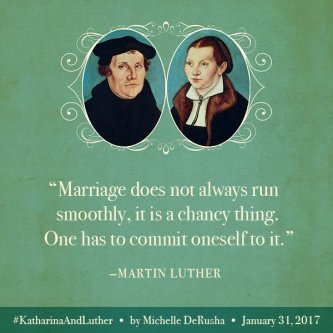
When writer Michelle DeRusha announced last year that she was working on a biography about Martin Luther’s wife, my first thought was–“Martin Luther had a wife?”  I am a self-professed history nerd (it was my minor in college) and although I racked my brain, I couldn’t remember any history book ever mentioning the fact that the father of Protestantism had a wife.  History, as we know, is often written by those who hold the most power over it.  And, in the Middle Ages, women were not the primary stakeholders of history.

That, however, is changing.  DeRusha’s work paints a fascinating portrait of a couple drawn together in a wave of political, theological and cultural change who, hand in hand, helped to shape the Modern era.  The Luther’s story is a compelling and thought-provoking peek into the heart of Christian marriage.

Katharina and Martin Luther: The Radical Marriage of a Runaway Nun and a Renegade Monk isn’t a dry historical tome, but rather a rich and vivid exploration of life during the Reformation that pulls the reader in and doesn’t let go.  DeRusha’s prose brings these historical figures to life, so much so that when reading the book you feel as if you’re there with the Luther’s, listening and participating in one of Martin Luther’s  famous Table Talks.

katharina-and-martin

So, what makes this such a fascinating read?  Well, let me give you a sneak peek.

Katharina von Bora’s story begins when, as a young girl, she is essentially sold to the church by her family.  Paying for a daughter to become a nun was cheaper than marrying her off, so many girls like Katharina found their life preordained behind cloister walls.  Katharina became a nun at the age of sixteen.  During this time, renegade monk Martin Luther was making waves across the country with his talk of church reformation.  Luther wrote and spoke passionately against the practices of the Catholic Church.  He urged the church to turn back to the practices of Jesus as laid out in Scripture.

Inspired by these ideas, Katharina (along with 12 other nuns) planned a daring escape from the confines of their convent.  Once free of the convent, Katharina had little choice but to marry.  Martin Luther attempted to play match-maker for her, but his choices didn’t work.  Instead, much to his initial bewilderment, Luther found himself compelled to take Katharina as his wife.  In his eyes, this marriage was an act of Christian charity.

At the time, Luther hardly knew the tsunami like force he had brought into his quiet life.  Katharina quickly proved herself to be an indispensable “helpmate” to Luther.  She took over the family finances, became his literary agent, challenged his thinking, was doctor, nurse and pharmacist, gave birth to six children and adopted several others, took part in theological discussions around the table and became Luther’s closest friend, ally and confidant.

One could argue that Martin Luther would not have had such a lasting impact on the world had it not been for Katharina.

And yet, DeRusha’s book is more than just a history lesson.  It is also an intimate and poignant (albeit nontraditional) love story that demonstrates the depth and power of Christian marriage.  In Katharina and Martin Luther, we see Christian marriage as it should be; God-centered, selfless, equitable and full of grace.

To order Katharina and Martin Luther, click here.  And, spread the word.  It’s time this story was told.

Blessings and Peace, Sara

Confession 403: Sing a New Song

and you gave me a new song,
a song of praise to you.
Many will see this,
and they will honor
and trust
you, the Lord God. Psalm 40:3 (CEV)

new-song

As a Christian writer, I try to be very transparent about my life and my journey in following Jesus.  After all, you can’t work toward an authentic faith without being honest with yourself and God.  With that said, I have to confess that I’m really struggling on this Inauguration Day.  Don’t stop reading yet, however, because this isn’t a political post.

The heaviness in my heart right now goes way beyond politics.  I’m disappointed in the fact that our national discourse, our expression of ideas and ideals, our actions and reactions displayed a total lack of regard for the sanctity of all life.  Maybe it’s always been there, an unfortunate consequence of being human.  We don’t like change, uncertainty or anything else that might be considered “other” to what we identify with and understand.  But our struggle with change should never lead us to disregard and degrade other human beings.  And even if we are not, as individuals, engaging in the process of degrading and diminishing others, our silence while it occurs makes us accomplices to the process.

I’ve been praying a lot about what I see going on in our public political sphere.  And my friends, here are the words God is whispering to me.

Sing a new song…

music-notes-and-heart

Political affiliation aside, we Jesus people have a duty that is higher than any political mandate.  God is calling us share his message of love and goodness to the world.  And if we’re sharing God’s love and goodness to the world, we cannot be engaging in conversations and debates where we tear others down to build ourselves up.  We need to counter the discord in our society by being Christ’s hands and feet in our homes, in our workplaces, in our communities and even in the world.

Sing a new song…

Instead of criticizing someone who believes differently than we do, we need to listen and learn why they believe the way they do.

Instead of pushing away those we see as “other”, we need to invite them in.  We need to understand what their experiences in life have been like.  Then, we need to find ways to bridge the gap between “us and them” so that we can place the label “God’s” on everyone we meet.

When people we engage with at work, around the barbecue grill, in the restaurant, at the ballgame start speaking in ways that disparage others, we need to change the conversation.  We also need to be secure enough in our own beliefs and opinions that someone expressing a different opinion or idea doesn’t threaten us.

Finally, we need to keep our focus on Jesus.  If we are truly following Jesus’ command to love God and love others, then there is no room for hate, for animosity, for the belittling of life.

In the days, weeks and months to come, I would encourage each of us to sing a new song–a song of love, a song of hope, a song of peace, a song of grace.

Blessings and Peace,

Sara

Confession 402:

Faith makes us sure of what we hope for and gives us proof of what we cannot see. Hebrews 11:1 (CEV)

frozen-pond

Standing on the frozen surface of the lake, I peered down into the depths of the water below the surface of the ice.  My eye was searching for some sign of life–a small ripple of current, the slight swish of an underwater plant.  I crouched on the ice and squinted.  All was still.  The lake was, indeed, frozen solid.

And yet, although I couldn’t see it, I knew that life was still going on within this small ecosystem.  In the deeper waters of the lake, down in the murky depths beyond the penetration of sunlight, a current was still moving.  The underground stream which feeds the lake was still flowing.  The thousands of fish which call these waters home were there, hunkered down in the mud, waiting for the waters above to thaw once more.  Zebra mussels, algae, microbes and bacteria were all still engaged in the process of living.  Beyond the apparent stillness, work continued to be done.

Sometimes in our spiritual lives, we find ourselves in a place of frozen stillness.  The reality of our life circumstances doesn’t match up with our theological beliefs.  We can’t see God’s goodness, we’re unsure of God’s justice, we don’t have peace.  It is in these moments, when God’s work seems frozen and still, that faith seems like a ridiculous concept.

We live in a society that thrives on the quantifiable.  We like the security of data-driven information.  We want certainty. Faith, however, is not quantifiable.  Faith is not data-driven.  You can’t input faith into a spreadsheet, create a line graph or formulate a faith forecast.  Faith is not about certainty.  Faith is about believing when your eyes tell you that something cannot be.  Faith is looking down into the frozen expanses of water and trusting that life-giving and sustaining work is still being done, regardless of whether or not you can see it.

Jesus put a high premium on faith during his earthly ministry.  He often chastised the disciples for their lack of faith, and rewarded the faith of those who came to him for healing.  In fact, Matthew, Mark and Luke record Jesus commending the faith of those who believed in him fourteen times.  Over and over again Jesus says to those who come to him believing when there is no definitive reason for belief: “Go, your faith has healed you.  Go, your faith has saved you.”

In the book of John, the apostle records an encounter one of the disciples has with the risen Christ.  Thomas is told of Christ’s resurrection, but refuses to believe until he has seen and touched Jesus for himself.  Jesus responds to Thomas (and to us), “Do you believe because you see me?  Happy are those who don’t see and yet believe.” John 20:20 (CEB) 

God’s work in our lives is sometimes like the frozen lake in the middle of winter.  We can’t see it on the surface, but we know life-growing and sustaining is being done deep beneath the waters of our souls.  And when that work finally reaches the surface, our faith will be stronger, deeper and fuller than before.

Blessings and Peace,

Sara

Confession 401:Easing Out of Comfortable Familiarity

Jesus called the Twelve together and he gave them power and authority over all demons and to heal sicknesses. He sent them out to proclaim God’s kingdom and to heal the sick. He told them, “Take nothing for the journey—no walking stick, no bag, no bread, no money, not even an extra shirt. Luke 9:1-3 (CEB)

img_5087

Standing at the edge of the busy ice rink, I took a deep breath and looked down at my ten year old son who was clutching my arm.  “Am I going first, or are you?” I asked.

“I don’t care,” he replied.

Prying his fingers away from my elbow, I eased him onto the ice.  With the first break in traffic, I gave a gentle push.  “Keep moving!” I cried, as he immediately started flailing and grabbing for the railing.

With a confidence that in no way matched my ability to skate, I followed my son onto the ice.  Slowly, step by step, I shuffled forward.  It wasn’t pretty.  Picture an overgrown bird flapping around on a frozen pond and you’ll probably get the idea.  However, I did manage to stay vertical and move forward.  Regardless of the fact that five year olds were literally skating circles around me and I had no idea how to brake without slamming into someone, I found myself smiling and laughing.  Out on the ice, with no skill or ability whatsoever, I felt pure unadulterated joy.

Finding joy in an activity you’re absolutely terrible at seems like a paradox.  But, as I thought about it, I realized that my terribleness at skating was precisely the reason I liked it so much.

Like many people, I tend to live in a box of comfortable familiarity. While not routine-driven per se, I have daily habits I engage in, preferred routes I take to the same stores over and over again, favorite brands of food, clothes and products, a fairly specific worldview and a close inner circle of friends and family whose company I prefer over that of strangers.

There’s nothing wrong with any of these things on the surface.  Without them, our lives would probably dissolve into chaos. The problem comes when we choose the comfortable familiarity of our lives over the uncomfortable work Jesus might be calling us to do.  Comfortable familiarity becomes a problem when we say to Jesus, “You know, that’s a great idea.  But, I’m not really comfortable going to nursing homes, prisons, soup kitchens, preschools, hospitals or countries without running water.”

One of the hard truths of faith is that following Jesus is uncomfortable.  Just ask the disciples.

When Jesus sends them out, he tells them to leave behind all of those things that would make them feel at home.  No change of clothes, no money, no walking stick, no food, no suitcase.  Jesus wants his followers to be totally dependent on him.  And they can’t be totally dependent on him if they’re too comfortable with what they have.


I think the same is true in our own walk with Jesus.  He wants us to be totally dependent on him.  But, in order to be dependent on him, we have to allow ourselves to experience some discomfort.  We have to stretch beyond the boundaries of our known abilities and understandings so that we can truly be the hands and feet of Christ that bring good news to a world clamoring for hope and peace.

This week, I would challenge you to ease yourself out of your world of comfortable familiarity by engaging in an activity that makes you a little uncomfortable.  For some of you, that might be trying a new activity for which you have zero skills or training.  For others, it might be having a conversation with someone who thinks a lot differently than you do.  Whatever you choose to do, open yourself up to the opportunity and experience the joy and peace that comes when you let go of comfortable familiarity and step into something new.

Blessings and Peace,

Sara

Confession 400: 2017–The Year of Reflection

From now on, brothers and sisters, if anything is excellent and if anything is admirable, focus your thoughts on these things: all that is true, all that is holy, all that is just, all that is pure, all that is lovely, and all that is worthy of praise. Practice these things: whatever you learned, received, heard, or saw in us. The God of peace will be with you. Philippians 4:8-9 (CEB)

contemplate

Over the course of the past several months, God and I have been doing a lot of soul searching.  Well, God has been searching my soul and revealing things to me.  It has slowly dawned on me that my life has become too loud–to frenetic.  I’m too tied to the immediate–immediate communication, immediate news, immediate reaction.  And over all of the “urgency of now” I hear God whispering…slow down…be still…stay present in my presence…

2016 has been a tumultuous year.  Like most everyone, we have had times of both celebration and mourning; times of hope and times of anxiety.  We have held onto faith and questioned faith; walked among the mountaintops and wandered in the desert.  This is the natural course of life–up, down; around and around.  And yet, I find that too much of my time and energy is being spent reacting to life’s ups and downs and not enough time spent in waiting on, watching for and walking with God.

God created human beings with the ability to think and reason, but it seems like there’s a lot less of that going on in our world right now.  We live in an age of impulsivity, where thoughts and opinions are immediately shared without any real consideration for their impact or legitimacy.  Our focus on materialism and consumerism has led to an increase in the need for immediate gratification.

The problem is, the focus on immediacy takes away from our focus on God’s bigger plan.  While we focus on the immediate, God focuses on the eternal.  And that eternal is something we cannot yet see.  However, I believe that we can see God more clearly when we are still, when we are actively waiting, watching and walking with God.

contemplate-2My goal for 2017 is to spend some quality time in the desert.  Like the ancient church fathers, I want to leave behind the immediacy of life and spend some time in deep contemplation.  I want to ask hard questions and wrestle with complex answers.  I want to engage in conversations that stretch my knowledge and expand my boundaries of understanding. I want to study the changes in the lake right outside my back door though every season of the year, marveling in God’s ability to create and sustain.  I want to build relationships that are miles long and fathoms deep.  And finally, I want to cultivate a life lived in peace.

I’ve crafted a basic plan for delving into the reflective process this year.  First, I will read more poetry.  Poetry is thoughtful, both in form and function and easily lends itself to reflection.  I’m also engaging in a Facebook Fast.  I’m not sure exactly what this will look like, but the overarching goal is to spend less time connecting online and more time connecting IRL.  And, as always, I will continue to work to deepen my walk with God through the reading of Scripture and writing.

I’m praying that each of you will experience God in a powerful and profound way this year.

Blessings and Peace,

Sara

Confession 399: Top 10 Books of 2016

I’m an avid reader.  So, when I saw all of the “Top Ten” book lists hitting the blogosphere the past few weeks, I had to jump in!  My taste in books runs the gamut, as you will see.  I’ve tried to create a mixture of fiction and non-fiction, and as I read with my boys a lot, there are a few kid books thrown in for good measure.

I’m including a brief summary of each book and a link to the book on Amazon–just in case you need a last-minute gift! 🙂

Happy Reading!

10: A Moveable Feast by Ernest Hemingway

hemingway

I’m not a Hemingway fan, but this book surprised me.  Hemingway’s reflection on his time as a young writer living in Paris during the 1920’s was warm, thoughtful and full of beautifully painted word pictures that make you feel as if you’re walking along the Seine with him.  This book reminded me of the power and importance of reflection in our lives, as well as the beauty of forgiveness–both for ourselves and others.

9: I Am Malala by Malala Yousafzai

malal

This autobiography tells the extraordinary story of a young girl who “stood up for education and was shot by the Taliban”.  Malala’s love for her country and her people shine through this book, which is a call to action on the part of the world’s citizens to fight for educational opportunities for all children.  I found this book to be deeply moving and convicting.  You can’t read it and not want to go out and change the world!


8: The Wolf Hall series by Hilary Mantel

mantel

If you’re a history buff, this series is for you!  Mantel’s work of historical fiction carefully details the events leading up to the crowning and execution of Anne Boleyn.  It’s one of those stories that keeps you on the edge of your seat even though you know what the final outcome will be.  The depth of characterization and sympathy Mantel has for even her most despicable characters gives these old events new life.  She frames her story in such a way that it could easily be a contemporary political tale.

7. The Jedi Academy series by Jeffrey Brown

brown

My boys and I have been reading this series for a couple of years now.  Brown incorporates comics, doodles, journal entries and letters into the text to create a completely original and hilarious account of what middle school might be like in a galaxy far, far away.  The characters are relatable and they face the same challenges that all kids face in school: making friends, peer pressure, academic struggles, etc… My boys and I laugh out loud as we read.  And, as the books are hard to put down, we blow through a lot of bedtimes!

6. The Dovekeepers by Alice Hoffman

hoffman

This was my second time through this book.  I love Hoffman’s lyricism and depth.  A fictional account of a 2,000 year old event scholars are still trying to understand takes on new life in Hoffman’s hands.  The final days of Masada are told through the viewpoint of four women, each trying to find their place in a dark and violent world run by men.  Although a reflection on past events, the search for love, meaning and identity Hoffman’s characters grapple with are common motifs in our present age.

5. The Fifth Wave series by Rick Yancey

yancey

This popular young adult science fiction series explores what happens when humanity is faced with an extinction-level event.  Dark and gritty, Yancey takes a no-holds barred approach to how human beings can both evolve and devolve when survival is on the line.  The plot line and characterization are both tightly woven, and the suspense keeps you reading well into the night.  If you have teens, this would be a great family read.  You can discuss what it is that makes us human, the nature of sacrificial love and the cost of survivalism.

4. Zane and the Hurricane: A Story of Katrina by Rodman Philbrick

philbrick

This fictionalized account of a twelve year old boy and his dog caught in the events of Hurricane Katrina is more than just an action-packed tale of survival.  Philbrick’s characters are beautifully drawn and carefully brought to life with his engaging prose and dialogue.  The issues presented in this book go way beyond Hurricane Katrina to encompass racism, identity, grief, compassion, poverty and community.  My boys and I read this together and had some really deep discussions, especially regarding race in America.

3. Smells Like Treasure by Suzanne Selfors

selfors

The second in a series of three children’s books, this one had the boys and I rolling.  Quirky and imaginative, the Smells Like Dog series follows the adventures and misadventures of Homer Winslow Pudding, 12 year old treasure hunter, and his faithful companion Dog.  Dog is a Bassett hound who is capable of smelling only one thing–treasure!  The characters are unique and the creativity of the story (as well as the quirkiness) are a breath of fresh air!


2. Not a Fan by Kyle Idleman

idleman

This was another second read book for me.  That’s the beauty of a great book–you can read it multiple times and still get something fresh out of it.  Idleman’s book on becoming a follower of Jesus is a challenge to all Christians to stop being comfortable and start walking in the footsteps of Jesus.  This book delves into the hard work of living like Christ and is at once convicting and uplifting.  You can’t walk away from this book unchanged.

  1. On Fire: The 7 Choices to Ignite a Radically Inspired Life by John O’Leary

oleary


Easily the most influential book I read in 2016, it is first on my list of re-reads for 2017.  O’Leary is a motivational speaker who survived a near-death experience at the age of nine.    He draws on these experiences in his book and shares how he used this tragedy to live with deeper purpose and meaning.  The book is a reminder that, “We can’t always choose the path we walk, but we can choose how we walk it.”  Seriously, this book will change your life.  It has mine.

  1. (Part 2) 40 Days of Decrease: A Different Kind of Hunger. A Different Kind of Fast by Alicia Britt Chole

chole

Okay, I’m totally cheating with an 11th book, but this one was also incredibly influential to my faith journey this year.  This book of Lenten devotionals explores fasting in a whole new way.  Instead of saying no to empty things like candy or soda, Chole challenges her readers to fast from things like comparison, spectatorship and regret.  This fast is about thinning our lives “to thicken our communion with God”.  The daily devotions are short and reflection questions are deep.  As someone who did not grow up practicing Lent, this has been the most meaningful Lenten experience of my life.

I hope you’ve enjoyed my 2016 book list.  I’d love to hear your favorite reads from this past year!

Blessings and Peace,

Sara