Confession 403: Sing a New Song

and you gave me a new song,
a song of praise to you.
Many will see this,
and they will honor
and trust
you, the Lord God. Psalm 40:3 (CEV)

new-song

As a Christian writer, I try to be very transparent about my life and my journey in following Jesus.  After all, you can’t work toward an authentic faith without being honest with yourself and God.  With that said, I have to confess that I’m really struggling on this Inauguration Day.  Don’t stop reading yet, however, because this isn’t a political post.

The heaviness in my heart right now goes way beyond politics.  I’m disappointed in the fact that our national discourse, our expression of ideas and ideals, our actions and reactions displayed a total lack of regard for the sanctity of all life.  Maybe it’s always been there, an unfortunate consequence of being human.  We don’t like change, uncertainty or anything else that might be considered “other” to what we identify with and understand.  But our struggle with change should never lead us to disregard and degrade other human beings.  And even if we are not, as individuals, engaging in the process of degrading and diminishing others, our silence while it occurs makes us accomplices to the process.

I’ve been praying a lot about what I see going on in our public political sphere.  And my friends, here are the words God is whispering to me.

Sing a new song…

music-notes-and-heart

Political affiliation aside, we Jesus people have a duty that is higher than any political mandate.  God is calling us share his message of love and goodness to the world.  And if we’re sharing God’s love and goodness to the world, we cannot be engaging in conversations and debates where we tear others down to build ourselves up.  We need to counter the discord in our society by being Christ’s hands and feet in our homes, in our workplaces, in our communities and even in the world.

Sing a new song…

Instead of criticizing someone who believes differently than we do, we need to listen and learn why they believe the way they do.

Instead of pushing away those we see as “other”, we need to invite them in.  We need to understand what their experiences in life have been like.  Then, we need to find ways to bridge the gap between “us and them” so that we can place the label “God’s” on everyone we meet.

When people we engage with at work, around the barbecue grill, in the restaurant, at the ballgame start speaking in ways that disparage others, we need to change the conversation.  We also need to be secure enough in our own beliefs and opinions that someone expressing a different opinion or idea doesn’t threaten us.

Finally, we need to keep our focus on Jesus.  If we are truly following Jesus’ command to love God and love others, then there is no room for hate, for animosity, for the belittling of life.

In the days, weeks and months to come, I would encourage each of us to sing a new song–a song of love, a song of hope, a song of peace, a song of grace.

Blessings and Peace,

Sara

Confession 402:

Faith makes us sure of what we hope for and gives us proof of what we cannot see. Hebrews 11:1 (CEV)

frozen-pond

Standing on the frozen surface of the lake, I peered down into the depths of the water below the surface of the ice.  My eye was searching for some sign of life–a small ripple of current, the slight swish of an underwater plant.  I crouched on the ice and squinted.  All was still.  The lake was, indeed, frozen solid.

And yet, although I couldn’t see it, I knew that life was still going on within this small ecosystem.  In the deeper waters of the lake, down in the murky depths beyond the penetration of sunlight, a current was still moving.  The underground stream which feeds the lake was still flowing.  The thousands of fish which call these waters home were there, hunkered down in the mud, waiting for the waters above to thaw once more.  Zebra mussels, algae, microbes and bacteria were all still engaged in the process of living.  Beyond the apparent stillness, work continued to be done.

Sometimes in our spiritual lives, we find ourselves in a place of frozen stillness.  The reality of our life circumstances doesn’t match up with our theological beliefs.  We can’t see God’s goodness, we’re unsure of God’s justice, we don’t have peace.  It is in these moments, when God’s work seems frozen and still, that faith seems like a ridiculous concept.

We live in a society that thrives on the quantifiable.  We like the security of data-driven information.  We want certainty. Faith, however, is not quantifiable.  Faith is not data-driven.  You can’t input faith into a spreadsheet, create a line graph or formulate a faith forecast.  Faith is not about certainty.  Faith is about believing when your eyes tell you that something cannot be.  Faith is looking down into the frozen expanses of water and trusting that life-giving and sustaining work is still being done, regardless of whether or not you can see it.

Jesus put a high premium on faith during his earthly ministry.  He often chastised the disciples for their lack of faith, and rewarded the faith of those who came to him for healing.  In fact, Matthew, Mark and Luke record Jesus commending the faith of those who believed in him fourteen times.  Over and over again Jesus says to those who come to him believing when there is no definitive reason for belief: “Go, your faith has healed you.  Go, your faith has saved you.”

In the book of John, the apostle records an encounter one of the disciples has with the risen Christ.  Thomas is told of Christ’s resurrection, but refuses to believe until he has seen and touched Jesus for himself.  Jesus responds to Thomas (and to us), “Do you believe because you see me?  Happy are those who don’t see and yet believe.” John 20:20 (CEB) 

God’s work in our lives is sometimes like the frozen lake in the middle of winter.  We can’t see it on the surface, but we know life-growing and sustaining is being done deep beneath the waters of our souls.  And when that work finally reaches the surface, our faith will be stronger, deeper and fuller than before.

Blessings and Peace,

Sara

Confession 401:Easing Out of Comfortable Familiarity

Jesus called the Twelve together and he gave them power and authority over all demons and to heal sicknesses. He sent them out to proclaim God’s kingdom and to heal the sick. He told them, “Take nothing for the journey—no walking stick, no bag, no bread, no money, not even an extra shirt. Luke 9:1-3 (CEB)

img_5087

Standing at the edge of the busy ice rink, I took a deep breath and looked down at my ten year old son who was clutching my arm.  “Am I going first, or are you?” I asked.

“I don’t care,” he replied.

Prying his fingers away from my elbow, I eased him onto the ice.  With the first break in traffic, I gave a gentle push.  “Keep moving!” I cried, as he immediately started flailing and grabbing for the railing.

With a confidence that in no way matched my ability to skate, I followed my son onto the ice.  Slowly, step by step, I shuffled forward.  It wasn’t pretty.  Picture an overgrown bird flapping around on a frozen pond and you’ll probably get the idea.  However, I did manage to stay vertical and move forward.  Regardless of the fact that five year olds were literally skating circles around me and I had no idea how to brake without slamming into someone, I found myself smiling and laughing.  Out on the ice, with no skill or ability whatsoever, I felt pure unadulterated joy.

Finding joy in an activity you’re absolutely terrible at seems like a paradox.  But, as I thought about it, I realized that my terribleness at skating was precisely the reason I liked it so much.

Like many people, I tend to live in a box of comfortable familiarity. While not routine-driven per se, I have daily habits I engage in, preferred routes I take to the same stores over and over again, favorite brands of food, clothes and products, a fairly specific worldview and a close inner circle of friends and family whose company I prefer over that of strangers.

There’s nothing wrong with any of these things on the surface.  Without them, our lives would probably dissolve into chaos. The problem comes when we choose the comfortable familiarity of our lives over the uncomfortable work Jesus might be calling us to do.  Comfortable familiarity becomes a problem when we say to Jesus, “You know, that’s a great idea.  But, I’m not really comfortable going to nursing homes, prisons, soup kitchens, preschools, hospitals or countries without running water.”

One of the hard truths of faith is that following Jesus is uncomfortable.  Just ask the disciples.

When Jesus sends them out, he tells them to leave behind all of those things that would make them feel at home.  No change of clothes, no money, no walking stick, no food, no suitcase.  Jesus wants his followers to be totally dependent on him.  And they can’t be totally dependent on him if they’re too comfortable with what they have.


I think the same is true in our own walk with Jesus.  He wants us to be totally dependent on him.  But, in order to be dependent on him, we have to allow ourselves to experience some discomfort.  We have to stretch beyond the boundaries of our known abilities and understandings so that we can truly be the hands and feet of Christ that bring good news to a world clamoring for hope and peace.

This week, I would challenge you to ease yourself out of your world of comfortable familiarity by engaging in an activity that makes you a little uncomfortable.  For some of you, that might be trying a new activity for which you have zero skills or training.  For others, it might be having a conversation with someone who thinks a lot differently than you do.  Whatever you choose to do, open yourself up to the opportunity and experience the joy and peace that comes when you let go of comfortable familiarity and step into something new.

Blessings and Peace,

Sara

Confession 400: 2017–The Year of Reflection

From now on, brothers and sisters, if anything is excellent and if anything is admirable, focus your thoughts on these things: all that is true, all that is holy, all that is just, all that is pure, all that is lovely, and all that is worthy of praise. Practice these things: whatever you learned, received, heard, or saw in us. The God of peace will be with you. Philippians 4:8-9 (CEB)

contemplate

Over the course of the past several months, God and I have been doing a lot of soul searching.  Well, God has been searching my soul and revealing things to me.  It has slowly dawned on me that my life has become too loud–to frenetic.  I’m too tied to the immediate–immediate communication, immediate news, immediate reaction.  And over all of the “urgency of now” I hear God whispering…slow down…be still…stay present in my presence…

2016 has been a tumultuous year.  Like most everyone, we have had times of both celebration and mourning; times of hope and times of anxiety.  We have held onto faith and questioned faith; walked among the mountaintops and wandered in the desert.  This is the natural course of life–up, down; around and around.  And yet, I find that too much of my time and energy is being spent reacting to life’s ups and downs and not enough time spent in waiting on, watching for and walking with God.

God created human beings with the ability to think and reason, but it seems like there’s a lot less of that going on in our world right now.  We live in an age of impulsivity, where thoughts and opinions are immediately shared without any real consideration for their impact or legitimacy.  Our focus on materialism and consumerism has led to an increase in the need for immediate gratification.

The problem is, the focus on immediacy takes away from our focus on God’s bigger plan.  While we focus on the immediate, God focuses on the eternal.  And that eternal is something we cannot yet see.  However, I believe that we can see God more clearly when we are still, when we are actively waiting, watching and walking with God.

contemplate-2My goal for 2017 is to spend some quality time in the desert.  Like the ancient church fathers, I want to leave behind the immediacy of life and spend some time in deep contemplation.  I want to ask hard questions and wrestle with complex answers.  I want to engage in conversations that stretch my knowledge and expand my boundaries of understanding. I want to study the changes in the lake right outside my back door though every season of the year, marveling in God’s ability to create and sustain.  I want to build relationships that are miles long and fathoms deep.  And finally, I want to cultivate a life lived in peace.

I’ve crafted a basic plan for delving into the reflective process this year.  First, I will read more poetry.  Poetry is thoughtful, both in form and function and easily lends itself to reflection.  I’m also engaging in a Facebook Fast.  I’m not sure exactly what this will look like, but the overarching goal is to spend less time connecting online and more time connecting IRL.  And, as always, I will continue to work to deepen my walk with God through the reading of Scripture and writing.

I’m praying that each of you will experience God in a powerful and profound way this year.

Blessings and Peace,

Sara

Confession 399: Top 10 Books of 2016

I’m an avid reader.  So, when I saw all of the “Top Ten” book lists hitting the blogosphere the past few weeks, I had to jump in!  My taste in books runs the gamut, as you will see.  I’ve tried to create a mixture of fiction and non-fiction, and as I read with my boys a lot, there are a few kid books thrown in for good measure.

I’m including a brief summary of each book and a link to the book on Amazon–just in case you need a last-minute gift! 🙂

Happy Reading!

10: A Moveable Feast by Ernest Hemingway

hemingway

I’m not a Hemingway fan, but this book surprised me.  Hemingway’s reflection on his time as a young writer living in Paris during the 1920’s was warm, thoughtful and full of beautifully painted word pictures that make you feel as if you’re walking along the Seine with him.  This book reminded me of the power and importance of reflection in our lives, as well as the beauty of forgiveness–both for ourselves and others.

9: I Am Malala by Malala Yousafzai

malal

This autobiography tells the extraordinary story of a young girl who “stood up for education and was shot by the Taliban”.  Malala’s love for her country and her people shine through this book, which is a call to action on the part of the world’s citizens to fight for educational opportunities for all children.  I found this book to be deeply moving and convicting.  You can’t read it and not want to go out and change the world!


8: The Wolf Hall series by Hilary Mantel

mantel

If you’re a history buff, this series is for you!  Mantel’s work of historical fiction carefully details the events leading up to the crowning and execution of Anne Boleyn.  It’s one of those stories that keeps you on the edge of your seat even though you know what the final outcome will be.  The depth of characterization and sympathy Mantel has for even her most despicable characters gives these old events new life.  She frames her story in such a way that it could easily be a contemporary political tale.

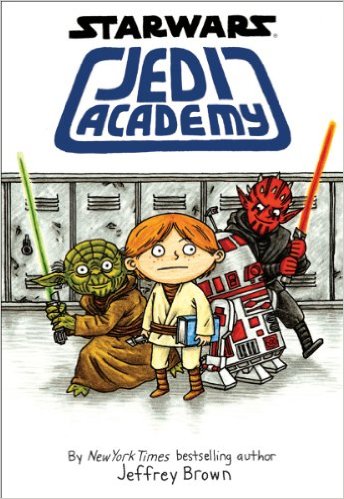
7. The Jedi Academy series by Jeffrey Brown

brown

My boys and I have been reading this series for a couple of years now.  Brown incorporates comics, doodles, journal entries and letters into the text to create a completely original and hilarious account of what middle school might be like in a galaxy far, far away.  The characters are relatable and they face the same challenges that all kids face in school: making friends, peer pressure, academic struggles, etc… My boys and I laugh out loud as we read.  And, as the books are hard to put down, we blow through a lot of bedtimes!

6. The Dovekeepers by Alice Hoffman

hoffman

This was my second time through this book.  I love Hoffman’s lyricism and depth.  A fictional account of a 2,000 year old event scholars are still trying to understand takes on new life in Hoffman’s hands.  The final days of Masada are told through the viewpoint of four women, each trying to find their place in a dark and violent world run by men.  Although a reflection on past events, the search for love, meaning and identity Hoffman’s characters grapple with are common motifs in our present age.

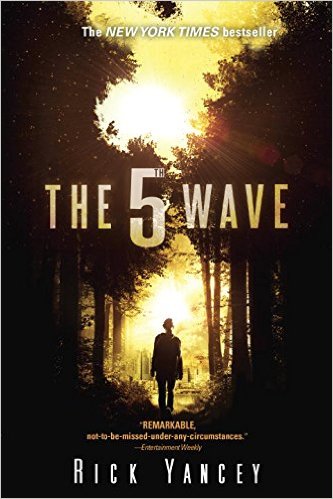
5. The Fifth Wave series by Rick Yancey

yancey

This popular young adult science fiction series explores what happens when humanity is faced with an extinction-level event.  Dark and gritty, Yancey takes a no-holds barred approach to how human beings can both evolve and devolve when survival is on the line.  The plot line and characterization are both tightly woven, and the suspense keeps you reading well into the night.  If you have teens, this would be a great family read.  You can discuss what it is that makes us human, the nature of sacrificial love and the cost of survivalism.

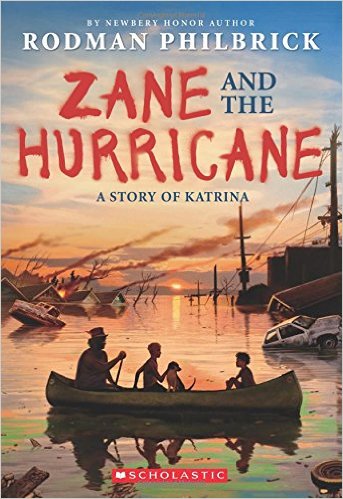
4. Zane and the Hurricane: A Story of Katrina by Rodman Philbrick

philbrick

This fictionalized account of a twelve year old boy and his dog caught in the events of Hurricane Katrina is more than just an action-packed tale of survival.  Philbrick’s characters are beautifully drawn and carefully brought to life with his engaging prose and dialogue.  The issues presented in this book go way beyond Hurricane Katrina to encompass racism, identity, grief, compassion, poverty and community.  My boys and I read this together and had some really deep discussions, especially regarding race in America.

3. Smells Like Treasure by Suzanne Selfors

selfors

The second in a series of three children’s books, this one had the boys and I rolling.  Quirky and imaginative, the Smells Like Dog series follows the adventures and misadventures of Homer Winslow Pudding, 12 year old treasure hunter, and his faithful companion Dog.  Dog is a Bassett hound who is capable of smelling only one thing–treasure!  The characters are unique and the creativity of the story (as well as the quirkiness) are a breath of fresh air!


2. Not a Fan by Kyle Idleman

idleman

This was another second read book for me.  That’s the beauty of a great book–you can read it multiple times and still get something fresh out of it.  Idleman’s book on becoming a follower of Jesus is a challenge to all Christians to stop being comfortable and start walking in the footsteps of Jesus.  This book delves into the hard work of living like Christ and is at once convicting and uplifting.  You can’t walk away from this book unchanged.

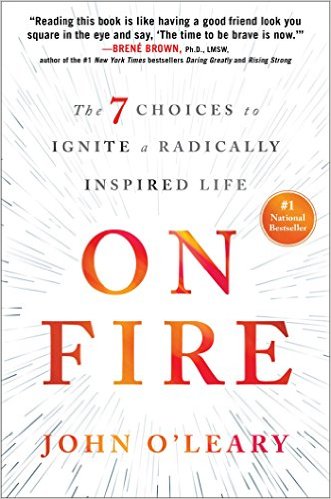
  1. On Fire: The 7 Choices to Ignite a Radically Inspired Life by John O’Leary

oleary


Easily the most influential book I read in 2016, it is first on my list of re-reads for 2017.  O’Leary is a motivational speaker who survived a near-death experience at the age of nine.    He draws on these experiences in his book and shares how he used this tragedy to live with deeper purpose and meaning.  The book is a reminder that, “We can’t always choose the path we walk, but we can choose how we walk it.”  Seriously, this book will change your life.  It has mine.

  1. (Part 2) 40 Days of Decrease: A Different Kind of Hunger. A Different Kind of Fast by Alicia Britt Chole

chole

Okay, I’m totally cheating with an 11th book, but this one was also incredibly influential to my faith journey this year.  This book of Lenten devotionals explores fasting in a whole new way.  Instead of saying no to empty things like candy or soda, Chole challenges her readers to fast from things like comparison, spectatorship and regret.  This fast is about thinning our lives “to thicken our communion with God”.  The daily devotions are short and reflection questions are deep.  As someone who did not grow up practicing Lent, this has been the most meaningful Lenten experience of my life.

I hope you’ve enjoyed my 2016 book list.  I’d love to hear your favorite reads from this past year!

Blessings and Peace,

Sara

Confession 398: Putting Jesus Back into the Manger

Then one of the elders said to me, “Don’t weep. Look! The Lion of the tribe of Judah, the Root of David, has emerged victorious so that he can open the scroll and its seven seals.” Revelation 5:5 (CEB)

img_1973

The other day, I was driving home from a “quick” shopping trip.  I had a few last minute Christmas items on my list and was feeling the stress of the Christmas crunch–lots of stuff to get and do, limited time and money.

As I was obsessing over how it was all going to come together–a random though flashed through my mind.  I slapped myself across the forehead and said aloud, “I forgot to put baby Jesus back in the manger!”

The week before, baby Jesus had been a prop in my Children’s Time message at church.  Afterward, I had casually tossed baby Jesus into an inner pocket of my church bag and hadn’t thought about him since.  It was only when I was feeling down and out that I remembered him–God’s great gift to his beloved children now sandwiched between old gum wrappers and lip gloss.

It’s so easy to get caught up in everything Christmas isn’t.  We stress over decorations and light displays, lose sleep over gifts and spending, crazily shove as many holiday activities as possible into our schedules leaving little time for self-care and reflection while forgetting the entire point of the holiday in the first place.

This week, it’s time to put Jesus back into the manger.  It’s time to put aside our Christmas lists, wrapping paper, cookie tins and stocking stuffers to focus on the fact that God sent his son into the world to redeem us.

More than that, God himself stepped down from his throne.  John 1 tells us that Jesus was with God when the world was created.  He was with God, and he was God.  Jesus was the Word who spoke all of creation into being.  Jesus sat at the right hand of the Father, had all of God’s power and authority at his fingertips and had thousands of angels at his command.  And yet, Jesus relinquished his status in heaven, his power and his might to come to earth as a vulnerable newborn.  Think about that for just a minute.  Jesus gave up everything he was so that he could come to earth and be completely dependent upon others.

nativity-4Jesus didn’t lead an easy life on earth.  He wasn’t born into a wealthy or influential family.  Rather, he came as the son of a carpenter.  Jesus’ family felt the full impact of the Roman occupation of Palestine and were even forced to flee the country and live as refugees in Egypt for several years.  As Jesus grew older, he didn’t have the advantage of a rabbinical education.  Instead, he learned a trade.  And when he began his ministry, he didn’t go to those who had money, power and influence.  He chose to walk among the outcast, the poor, the sinful and the needy.
This, then, is what we should celebrate at Christmas.  That God chose humility and love over power and might, and that choice–that gift–led to the greatest victory humanity has ever known.  Love conquered Death.

  • Because of Jesus, we are Redeemed.
  • Because of Jesus, we know Love.
  • Because of Jesus, we are Forgiven.
  • Because of Jesus, we know Peace
  • Because of Jesus, we are Victorious.

nativity

Sometime in the course of the next few days, I would encourage you to ponder the baby Jesus sitting in your manger.  Kneel before the creche.  Hold baby Jesus in your hands.  Trace the outline of his tiny form.  Consider his sacrifice–his gift of humility and love.  Then, ask Jesus to once again make his presence known in your life this Christmas.  And celebrate with others his redemption, love, forgiveness, peace and victory.


Blessings and Peace,

Sara

Confession 397: Searching for the Light–Hope

My prayer is that light will flood your hearts and that you will understand the hope that was given to you when God chose you. Then you will discover the glorious blessings that will be yours together with all of God’s people. Ephesians 1:18 (CEV)

christmas-light

“What do you think hope is?” I asked a group of elementary aged children.  Their eyes widened as they stared at me like deer caught in the headlights of an oncoming car.  The uncomfortable silence of uncertainty filled the air.  No one moved.

I wanted to help them out, but honestly, I was struggling too.  How do you take a huge abstract word like hope and narrow it down to a simplistic kid-friendly definition?  My thoughts spun like the sugar in a cotton candy machine, but they weren’t pulling together.

 Finally, someone spoke.  “Hope is when you believe something.”

I thought for a beat, and suddenly my strands of thought pulled together and clung to the core of this one simple definition.  “Yes,” I replied.  “Hope is when you believe that something good is going to happen.”

I’ve seen a lot of articles and blogs about hope lately.  It seems many people find it to be in high demand and short supply.  This year has brought too much for many.  Too much grief, too much loss, too much uncertainty, too much anxiety, too much divisiveness, too much change, too much anger, too much politics, too much of just about everything.

The “too much” has taken away our ability to believe in something better just around the bend.

The people of Jesus’ time were all too familiar with the concept of too much.  Too much oppression, too much injustice, too much war, too much religion, too much greed, too much corruption, too much poverty, too much disparity.  There were many who had given up on the hope of the Messiah.

It was into this world of too much that Jesus first came.  He stepped right into the middle of the mess and healed the sick, fed the hungry, welcomed sinners and spoke of a new covenant that would free the people from the burden of the Law.  Jesus brought hope.  Jesus made people believe that something good was going to happen.

images-17

As Jesus followers, we are called to be a people of hope.  We are called to believe, regardless of life’s too much, that something good is going to happen.  Because it has.  Because Christ came.  Because he died.  Because he rose in victory and conquered death.  Because he lives within us.  Because he is coming again.

This is our hope in Advent–not just that Christ came, but that he is here.  He is Emmanuel–God with us.

This week, I would encourage you to reflect on the nature of hope.  More than that, I challenge each of us to live in God’s hope.  Let’s take a stand, together, against life’s too much.  Think about how you might offer hope to someone else this week.  You might:

images-16

  • send a note of encouragement to someone struggling with loss or loneliness
  • surprise someone struggling financially with an anonymous gift
  • send thank-you notes to your local firefighters, police officers and city workers
  • check in on someone you know is struggling with the holidays
  • randomly pay for someone’s dinner, groceries, coffee, gas, etc…
  • ask the cashier at the grocery store, department store or gas station how they’re doing–and encourage them to answer
  • call someone who has a thankless job by name and thank them for their work
  • forgive yourself or someone else and move on with life
  • speak kindly to those you come into contact with, even if they’re telemarketers who call during dinner

There are thousands of ways we can bring hope to a world of too much.  We just need to let God’s light shine through.

Blessings and Peace,

Sara

Confession 396:Searching for the Light

unpacking

“Do you know where the gloves got put?”

“Which box is our comforter in?”

“Do I have any pants?”

These are the questions I field at least once a week since we moved in June.  With each request, I go searching through the house–looking into random closets, digging into partially opened tubs and boxes and rummaging around shelves I can’t see the tops of.  Eventually I find that pants are on top of a dresser, the comforter is in a vacuum sealed bag and gloves, well, it’s not that cold yet.

The searching in our house these past few months has been reflected in my spirit, too.  I seem stuck in a cycle of perpetual searching.  I’m searching to find my place in a new community, searching to define myself as an author, searching to establish myself in a new career, and even searching to figure out who I am now that I’m 40.

I have to be honest, searching for gloves, comforters and pants is a lot easier.

I feel like, after a season of mountaintop living, I have been thrust back into the wilderness.  I’m trying to find the light of God’s leading, but there are no bushes ablaze around me.  There’s no pillar of fire going before me into the darkness pointing east or west.  There’s just me kicking up sand and wondering if I’ve passed this rock before.

wilderness

Lent has traditionally been the time for wilderness wanderings; however, Advent finds us in the wilderness, too.   Jesus didn’t enter into a world festooned with mistletoe and holly.  He entered humanity in a time of violence, fear, uncertainty and injustice.  He came when people were seeking a light to dispel the darkness of poverty, injustice and oppression.  He came when people were seeking hope.

The world hasn’t changed much since Jesus first came.  We might string mistletoe and holly more freely around our homes, but there is still violence, still fear, still uncertainty, still injustice.  Like the people of Jesus’ time, we are still seeking a light to dispel the darkness of the world around us.

Advent provides us with the opportunity to wait, in hopeful expectation, for the Light of the World to come.  And come he will, because he’s always been there.

lantern

In the beginning was the Word
and the Word was with God
and the Word was God.
The Word was with God in the beginning.
Everything came into being through the Word,
and without the Word
nothing came into being.
What came into being
through the Word was life,[a]
and the life was the light for all people.
The light shines in the darkness,
and the darkness doesn’t extinguish the light. John 1:1-5 (CEB)

Whatever you find yourself searching for this Advent, embrace the uncertainty of finding it.  Give yourself over to God’s work in your life.  Wait in hopeful expectation for the Light that was, is and will come.

Blessings and Peace,

Sara

Confession 395: Some Thanksgiving Thoughts on Imperfection and Grace

We have been ransomed through his Son’s blood, and we have forgiveness for our failures based on his overflowing grace, which he poured over us with wisdom and understanding. Ephesians 1:7-8 (CEB)

images-12

When my oldest was in first grade, I forgot to send his lunch to school not once–but twice.  Twice–in less than a month!  My son is on the Autism spectrum and is a very picky eater.  He has, since kindergarten, taken a crustless peanut butter sandwich and two Oreo cookies for lunch each day of school.

After the second no lunch day (my son wept in the cafeteria and the school resource officer made him a sandwich) his teacher emailed me with the concern that my son wasn’t getting enough to eat.

I was mortified.  What kind of parent forgets to send lunch with their kid?  Apparently, this one.

We live in a society obsessed with perfection, so much so that what we see presented as an ideal in a magazine, on T.V. or even in social media isn’t actually reality.  Photos get doctored, news gets distorted and social media posts are carefully orchestrated to show us at our best.

We tiptoe carefully around our imperfections to avoid the judgment and condemnation of others struggling with their imperfections.  The danger of striving for perfection by masking imperfection is that we  lose the very essence of who we are in the process.  Human beings are born into imperfection.  Although you probably can’t scientifically prove it, it’s part of the fabric of our DNA.  And being imperfect is actually a really good thing!

dandelion

Imperfection is the foundation of knowledge.  Most of us learn far more from our mistakes than we do our successes.  Imperfection can also be a great motivator for achievement.  A scientist finds a great way to treat cancer, but there are flaw.  Another scientist can use those flaws to build an even better treatment.

As Jesus people, our imperfections are a means of experiencing God’s grace.  Grace is, by definition, the “unedited favor of God”.  It is forgiveness, mercy, love and justice all rolled into one.  Grace is God’s gift to his children–his perfect love extended to us even though we are imperfect. God’s grace pours over us in our imperfection with wisdom and understanding. Grace is God saying, “I love you. I’m with you. Let’s keep going.

As you enter into Thanksgiving this week, take some time to give thanks for your imperfections.  Accept the fact that you’re human, and that it’s okay.  Ask God to help you experience his grace as it pours into your life.

Then, extend that grace to those gathered around your Thanksgiving table.  Let them know how much you love them, imperfections and all.

Blessings and Peace,

Sara

Confession 394: Playing the Long Game


cropped-fall-header.jpg

Disheartened.

That’s the word I went to bed with last night and awoke with this morning.

At the end of an unprecedented in my lifetime hate-filled, vicious and embarrassing political season, I am disheartened.

Now, before my Republican friends check out, let me be clear.  I’m not condemning Republicans.  I’m not condoning Democrats.  Although I didn’t see the election of Donald Trump as President coming, I get where it came from.

People are fed up with the American government.  More than that, they’re angry–and justifiably so.  Corporate democracy has polluted the democratic process and left many Americans in distress both financially and socially.

As a barely middle-class American, I don’t particularly feel like the government works on my behalf, and I know it doesn’t work on behalf of the poor, the marginalized and the oppressed.

However, I’m not sure that it should.  I think there’s a great danger in looking to the government for salvation. Governments are created to bring forth the kingdoms of men.  As Jesus followers, it is our responsibility to bring about the kingdom of God.

That’s not an attempt to diminish the significant role our government plays in promoting peace, justice and freedom.  The government has a responsibility to work on behalf of all its people.  Right now, it’s failing fairly spectacularly.  But, neither presidential candidate was going to fix that.


And while it disheartens me that so many people thought Donald Trump was the answer, God reminded me that there is a much wider lens from which to view this current election cycle.

Therefore, brothers and sisters, you must be patient as you wait for the coming of the Lord. Consider the farmer who waits patiently for the coming of rain in the fall and spring, looking forward to the precious fruit of the earth.  You also must wait patiently, strengthening your resolve, because the coming of the Lord is near.  Don’t complain about each other, brothers and sisters, so that you won’t be judged. Look! The judge is standing at the door!  James 5:7-9 (CEB)

Be patient

Wait for the Lord

Strengthen your resolve

Don’t complain about others

James gets the long game.  He understands that in a world fraught with upheaval, uncertainty and fear it’s easy to lose sight of what God is doing.  James calls on the people of God, who had absolutely no voice in the Roman government, to stand strong in their hope–to expect to see the coming of the Lord.

I think–almost 2,000 years later–there’s a message here for us.  God knows what is going on in his world.  God sees the injustice, the oppression, the poverty, the persecution, the greed, the violence and the iniquity.  And he’s going to do something about it.  In fact, he already is.

The truth of the matter is that we, as Jesus followers, have dropped the ball.  We’ve relinquished our call to do works of justice, mercy, love and peace and instead have called on the government to do those things for us.  But, that’s not the way God works.

Jesus gives  his disciples the following command as he sends them out to do the work of God.

As you go, make this announcement: ‘The kingdom of heaven has come near.’  Heal the sick, raise the dead, cleanse those with skin diseases, and throw out demons.” Matthew 10:7-8 (CEB)

Jesus doesn’t say: petition the government for better healthcare, demand an audience with the governor or campaign on behalf of Caesar.

No, Jesus tells his disciples, you heal the sick.  You feed the hungry.  You love your enemies.  You visit those imprisoned.  You work to bring about my kingdom.

My friends, it is time we put our hope back at the feet of the one who sits on the throne of creation.  It is time we stop blaming the government for all of our failures as human beings and take up the mantle of discipleship Jesus has placed before us.

Over the coming weeks and months, I challenge you to engage in some dialogue with God about how you can work within your homes, churches, workplaces and communities to bring about justice, peace, unity, mercy and love.  Regardless of who sits in Congress or the Oval Office, what can you do to help build God’s kingdom here on earth?

Blessings and Peace,

Sara