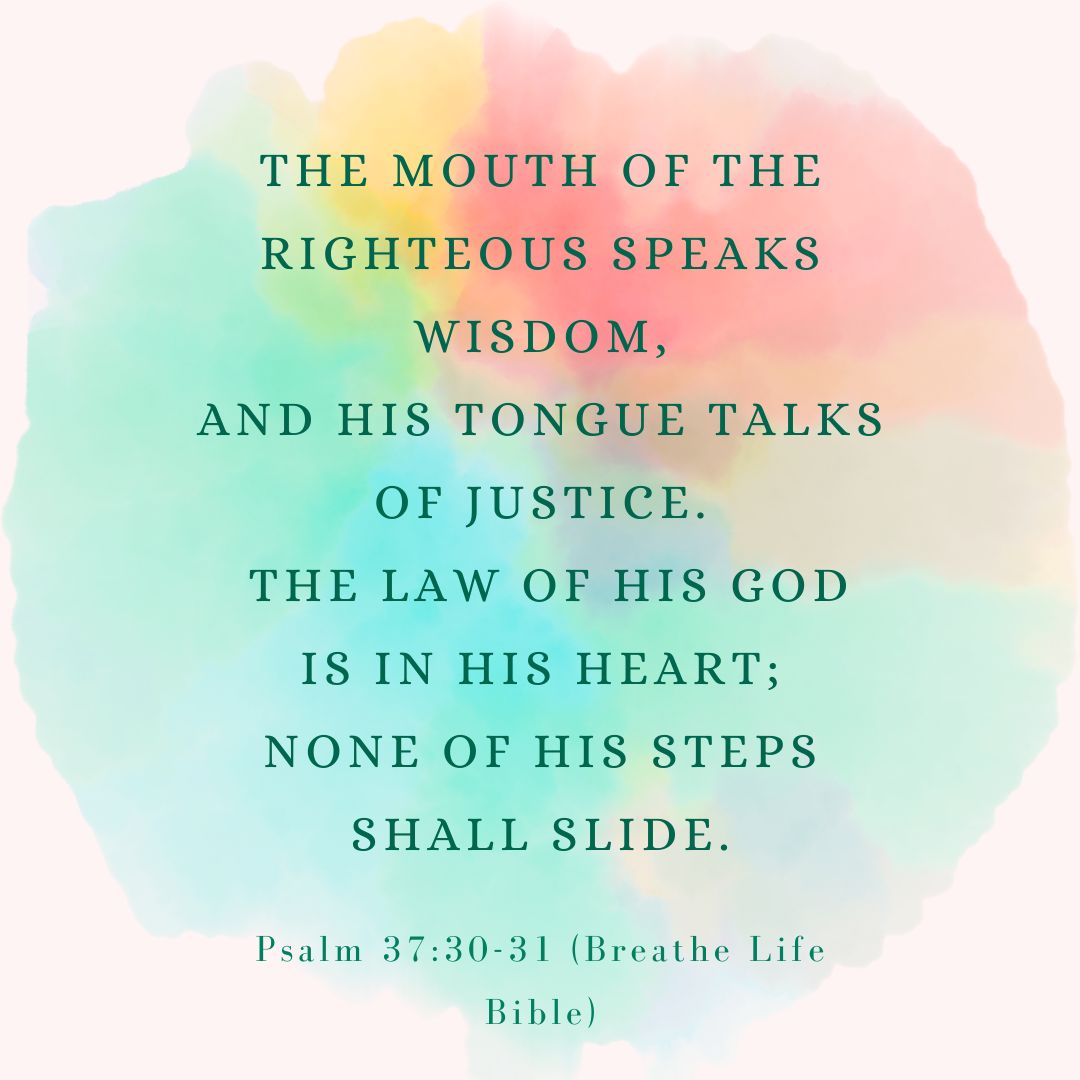
Small Ties That Bind

This morning, I got out of bed and made my coffee. I said a prayer over my cup–my morning coffee prayer– asking, as I do each morning, that God will bless all of those whose hands have led to the cup being placed in my hands. I use the same phrases, call to mind the same images, as I go through the life cycle of a coffee bean. It’s a small ritual, but it’s one that grounds me in a big way. It reminds me that I am just a small part of something much larger, and that what I have and enjoy is not mine alone. Others have cultivated and nourished and shaped it, too, so at the end of its journey, when the coffee is poured into my cup, I feel a profound sense of gratitude for that first rich sip.

My coffee prayer is a ritual–a solemn rite that I engage in repeatedly, intentionally, in the same way, over and over again.

Often, when I think of ritual, I think of those big acts of worship that we engage in on Sunday mornings: communion, the Lord’s Prayer, the Apostles Creed, the Gloria Patri, the Doxology. And if I’m being honest, sometimes they get a little old (Apostles Creed, I’m looking at you!). If you asked me what I thought about rituals, in general, I would roll my eyes and give you my best 80’s Valley Girl “Uck–as IF! They’re so booooring!”

But this morning, as I pray over my coffee, I realize that I’ve got rituals all wrong. Rituals aren’t rote tasks that we complete on autopilot just because it’s something we’ve always done. Rather, they are intentional acts of worship that bring the divine and the earthly together in sacred communion. In going through the motions of ritual, we remind ourselves that what we are part of something bigger, something nobler, something stronger and more lasting than our little lives. Ritual is a beautiful mingling of past, present, and future. Our words and actions are familiar, having been taught and practiced over time, but they speak to us anew where we are right now, and they give us hope and stability for what is to come. There is comfort in ritual. And we create it, even if we think we’re opposed to it.

How do you order today? What are those intentional practices you engage in that give your tasks meaning? Maybe it’s a special prayer you say before each meal. Perhaps it’s going to the same space each day to meditate or read God’s word. It could be an early morning walk as you gaze at the wonder of a new day opening up, or a late night glance at the stars holding court in the night sky.

We all create rituals, and these small moments of the sacred infused into our day are the ties that bind us to God’s beloved kingdom. Rituals, whether practiced corporately or alone, build community. In the Gospels, we see Jesus pausing throughout his missionary journey to engage in rituals. There was the Lord’s Supper on the night before he was arrested, there was the reading of Scripture in the synagogues, and the mixing of mud and spit before a healing. Though Jesus’s ministry was itinerant, it was grounded by rituals both big and small. And it was the practice of those rituals which helped the disciples recognize Jesus upon his resurrection.

Rituals don’t have to be huge. We can practice them simply, quietly, in the midst of our busy days. They are a moment, however brief, to feel God’s loving presence, and to know that we are not alone.

Blessings and Peace,

Sara

New Year, One Word 2025: Openness

Last night, as we were closing out 2024 with good friends around the table, sharing stories, food, and laughter, my husband posed this question: What are you most looking forward to in 2025?

These kinds of questions always stump me. They require some form of planning, which I’ve never been particularly good at. 2025 will definitely be a year of change in the Snyder household, as our eldest graduates high school this spring and begins to make his way into the world. And though I am excited to see what his future holds, I can’t say it’s what I’m most looking forward to this year. And so, I’m back to the original question, and my honest answer is simply this–I’m looking forward to seeing 2025 unfold and am open to all of the possibilities that it brings.

While it might seem blasé, or even a little trite, it’s the space in which I find myself on this New Year’s Day, and it truly fills me with excitement. I love looking into the future with no predetermined expectation or intention, because that, in my experience, is where God works best. God rarely looks at our calendars and picks a blank date in which to schedule a visit. Instead, he tends to throw our carefully planned itinerary out the window and invites us to step into the chaos of creation with him. There is so much possibility in that, if we are open to it…which leads me to my focus word for 2025: Openness.

I want to be open to all that God seeks to do in our lives this year. I want to be like the lake trout that I read about in Gayle Boss’s book of Advent reflections titled All Creation Waits. As Boss writes, the lake trout deposits her eggs among the rocky shoals of Lake Michigan and swims on, having done all that she can do while the eggs wait, “vital but dormant” until winter ends. Like the trout, I want to plant seeds this year that, while they might lie dormant for a time, will burst forth with life when God says it should be so. I want to be open to the fact that, while things might not go exactly as planned or hoped for this year, God is still doing a new thing, and, as the psalmist writes:

It always brings me immense comfort to reflect on the promises of God which have been fulfilled. Throughout Scripture, and in my own life, I see the goodness of his love manifested in the fulfillment of his promises. When God says he’ll do something, he does it. Though, admittedly, he and I often have a profoundly different sense of timing. Where I often respond in haste, God takes his time. He sees the bigger picture and, like any great artist, is willing to let his masterpiece unfold slowly, one brushstroke or typed phrase at a time.

For me, being open to what God is doing means waiting and watching. It means listening more and thinking before responding in situations. It means not rolling my eyes when new initiatives come around at work, and not bristling with indignation when someone suggests a change to how we always do things at home, or work, or church. Openness, for me, means being willing to put forth ideas, and then to let those ideas go if someone has a better one. It means connecting with others, even if I’d rather stay home and read a book, and engaging in tasks that I don’t like but that make a difference to someone else. Above all, openness means actively seeking those places where God is working and being willing to work with him, even if the work wasn’t something that I had planned or initiated or even find interesting.

I have no idea what 2025 will bring….there will be laughter, and likely some tears; there will be new beginnings, as well as bittersweet endings; people will come into our lives, and others will depart; we will have adventures, both planned and unexpected, and we will be faced with challenges both big and small. But if we are open to God’s working in our lives, if we are willing to put in the work to plant the seeds rather than just partaking of the harvest, what wonders might we behold?

It’s a new year, and God is doing a new thing. Though the news might be bleak, though the hearts of some might be sad and the spirits of others might be shaken, though some might be looking to the new year with hope and a sense of promise, and others with trepidation, one thing is certain:

God’s not done yet.

2025 is open….are you open to what God will do within it?

Blessings and Peace,

Sara

Searching for the Light in Advent

unpacking

As Advent is fully upon us once more, I thought this repost from 2016 an appropriate expression of the hope we yearn for this season. As Jesus told his disciples so long ago…the light has come, and darkness cannot put it out.

Wishing you warmth and light this season…

“Do you know where the gloves got put?”

“Which box is our comforter in?”

“Do I have any pants?”

These are the questions I field at least once a week since we moved in June.  With each request, I go searching through the house–looking into random closets, digging into partially opened tubs and boxes and rummaging around shelves I can’t see the tops of.  Eventually I find that pants are on top of a dresser, the comforter is in a vacuum sealed bag and gloves, well, it’s not that cold yet.

The searching in our house these past few months has been reflected in my spirit, too.  I seem stuck in a cycle of perpetual searching.  I’m searching to find my place in a new community, searching to define myself as an author, searching to establish myself in a new career, and even searching to figure out who I am now that I’m 40.

I have to be honest, searching for gloves, comforters and pants is a lot easier.

I feel like, after a season of mountaintop living, I have been thrust back into the wilderness.  I’m trying to find the light of God’s leading, but there are no bushes ablaze around me.  There’s no pillar of fire going before me into the darkness pointing east or west.  There’s just me kicking up sand and wondering if I’ve passed this rock before.

wilderness

Lent has traditionally been the time for wilderness wanderings; however, Advent finds us in the wilderness, too.   Jesus didn’t enter into a world festooned with mistletoe and holly.  He entered humanity in a time of violence, fear, uncertainty and injustice.  He came when people were seeking a light to dispel the darkness of poverty, injustice and oppression.  He came when people were seeking hope.

The world hasn’t changed much since Jesus first came.  We might string mistletoe and holly more freely around our homes, but there is still violence, still fear, still uncertainty, still injustice.  Like the people of Jesus’ time, we are still seeking a light to dispel the darkness of the world around us.

Advent provides us with the opportunity to wait, in hopeful expectation, for the Light of the World to come.  And come he will, because he’s always been there.

lantern

In the beginning was the Word
and the Word was with God
and the Word was God.
The Word was with God in the beginning.
Everything came into being through the Word,
and without the Word
nothing came into being.
What came into being
through the Word was life,[a]
and the life was the light for all people.
The light shines in the darkness,
and the darkness doesn’t extinguish the light. John 1:1-5 (CEB)

Whatever you find yourself searching for this Advent, embrace the uncertainty of finding it.  Give yourself over to God’s work in your life.  Wait in hopeful expectation for the Light that was, is and will come.

Blessings and Peace,

Sara

Thomas Nelson Bible Roundup: Kids, Max Lucado, and Pretty in Purple

As most of you know, I LOVE Bibles! I love the heavy weight of a Bible in my hands as I sit and study Scripture. I love the crinkly sound of tissue-thin pages being turned, and the sharp smell of paper mingling with ink that wafts up as one page gives way to another. Reading the Bible is an act of communion for me–it is, at the same time, both tactile and ethereal–a mingling of body, soul, and mind as I read, reflect, write, and converse with God. So, I’m always excited when Thomas Nelson sends out the next round of Bibles to be reviewed. Not only do I get to sample different versions of our faith’s guiding text, but I get to share them with others!

Here is the latest Thomas Nelson Bible Roundup.

Pros: This Bible has several features that can help kids relate to the text, including profiles of people in Scripture, definitions of words like genealogy, and action articles that help kids practice their faith in the real world.

Cons: Like many kids’ Bibles, it doesn’t fully address the fact that Bible literacy is tough for kids. While the explanatory articles are great, asking kids to read more when they’re already struggling to comprehend could be a deal-breaker for many of them. It’s very text-heavy, with few pictures or illustrations, which is also tough for kids, and some of the “Live It” commentaries are pithy.

Overall: This is an okay study Bible option for upper elementary and middle grade readers. I would be inclined to use it in a small group or Sunday school setting. However, I feel like it trivializes some big questions of faith that kids are perfectly capable of thinking and talking about.

Pros: If you’re a fan of Max Lucado’s work, then you will love this Bible. It breaks the text into daily readings so you can get through the Bible in a year, and it includes short reflections on Scripture passages by Lucado himself.

Cons: Because you’re going through the Bible in one year, the reading is not light. You’ll need a dedicated chunk of time each day to get it done. Also, the writings from Lucado are pulled from his published work–so, no new content.

Overall: A great choice for Lucado fans, or those interested in tackling the Bible from cover to cover in on year.

Pros: This Bible is all about the beauty. From the gold filigree and stamped leather markings on the cover, to the gorgeous text type within, there’s a reason this is the publisher’s “Sovereign Collection.” I love that, textually, this Bible is no-frills. There are no reflections, commentaries, spotlights, etc., which makes the Bible light and portable. I can easily see myself popping this Bible into a bag and hitting the road. Plus, because there aren’t a lot of extra features inside, there’s plenty of room in the margins for note-taking.

Cons: There aren’t extra features included in this Bible, so if you want reflections or commentary, you’re going to need to look elsewhere. And, it’s pricier than the other Bibles in this review.

Overall: I love this one. It’s both light and sturdy, which makes it a great Bible to carry around. And it’s beautiful.

No matter the Bible you choose, spending time in God’s Word is paramount to faith development. It’s a way to connect with our Creator, and to better understand who he is, and who we are in relation to him.

Blessings and Peace,

Sara

Just Breathe: A Review of the Breathe Life Bible

Recently, I had the opportunity to review a couple of Bibles through the Thomas Nelson bible review program. One Bible that I chose to peruse is the Breathe Life Bible. Though I didn’t realize it at the time, this Bible is the perfect resource for anyone who is interested in exploring the crossroads where faith and justice meet. Though compiled with those in mind who daily feel the suffocating effects of racial injustice, it is most certainly not limited to one group. As former Ambassador to the United Nations Andrew Young writes in the forward, the Breathe Life Bible is about putting faith into action, taking an active stand against injustice and oppression. Young writes that this Bible “is about making real the Beloved Community where everyone is valued and cared for.”

When my youngest was about six, he and his brother were walking home from school one afternoon with a few other students who also lived nearby. One of the students had pulled out a Little Debbie snack to eat along the way, but before she could dig in, an older boy snatched it from her hand. My little firebrand would not stand for that. He promptly took the snack back and returned it to the girl, telling the older student, “That’s not right!”

This story always makes me chuckle–if you knew my youngest, you’d understand. He’s always had a fire in his belly to stand up to something, and as he’s gotten older, that hasn’t changed. My son feels strongly about justice…more aptly, he feels compelled to take a stand against what he perceives to be injustice. And there’s a lot of it. Walk down any street in your community and I’ll bet you’ll see it. Poverty; lack of access to resources like healthcare, mental healthcare, addiction treatment, quality education, fresh food; systemic violence….the list goes on and on.

Over the years, I have come to believe that our faith is intricately wound with justice. More specifically, I believe that God calls his people to acts of justice.

#saramsnyder.com

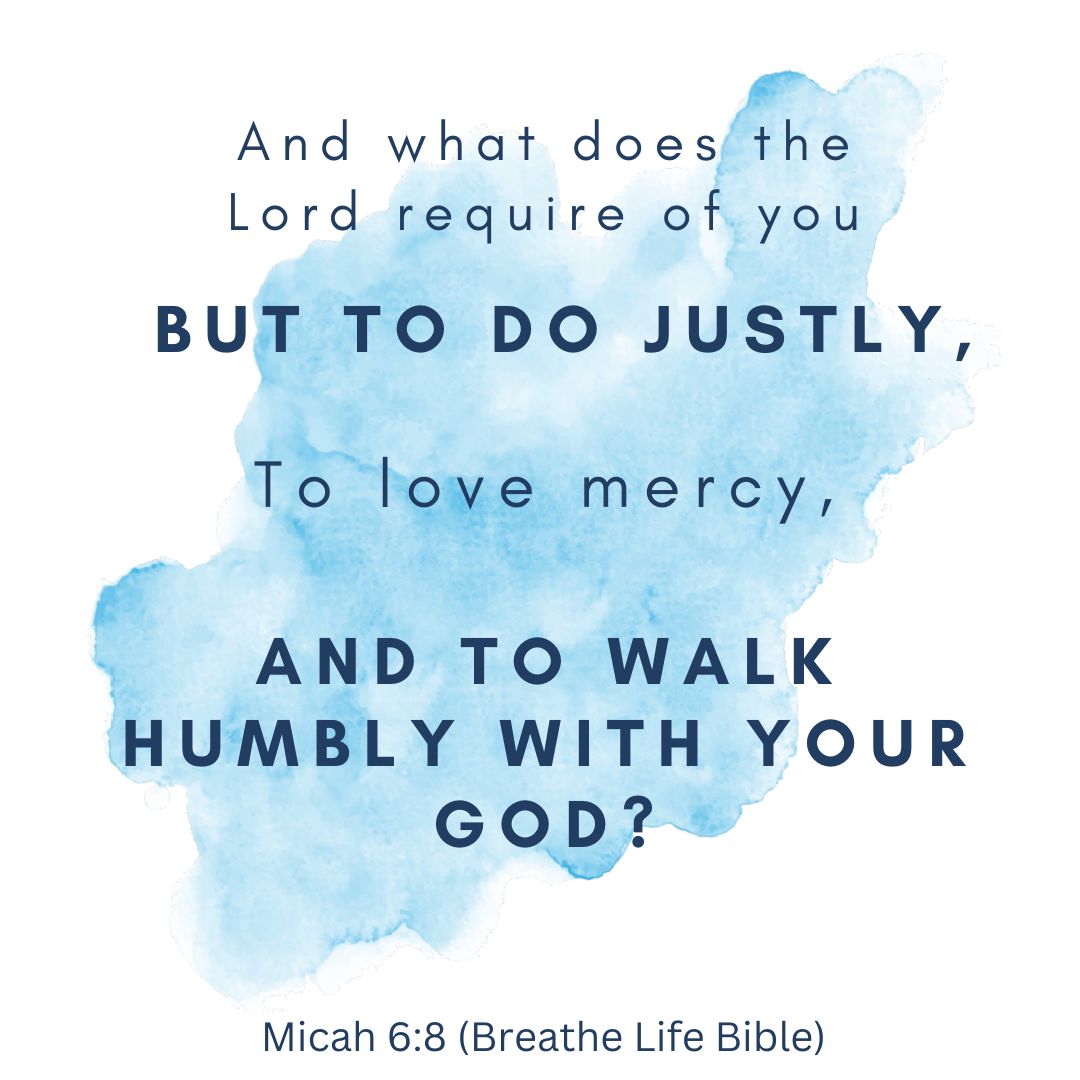
I love that the Breathe Life Bible says that the Lord requires his people to DO justly. This call to action encompasses Jesus’ command to love our neighbors as ourselves, and his exhortation to remember that whatever we do for the least of these, we do for him. But God’s message of justice often gets diluted in feel-good messages that only touch the surface of what it means to live a life of faith. As Christians, we have a tendency to become consumers of God, rather than people who act on his word. Author and leader Brian Heasley wrote in a reflection that, “Christianity is not a self-help group.” Though we sympathize with the plight of those suffering injustice, and maybe even empathize at times, how often do we act on their behalf? How often do we stand up and say, “That’s not right!”

The Breathe Life Bible is unique in that it also offers practical insight into how we can cultivate a life of social justice. There are essays by social justice leaders about what it means to put our faith in practice, commentary by Biblical theologians about what it means to act justly, special first-person accounts of Biblical characters that help the reader engage deeply and personally with God’s word, devotions written by pastors and teachers who share how God’s word impacts our lives, and opportunities to simply inhale and exhale God’s spirit.

Here’s a peek at some of those features:

God calls us to DO justice. And the Breathe Life Bible is a good companion for the journey. Regardless of which Bible you use, however, the fact remains that God doesn’t want us sitting on the sidelines of justice. Rather, he calls us to take action–to stand up and, in his name, work to make the world a better place.

God of Justice, open my eyes, stir my heart, and teach me how to do justly, and to love mercy, and to walk humbly with you today. Amen

Blessings and Peace,

Sara

On Lent and Justice and Slogging Through Both

This past week marked the season of Lent–a time when many of us Christians give up or pick up habits in an effort to grow closer to becoming that person we believe (fingers crossed) God has called us to be. A few weeks ago, I read a devotion based on Isaiah 1:11-21 that lit a fire within me. If you haven’t read it, take a few moments to do so…I’ll wait.

In Isaiah 1, God has had it with the people of Israel. They’ve made worship a spectacle–kind of like the Super Bowl, but without T-Swift. They show up with their game-day gear, jump around, scream and cheer, get fired up and riled up, then go home feeling really good about themselves, secure in the knowledge that they’re part of team God and they will always bring home the bling. However…God’s not buying it. Look at what he says to the Israelites:

#saramsnyder.com

Yikes! I’m not going to lie, that kind of stings. That’s because I have a feeling, deep down, that Isaiah’s words are as true today as they were thousands of years ago. How often do we make our faith a performance–something we throw on Sunday mornings like a special-occasion dress so we can #church on social media? We tend make worship a bit of a spectacle, too, complete with loud songs, raised hands, and calls of “Amen” and “Praise Jesus!” None of this is wrong, per se, but God tells us that he wants more than the motions. In Isaiah, God’s not angry that the Israelites are worshipping emphatically–he’s furious that their so-called devotion doesn’t extend beyond the walls of the Temple.

While the Israelites are happy to bring sacrifices to God in worship, they most certainly aren’t doing so beyond that. They lie and cheat. They ignore those in need. They don’t defend the widows or help the orphans. And they oppress the immigrants. In fact, Isaiah goes so far as to say that the people of Israel have blood-stained hands. Maybe they haven’t physically hurt someone else, but their actions have perpetuated systems of injustice that have led to people being oppressed and neglected. When children are starving, who is responsible? God seems to say that we all are.

So, what does God want from us? Isaiah lays it out pretty clearly:

#saramsnyder

We are to be the people of hope–the feet that bring good news to the poor, sight to the blind, and release to the captives. Our acts of worship should fill us up with God’s spirit so that we can leave behind the walls of the church and bring God’s mercy and love to those on the streets…the hungry, addicted, enslaved, abused, grief-stricken, struggling, fearful, lonely people we meet every day.

God’s justice is different from the world’s justice. When the prophets speak of justice, they’re not always talking about retribution. Rather, it’s a reordering of priorities and practices. God’s justice is about freedom–breaking the chains of poverty, racism, sexism, ableism, violence, human trafficking, hunger, climate change so that all people can live into their God-given potential because all people are children of God.

God’s justice makes me want to move, to act, to sing the Good News into the world. Before Lent, I had a plan. I was going to make a justice calendar for myself that I could hang above my desk. There would be a daily act of justice, something small, but meaningful, I could check off each day. But as I considered this justice to-do list, I came to a daunting reality: You can’t schedule justice on a calendar.

The truth is, fighting oppression is a long slog through the bogs of humanity. Though we can give to the hungry, it takes a lot of time, effort, resources, and reordering of our systems of government and finance to ensure that every person can provide for themselves. Case in point, we once served a church that helped build a chicken farm in a community in Haiti. The farm was supposed to bring financial freedom to the people of the community and help their neighbors get sustenance, but these God-inspired goals were hit with the full force of political turmoil and economic oppression. The farm struggled, and though the people of the community are diligently trying to make it work, it’s an uphill battle.

Justice is hard, because it calls for a reordering of society. Justice is about relinquishing power, turning over our resources, making more room at the table for people who might make us uncomfortable. And honestly, I don’t always have the will or desire to do that. However, God is adamant that this is nonnegotiable. Remember when Jesus said: “Whatever you do for the least of these, you do for me?” That’s justice. And it’s so hard.

Fortunately, when it comes to hard things, we’re not alone. We have a God who can do infinitely more that we could ever plan or imagine. He makes things possible, though not necessarily easy. This Lenten season, I feel like I’m at the start of something. There’s a road that God is inviting me to follow, and I know we’re going to wind our way through some steep hills and marshy valleys. I don’t know anymore what this focus on justice will bring, but I know it’s a journey I have to take. Because we are kingdom builders. Even it we have to start with one small pebble at a time.

Blessings and Peace,

Sara
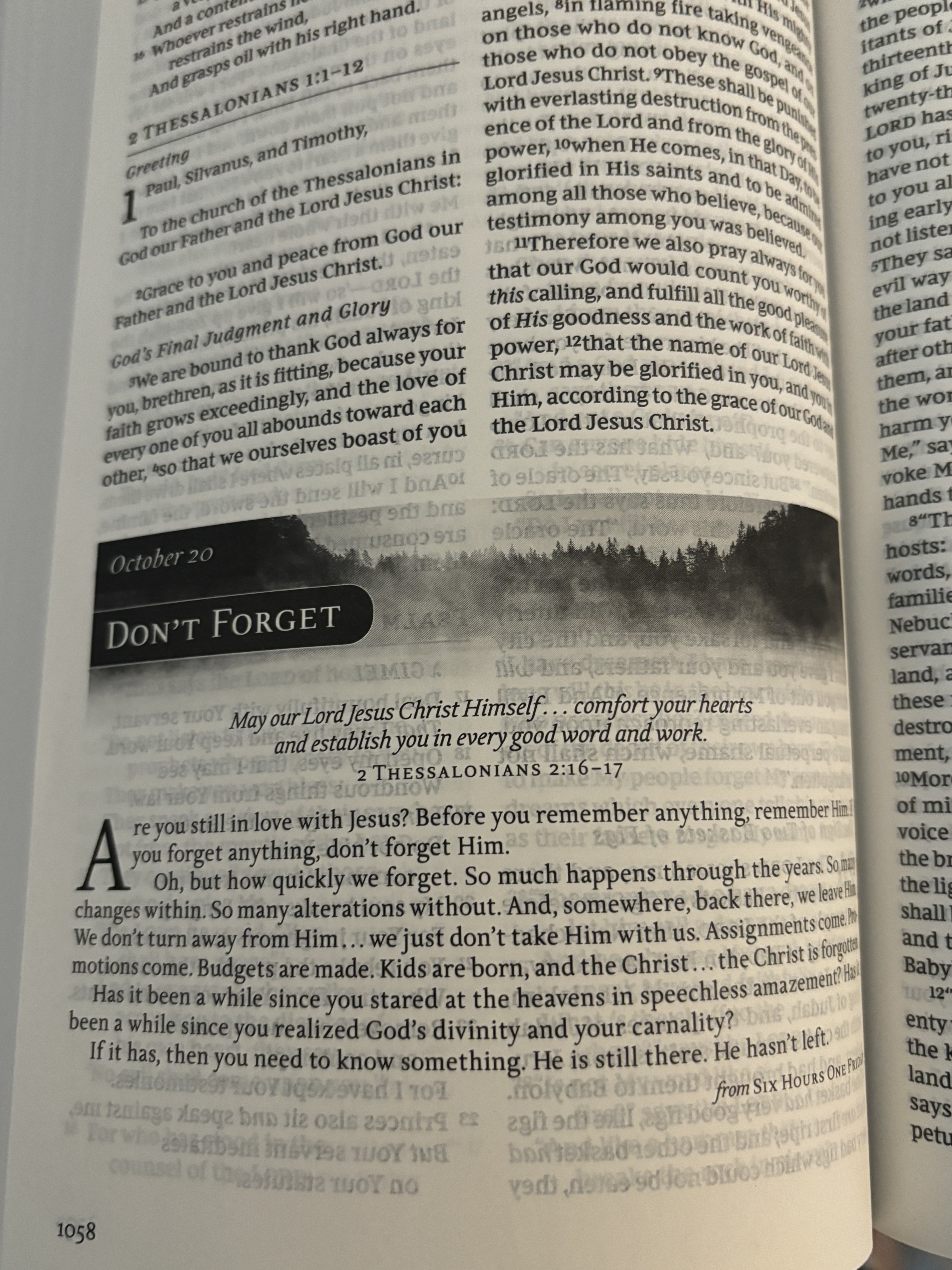
Are We Paying Attention?

Have you ever missed the turn onto your street? I’m not talking after recently moving to a new city or neighborhood–I mean a true head in the clouds moment where you blew right past the place you’ve been turning into for at least three years. I would like to tell you that this happened to me once….but the truth is….no one in my house is surprised when I miss an obvious turn. I just get distracted. There’s a great song playing and I’m singing along. Or a fox crossed the road and I’m craning my neck to see where it went. Maybe I’m too focused on the pinks and purples bleeding into the horizon as the sun sets. Whatever the case, I don’t always pay enough attention to where I’m going.

Recently, I was re-reading Moses’ call story. This is, hands down, one of my favorite stories in all of Scripture. I love that Moses is not a superhero. I love that he comes up with excuse after excuse to avoid God’s call. I love that Moses is plagued with self-doubt. I love that he boldly tells God he needs some muscle because he can’t carry this call alone. And, of equal importance, I love that Moses was distracted enough to have an encounter with God in the first place.

As Exodus 3 opens, Moses is tending sheep for his father-in-law. I don’t know a lot about sheep, but I cannot imagine it to be a highly stimulating job, especially for someone whose resume boasts “working royal”. With no smart phone, book, magazine, or radio, Moses had lots of time and space for his mind to wander. And that’s how he came to notice the burning, yet strangely not burning bush.

xr:d:DAF7RudQutY:3,j:8830849986575324288,t:24012914

In this passage, Moses was aware enough of his surroundings, yet distractible enough from his task at hand, that he noticed something out of the ordinary was taking place. Moses looked up. And when he looked up, he saw something new–something remarkable–and it sparked his interest. When Moses saw the burning, not burning bush, he was curious. And so, (like future shepherds would) he went to see this thing which had come to pass.

Here’s where the story gets really interesting: It wasn’t until Moses actually went to see what was going on that God showed up. Scripture tells us that an angel of the Lord was responsible for the fire. Though God had orchestrated the supernatural event, Moses had to take the first step before God called his name.

Sometimes, God needs to get our attention before he can get to work in our lives. And he waits until we’re invested before he speaks. Moses shows us that when God calls, sometimes it requires us to wake up and move!

Too often, I run around with my head so lost in the fog of my thoughts or an electronic device that I can’t hear God call. I’m not focused on where God and how he’s working and what he might be inviting me to take part in. And so, God gets my attention in some surprisingly odd ways. Like a cow…stuck in a fence.

Years ago, as I was going about my business, driving the two-lane highway past farms and fields that was my daily commute, singing along to whatever pop song was on the radio, I happened to spot movement from the corner of my eye. Turning my head, I saw something new–a cow that was entangled in a barbed wire fence. As my brain was attempting to process this strange sight, my cell phone rang. It was my sister, driving down city streets 200 miles away, passing storefronts instead of fences. When I told her about the bizarre bovine encounter, I expected a chuckle, or at best, a snort. But what I got instead was a question that entirely upended my way of thinking. She asked: “What are you going to do about it?” In that moment, my sister reminded me that we are not to be passive bystanders on the road of life. Rather, we are called to enter in, to act, to make a difference. Because if we don’t, then who will?

And so, I called the sheriff’s department and reported a wayward cow. I have no idea what happened next, if the cow was safely removed from the fence or became someone’s dinner, but I know that God used that cow (and my sister) to teach me a lesson that has factored into many of my ensuing moments. But before God could get to the lesson, I first had to notice…and then I had to move.

What do you need to look up from to see God working in the world? Where is he trying to get your attention? And are you willing to go and see what he’s doing?

Blessings and Peace,

Sara

New Year, One Word: Compassion

Over Christmas, our family took a trip to NYC–along with half the world’s population! It was beyond crowded at most of the tourist spots. Just for some perspective, here’s a look at our ferry on the way back from Ellis Island:

See those life vests up above? Just decoration…if that sardine can went down, we were all going with it.

If I’m being honest, I am not really at my best among hordes of people. In my better moments, I see crowds as a nuisance–something to get through in order to experience something I want. And at my worst…well…I mostly wish they would just all go away so I can fully enjoy whatever I want to enjoy. It’s selfish and entitled, and I am fully aware of that in the moment. Unfortunately, that awareness doesn’t always precipitate change.

That’s why I am floored that Jesus’ response to the overflow of people hounding him along his journey isn’t one of exasperation; rather, Matthew tells us (three times!) that Jesus saw the crowds and had compassion.

Compassion is a powerful word. It’s more than just feeling bad for someone. Instead, to have compassion means that you are so deeply concerned about the circumstances of another human being that, according to Merriam Webster, you have “an urgent desire to aid” them. When Jesus saw the crowds around him, his heart was broken open. He saw their sickness, both spiritual and physical, and was compelled by an urgent desire to make them better.

Too often, when I look at others, I don’t see them with compassion. I see the poor choices, the dirty fingernails, the tattered clothes, the coarse language, the cloying neediness, the boisterous braggadocio, the condescending glance, the mental illness, or even the gleaming success….and I walk away full of my own self-righteousness, somehow thinking that Jesus’ compassion is a gift only for me.

In the gospel of Luke, Jesus gives those who will listen a lesson on compassion. Love your enemies, he says. Do good, and lend expecting nothing in return. If you do, you will have a great reward. You will be acting the way children of the Most High act, for–and this is the kicker– he is kind to ungrateful and wicked people.

God is kind to ungrateful and wicked people. And who might those ungrateful and wicked people be, per se? Get a mirror.

God always sees right into the hearts of his children. And when he finds their particular sickness (which we all have), he doesn’t turn away. He is so concerned for them, for us, that he has an urgent desire to act. God brings healing and hope to all those he encounters. And, if we’re willing, he’s offering us the chance to take part in this healing with him by showing others compassion.

We are called to be a people of compassion–a people who are so concerned with the problems facing other human beings that we have an urgent desire to aid them. But so often, we let our own sickness keep us from engaging in this practice. We put ourselves first, and quite honestly, most of us don’t even show compassion there.

This year, my focus word is compassion. I want to look at others with Jesus’ eyes–to see beyond the surface and into the heart, and to allow that knowledge of who, what, and why someone is (fill in the blank) break open my soul and lead me to act rather than pass by. It won’t be easy…I realize that I’m fighting against some deeply ingrained habits of behavior. But if I open the door of my heart to God’s compassion, I think that change will come…

Blessings and Peace,

Sara